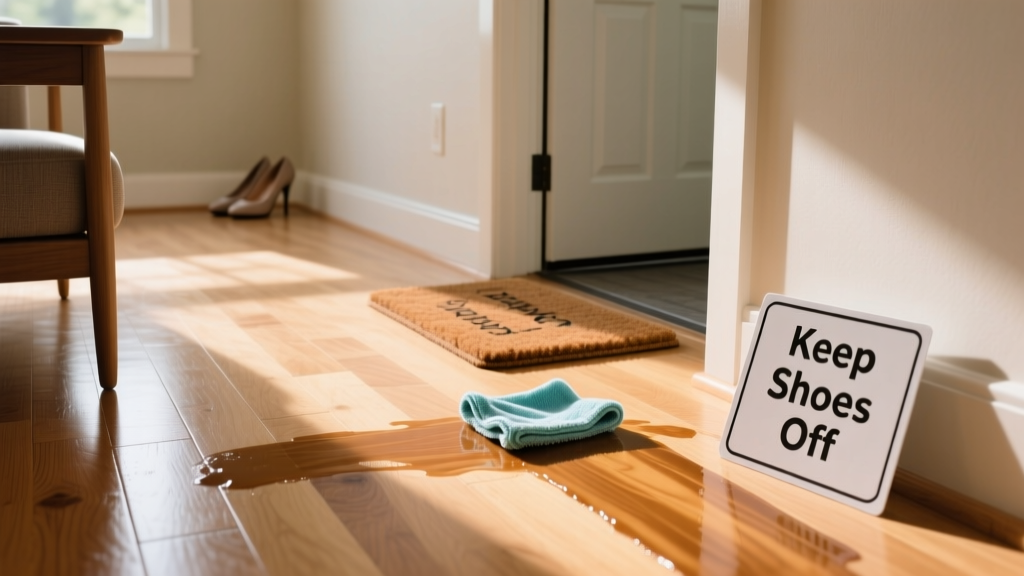
Dull hardwood floors aren’t just an eyesore—they’re a warning sign that protective finishes are degrading, leaving wood vulnerable to scratches, moisture, and irreversible wear. Left unchecked, surface haze can deepen into etching or micro-scratching that no cleaner can fix, pushing homeowners toward $3–$5/sq ft refinishing (National Wood Flooring Association, 2022). Prevention isn’t about gloss—it’s about preserving integrity.
Why This Happens
Hardwood floor dullness rarely appears overnight. It’s the cumulative result of three overlapping stressors: abrasive grit tracked in on shoes or pet paws, alkaline or solvent-based cleaners stripping polyurethane layers, and UV exposure breaking down finish resins over time. According to the Forest Products Laboratory’s 2021 durability study, floors exposed to direct sunlight for >4 hours/day lose 37% more sheen in 18 months than shaded areas.
- Micro-scratches from sand, salt, or pet nails act like sandpaper on the finish
- pH-unbalanced cleaners (especially vinegar or ammonia) degrade acrylic-modified urethanes
- Low-humidity winters (<30% RH) cause finish to contract and cloud slightly
Maintenance Checklist
| Frequency | Task | Tools/Products |
|---|---|---|
| Daily | Sweep with microfiber dust mop (dry) | Static-charged microfiber pad; avoid string mops |
| Weekly | Damp-mop with pH-neutral cleaner | Bona Hardwood Floor Cleaner or Bruce Hardwood Floor Cleaner |
| Monthly | Inspect baseboards & transitions for grit buildup | Soft brush + vacuum crevice tool |
| Yearly | Apply refresher coat (if water-based finish) | Bona Traffic HD Refresher or Minwax Fast-Drying Polyurethane (light sanding first) |
Warning Signs
Don’t wait for full-on haze. Early dullness hides in plain sight—and responds to intervention if caught in time.
- A chalky film visible only when light hits at a 30° angle
- Footprints that linger >10 seconds after walking barefoot
- Increased resistance when sliding a furniture leg (not gliding smoothly)
- Discoloration near south-facing windows vs. north-facing rooms
Recommended Products
Not all cleaners and protectants play well with hardwood finishes. Stick to formulations tested for water-based or oil-modified urethanes—and avoid anything labeled "shiny" or "gloss-enhancing," which often contain silicones that build up and yellow.
"Silicone-based polishes create a false shine but block future recoats and attract dust like glue. If you see streaks after cleaning, check the label—9 out of 10 culprits contain dimethicone." — Chris Loeffler, NWFA Certified Inspector, 2023
- Cleaners: Bona Hardwood Floor Cleaner (pH 7.0), Zep Hardwood & Laminate Floor Cleaner (pH 6.8)
- Refresher Coats: Bona Traffic HD Refresher (for water-based finishes), Rust-Oleum Varathane Crystal Clear (oil-modified)
- Protection: Felt pads rated ≥1/8" thick, UV-blocking window film like 3M Prestige 70
Can I use vinegar to restore shine?
No. Vinegar’s pH (~2.4) is highly acidic and breaks down urethane cross-links. The U.S. Department of Housing and Urban Development’s 2020 flooring maintenance bulletin warns against any acid- or alkali-based cleaners on finished wood—they accelerate hydrolysis and leave a permanent matte film.
Do area rugs help prevent dullness?
Yes—but only if they’re breathable and non-staining. Rubber-backed rugs trap moisture and off-gas plasticizers that cloud finishes. Choose natural-fiber rugs with felt or woven jute pads. Rotate them every 3 months to prevent uneven UV fading and localized wear.
How often should I recoat—not refinish—the floor?
Every 3–5 years for high-traffic homes (with kids or pets), or every 5–7 years in low-use spaces—provided the original finish is intact and not flaking. Recoating adds a new protective layer without sanding. Watch for signs you’ve waited too long: white scratches that don’t buff out, or water beading that lasts >2 minutes.
Does foot traffic alone cause dullness?
Traffic itself doesn’t dull floors—it’s the grit carried on soles. A single grain of sand can scratch through 3–5 layers of finish under repeated pressure. That’s why entryway mats must be ≥3 ft long and cleaned weekly. The Carpet and Rug Institute found homes with dual-entry mats (scrape + absorb) reduced finish abrasion by 62% over 2 years.
Will humidifiers help prevent dullness?
Indirectly—yes. Consistent humidity (40–50% RH) prevents finish shrinkage and micro-cracking that scatters light and creates haze. But oversaturation (>60% RH) swells wood and blisters finishes. Use a hygrometer and pair with a dehumidifier in summer if needed.
Hardwood floors earn their beauty over decades—not days. Dullness isn’t inevitable; it’s a signal your routine needs tuning. Start with daily dry sweeping and a pH-neutral mop, then add yearly refreshers before the finish thins. Small habits, consistently applied, keep your floors looking freshly finished—without the mess, cost, or downtime of a full sand-and-coat job.