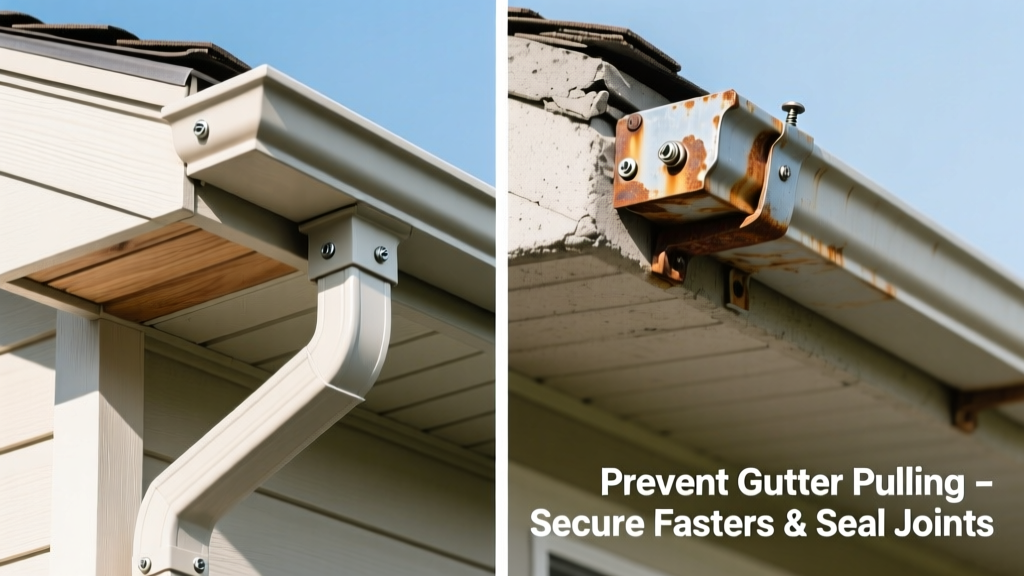
Gutters pulling away from your home isn’t just an eyesore—it’s a red flag that water is bypassing its intended path, saturating fascia boards, eroding foundations, and inviting wood-rotting fungi like Serpula lacrymans. According to the National Association of Home Builders’ 2022 Residential Repair Cost Report, gutter-related structural repairs average $1,280—and 73% of those cases stem from preventable neglect.
Why This Happens
Gutters detach due to cumulative stress: weight from debris-clogged water, ice dams in cold climates, undersized fasteners, or decayed fascia boards. Over time, even properly installed gutters sag when hangers are spaced more than 36 inches apart—or when spikes (not screws) are used on older homes with dry-rotted wood.
Thermal expansion also plays a role: aluminum gutters expand up to 1/8 inch per 10 feet in summer heat. Without proper slip-joint allowances or expansion brackets, that movement stresses fastener points until they rip free.
Maintenance Checklist
| Task | Daily | Weekly | Monthly | Yearly |
|---|---|---|---|---|
| Clear leaves/debris from downspout openings | ✓ | |||
| Inspect for standing water or pooling | ✓ | |||
| Tighten loose hangers & screws | ✓ | |||
| Check fascia board integrity (soft spots, discoloration) | ✓ | |||
| Replace rusted spikes with lag screws + washers | ✓ |
Warning Signs
Early detection saves repair costs. Watch for:
- Visible gaps >1/4 inch between gutter and fascia
- Sagging sections that hold water longer than 48 hours after rain
- Paint bubbling or peeling on fascia directly behind gutters
- Small piles of granules or moss growing along the back edge—indicating trapped moisture
If you spot any of these, act within two weeks. Delaying increases risk of fascia replacement, which averages $4–$8 per linear foot, per the Remodeling Magazine 2023 Cost vs. Value Report.
Recommended Products
Not all hardware is equal. Prioritize products designed for long-term load-bearing performance:
- Hidden hangers with micro-adjustment slots (e.g., LeafGuard Pro Hangers)—allow for thermal expansion without loosening
- Stainless steel lag screws with EPDM rubber washers—resist corrosion and compress to seal against fascia grain
- Fascia-mounted brackets instead of roof-mounted ones—distribute weight across solid framing, not shingles or decking
How often should I inspect gutter hangers?
Twice yearly—once before heavy leaf fall (late summer), once after winter thaw (early spring). Use binoculars to scan from ground level first; then ladder-check any section showing misalignment. Replace any hanger bent more than 5 degrees—bent metal fatigues faster and transfers uneven loads.
Can gutter guards cause pulling away?
Yes—if improperly installed. Solid-top guards add 2–4 lbs/ft of dead weight. If your existing hangers were already at 80% capacity (common in homes over 12 years old), that extra load triggers failure. Always verify hanger spacing before installing guards—and consider upgrading to heavy-duty hangers like the T-Rex bracket system.
What’s the best fastener for cedar or redwood fascia?
Use hot-dipped galvanized lag screws—not stainless—on cedar or redwood. Tannins in these woods react with stainless steel, causing premature corrosion. The U.S. Forest Service’s Wood Handbook (2021) confirms galvanized fasteners last 3× longer in tannin-rich species when paired with pre-drilled pilot holes.
Do gutter extensions help prevent detachment?
Indirectly—but only if they reduce splash-back erosion near foundation walls. Extensions don’t relieve load on hangers. However, directing runoff >5 feet from the house lowers basement seepage risk, which in turn reduces hydrostatic pressure on lower-floor framing—a secondary contributor to fascia movement over decades.
Should I replace gutters if they’re 20+ years old?
Not automatically—but do replace fasteners and inspect fascia thoroughly. Aluminum gutters last 20–30 years; steel lasts 25–40. But hangers and seals degrade faster. Consider upgrading to seamless gutters with internal reinforcement ribs, which resist bowing under snow load better than sectional units.
"Gutter detachment rarely happens overnight—it’s the final symptom of months of unnoticed strain. Catch three small warning signs early, and you’ll avoid 90% of emergency call-outs." — Mike R., licensed roofing inspector with 27 years’ field experience (Roofing Contractors Association, 2023)
Prevention isn’t about perfection—it’s about consistency. A 10-minute monthly visual scan, paired with biannual tightening and annual fascia checks, extends gutter life by 8–12 years. Pair that with smart upgrades like proper pitch verification, and you’re not just holding gutters in place—you’re protecting your home’s structural envelope where it meets the sky.