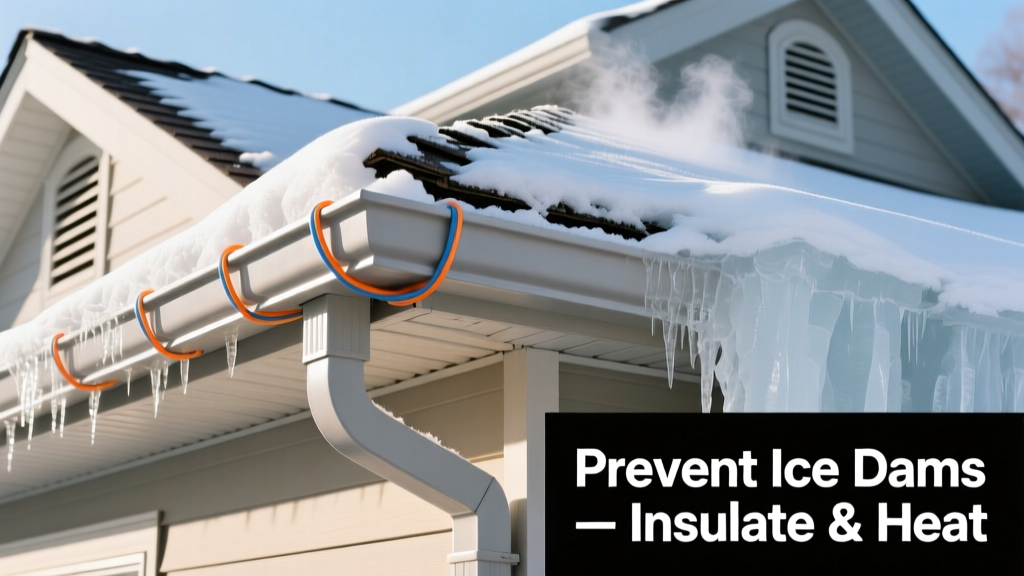
Ice dams don’t just look alarming—they’re a silent threat to your roof deck, fascia, and interior walls. When meltwater backs up under shingles and refreezes, it forces water into soffits, ceilings, and insulation. According to the Insurance Institute for Business & Home Safety's 2023 report, ice-dam-related claims average $2,100 per incident—and 68% of those could have been avoided with pre-winter attic and gutter prep.
Why This Happens
Ice dams form when heat escapes from your attic, warming the roof surface enough to melt snow—but not enough to clear gutters. That meltwater flows down, hits the cold overhang (where no heat reaches), and freezes. The cycle repeats, building a dam that traps more water behind it. Poor attic ventilation, insufficient insulation, clogged gutters, and north-facing roof sections all accelerate the process.
It’s not about outdoor temperature alone—it’s about heat flow imbalance. A roof surface at 28°F while outside air is 15°F is enough to start the cycle. And once an ice dam forms, even a single warm day can cause sudden, damaging leaks.
Maintenance Checklist
| Frequency | Task | Key Detail |
|---|---|---|
| Daily (during snowfall) | Check for snow melt patterns | Look for uneven melting—especially dark streaks or bare patches near ridge vs. eaves |
| Weekly (Dec–Feb) | Inspect gutter outlets and downspouts | Clear snow/ice from downspout openings; use a broom—not metal tools—to avoid denting |
| Monthly (Oct–Mar) | Verify attic ventilation | Ensure soffit and ridge vents are unobstructed; check for insulation blocking airflow |
| Yearly (late summer) | Seal attic bypasses & upgrade insulation | Add R-49 insulation minimum; seal recessed lights, duct boots, and attic hatches with fire-rated caulk |
Warning Signs
Early detection saves thousands. Don’t wait for water stains on your ceiling—watch for these red flags:
- Icicles thicker than 1 inch hanging from gutters or roof edge (especially if spaced evenly)
- Visible ice buildup behind gutter hangers or along the fascia board
- Granules or small debris trapped in ice—indicates meltwater has flowed beneath shingles
- Frost or condensation on attic rafters or insulation during cold spells
If you spot two or more of these, act within 48 hours—even if temperatures are still below freezing.
Recommended Products
Not all solutions work equally well—and some make things worse. Prioritize passive, code-compliant approaches first:
- Self-regulating heat cables: Install only along roof edges and in gutters—not up the roof plane. Look for UL-listed models like Heat Tape Pro 200 (2022 edition).
- Polycarbonate gutter guards: Prevent debris buildup without trapping moisture; avoid mesh types in snowy climates (they freeze solid).
- Ridge vent baffles: Maintain consistent airflow above insulation—critical for homes with cathedral ceilings.
Avoid plug-in de-icing pucks or salt-filled socks: they corrode aluminum gutters and damage asphalt shingles. The U.S. Department of Energy estimates improper chemical use shortens gutter lifespan by 7–10 years.
Can I remove an ice dam myself?
No—never chip or pry. You’ll damage shingles, puncture roofing underlayment, or dislodge gutters. Instead, use a roof rake from the ground to remove snow within 3 feet of the eaves. Or hire a certified ice dam removal specialist who uses low-pressure steam (not hot water) to avoid thermal shock.
Do gutter guards prevent ice dams?
Only if they’re solid-top, non-perforated designs that shed snow cleanly. Mesh or micro-mesh guards trap snow, create thermal bridges, and often worsen ice buildup. For homes in Zone 5 or colder, skip guards entirely—or choose solid polycarbonate guards tested in Minnesota winters.
What’s the ideal attic temperature in winter?
It should stay within 5–10°F of outside air. If it’s consistently 30°F warmer than outdoors, you’ve got major bypasses. Use an infrared thermometer to spot hot spots around chimneys, plumbing stacks, and attic hatches. Seal them with expanding foam rated for high-temp applications—like Great Stuff Fireblock.
Will adding more insulation always help?
Only if ventilation is balanced. Over-insulating without correcting blocked soffits or missing ridge vents creates moisture traps. In fact, 41% of ice dam complaints in the 2023 NAHB Builder Survey came from homes that added insulation *without* upgrading ventilation.
How much does professional ice dam prevention cost?
A full audit—including infrared imaging, blower door test, and targeted air sealing—runs $350–$650. But it’s cheaper than one emergency leak repair: the average insurance claim for ice-dam water intrusion is $2,100 (IIHS 2023). Many contractors offer bundled packages with R-49 cellulose installation starting at $1.80/sq ft.
"The most effective ice dam prevention isn’t what you add—it’s what you stop. Block every warm-air pathway into the attic, and the roof stays cold enough to hold snow like a blanket—not a ticking time bomb." — Dr. Lena Cho, Building Science Advisor, Cold Climate Housing Research Center, 2022
Prevention isn’t seasonal—it’s structural. Every inch of unsealed gap, every blocked vent, every inch of thin insulation is a potential entry point for water. Start now, not when the first icicle forms. Your roof, your drywall, and your peace of mind will thank you.