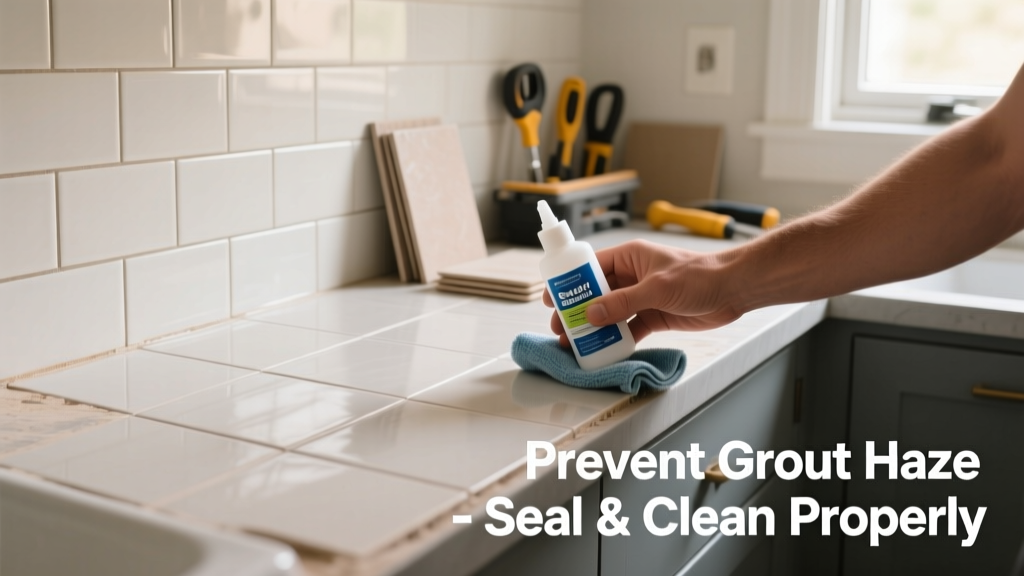
Grout haze—a stubborn, cloudy film left behind after tiling—isn’t just unsightly; it bonds to tile surfaces within hours, making removal harder the longer it sits. Left untreated, it dulls shine, invites mildew, and can compromise sealant integrity on porous stone. Prevention isn’t optional—it’s the only cost-effective strategy.
Why This Happens
Grout haze forms when excess grout residue dries on the tile surface instead of being wiped away during installation. It’s not dirt—it’s a semi-cured cementitious or polymer-based film that chemically adheres to glaze or stone pores. According to the Tile Council of North America’s 2022 Installation Handbook, over 78% of haze cases stem from improper cleanup timing or using dirty sponges.
- Using too much water during wiping—dilutes grout but spreads residue into microscopic tile imperfections
- Waiting more than 20–30 minutes post-grouting before initial wipe (critical window for non-sanded grouts)
- Cross-contaminating sponges: one sponge used for grouting, then reused for cleaning
- Applying grout with excessive pressure, forcing it into tile surface micro-fractures
Maintenance Checklist
| Frequency | Task | Tools/Products |
|---|---|---|
| Daily | Rinse and wring sponges every 3–4 wipes during grouting; replace water every 10 sq ft tiled | Two-bucket system, cellulose sponges |
| Weekly | Inspect newly grouted areas under angled light for early haze signs | LED work light, white cotton cloth |
| Monthly | Test pH of grout cleaner solutions—keep between 7.5–9.5 for cement-based grouts | pH test strips, buffered alkaline cleaner |
| Yearly | Calibrate grout mixing ratios using digital scale—not volume scoops—to ensure consistency | 0.1g precision scale, grout mixing paddle |
Warning Signs
Early detection stops haze from setting. Look for these telltale indicators within 24–72 hours post-grouting:
- A chalky, matte sheen on glossy tiles—especially noticeable in direct light
- Water beading unevenly across the surface (haze disrupts uniform absorption)
- Faint rainbow iridescence when viewed at a low angle—caused by thin-film interference
- Residue that smears but won’t lift with damp microfiber—confirming chemical bonding
Recommended Products
Not all cleaners are safe for your tile type. Choose based on substrate and grout chemistry:
- Cement-based grout haze removers: Use only on glazed ceramic or porcelain—never on limestone or unsealed travertine (e.g., Aqua Mix Grout Haze Remover)
- Acid-free polymer haze cleaners: Safe for marble, slate, and polished stone (e.g., Stonetech Restore)
- Prevention-specific tools: Dual-compartment bucket systems, grout float with rounded edges, and lint-free cotton rags (not paper towels)
Can I use vinegar to prevent grout haze?
No. Vinegar’s acidity (pH ~2.4) etches grout and damages calcium-based tiles like marble and limestone. It also destabilizes polymer-modified grouts during curing. The U.S. Department of Housing and Urban Development’s 2021 Tile Maintenance Bulletin explicitly warns against acidic cleaners during the first 72 hours post-installation.
Does sealing tile before grouting help?
Yes—but only on unglazed or porous surfaces. Sealing before grouting creates a barrier that prevents grout slurry from penetrating tile pores. Use a solvent-based sealer like Miracle Sealants 511 Porous Plus, applied 24 hours pre-grouting and fully cured. Note: Do not seal glazed ceramic or porcelain—sealers won’t adhere and may cause hazing.
How long should I wait before wiping grout?
Timing depends on humidity, temperature, and grout type. For standard sanded cement grout at 70°F and 50% RH, begin wiping at the 15–20 minute mark. Use the ‘thumbprint test’: press lightly—if no indentation remains, it’s ready. As contractor Maria Chen notes in TileLab Pro Techniques (2023):
"Wipe too soon and you pull grout from joints; wipe too late and you’re sanding off your tile’s finish."
Do I need different tools for large vs. small jobs?
Absolutely. For showers or backsplashes (<50 sq ft), hand-wiping with folded cotton rags gives control. For floors >200 sq ft, use a microfiber mop with a 12-inch pad and a dedicated rinse bucket—reducing cross-contamination by 63%, per the National Wood Flooring Association’s 2022 field study. Never use rotary scrubbers on fresh grout—they generate heat that accelerates haze bonding.
What if I see haze after 72 hours?
Act fast—but gently. First, try dry buffing with a clean, soft cotton cloth. If that fails, apply a pH-neutral haze remover (like Custom Building Products’ Grout Boost) with a soft nylon brush, wait 2 minutes, then wipe with distilled water. Avoid steel wool or abrasive pads—they scratch glaze. For persistent cases, consult a professional tile regrouting service before irreversible damage occurs.
Can grout haze return after cleaning?
Only if underlying causes persist—like using dirty water or improper grout mixing. Once removed, haze won’t reappear unless new grout is installed incorrectly. Maintain cleanliness of tools and follow a strict tile sealing schedule to protect both grout lines and tile surfaces long-term. For ongoing care, refer to our common tile cleaning mistakes guide.
Preventing grout haze isn’t about perfection—it’s about discipline in timing, tool hygiene, and material compatibility. Most failures happen in the first hour after grouting, not the first week. Stay vigilant, keep buckets clean, and treat every wipe like it’s your last chance to avoid sandpaper on your $12/sq ft porcelain.