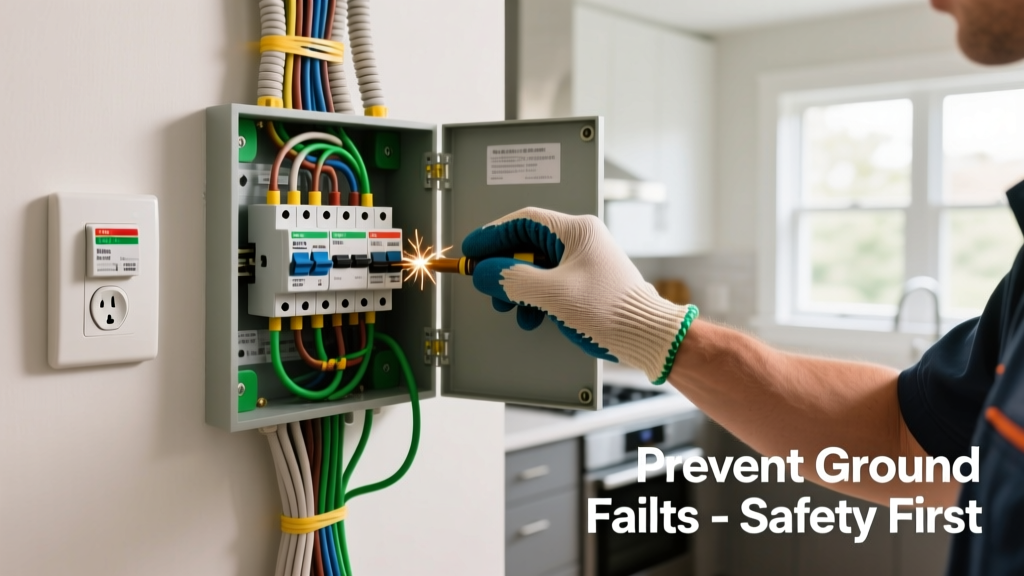
A single undetected ground fault can silently degrade insulation, overheat connections, and raise shock risk—especially in damp areas like bathrooms, garages, and outdoor outlets. According to the Electrical Safety Foundation International (ESFI) 2023 report, ground faults contribute to nearly 18% of residential electrical fires annually, many with no prior warning signs.
Why This Happens
Ground faults occur when current strays from its intended path and flows directly to ground—often through moisture, damaged insulation, or improper grounding. Aging wiring (especially pre-1980 NM-B cable with degraded paper wrap), ungrounded two-prong outlets, and DIY modifications without GFCI protection are top contributors. Moisture intrusion into outdoor receptacles or basement junction boxes accelerates corrosion and insulation breakdown—creating invisible leakage paths that standard breakers won’t trip.
- Corroded or loose grounding rods (resistance >25 ohms fails NEC 250.53)
- Shared neutrals between circuits causing neutral-to-ground voltage drift
- GFCI devices older than 10 years (failure rate jumps to 22% per UL 943 testing, 2022)
Maintenance Checklist
| Frequency | Task | Tools/Notes |
|---|---|---|
| Daily | Test GFCIs at all wet-location outlets (bathroom, kitchen, garage, exterior) | Press TEST button; should cut power instantly. Reset only after verifying trip function. |
| Weekly | Inspect for warm outlets, buzzing sounds, or discoloration around receptacles | Use non-contact voltage tester + infrared thermometer (≥110°F indicates trouble). |
| Monthly | Check grounding continuity on major appliances (refrigerator, washer, HVAC) | Use a multimeter: measure resistance between appliance chassis and known ground rod (<1 ohm acceptable). |
| Yearly | Hire licensed electrician to perform insulation resistance test (megger test) on branch circuits >10 years old | Minimum 1 MΩ per 500V applied; below 0.5 MΩ signals urgent repair (NEC 400.6). |
Warning Signs
These aren’t just nuisances—they’re red flags. A tripping GFCI *only when using one specific appliance* often points to internal leakage in that device’s motor or heating element. Intermittent tingles from faucets or metal appliance casings indicate stray voltage due to a compromised ground path—not normal static discharge.
- Faint ozone smell near outlets or panels (indicates arcing)
- GFCI trips but won’t reset—even after unplugging all loads
- Neutral wires measuring >2VAC relative to ground at panel (use multimeter on AC voltage mode)
- Outlet plates warm to touch during normal use
Recommended Products
Not all protection is equal. Prioritize devices with self-testing features and listed Class A (5–6 mA) sensitivity—required for personnel protection under NEC 210.8.
- GFCI Receptacles: Leviton SmartlockPro or Eaton GFTR series (auto-monitoring every 3 seconds)
- Whole-House GFCI Breakers: Siemens QF220GFI (for subpanels feeding detached garages or workshops)
- Ground Continuity Tester: Fluke 1625-2 GEO Earth Ground Tester (measures soil resistivity and rod integrity)
Can a standard circuit breaker detect a ground fault?
No. Standard breakers respond only to overcurrent (amps), not low-level leakage (milliamps). A 5 mA ground fault—enough to stop a human heart—draws less than 0.005A. That’s 1/100th of what a 15A breaker requires to trip. Only GFCIs monitor the imbalance between hot and neutral conductors—and act within 25 milliseconds.
Do LED bulbs cause false GFCI trips?
Rarely—but cheap, non-dimmable LEDs with poor EMI filtering can generate high-frequency noise that mimics leakage. If multiple GFCIs trip simultaneously only when LEDs are on, replace them with UL-listed, dimmable models like Philips Warm Glow or Cree TW Series. The U.S. Department of Energy found 7% of nuisance GFCI trips in 2022 were linked to uncertified LED drivers.
How often should I replace GFCI outlets?
Every 10 years—even if they still test “good.” Internal electronics degrade. UL 943 mandates end-of-life indicators (flashing LED or lockout) on units manufactured after 2020, but older models give no warning.
"We see GFCIs pass the manual test but fail under load—especially when humidity exceeds 60%. Annual megger testing catches what the 'test' button hides." — Licensed Master Electrician Maria Chen, NECA Technical Bulletin #47, 2023
Is it safe to daisy-chain GFCIs?
Technically yes, but not advisable. Cascading GFCIs increase nuisance tripping and complicate troubleshooting. Instead, install one GFCI at the first outlet in a circuit and wire downstream outlets to its LOAD terminals—this protects the entire string with predictable behavior. See our guide on wiring GFCI outlets correctly.
What’s the difference between GFCI and AFCI protection?
GFCIs guard against shock by sensing current imbalance (hot vs. neutral); AFCIs guard against fire by detecting arcing signatures (series vs. parallel arcs). Modern panels often combine both (dual-function breakers), but never assume AFCI coverage includes ground fault protection. NEC 210.12 requires AFCIs in bedrooms since 2014—but GFCIs remain mandatory in wet locations regardless of AFCI presence. For full coverage, see our AFCI vs. GFCI comparison.
If your home was built before 1990—or you’ve added outlets without updating the grounding system—schedule a ground integrity audit. A single compromised ground rod or corroded main bonding jumper can render every GFCI in your house ineffective. Prevention isn’t about replacing everything at once; it’s about verifying what’s already there works as designed—before the first tingle becomes a trip to the ER. For more on safeguarding aging systems, read our electrical safety checklist for older homes.