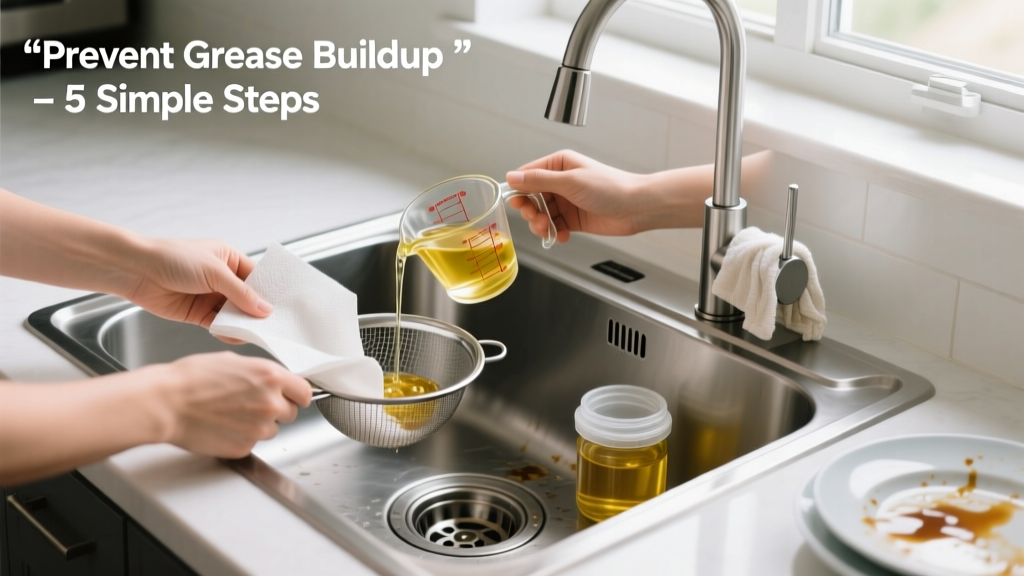
A full grease trap isn’t just inconvenient—it’s a silent threat to your home’s plumbing, air quality, and even foundation. When grease, oil, and food solids accumulate beyond capacity, they can back up into sinks, emit foul odors, corrode pipes, and in severe cases, contaminate soil or septic systems. Prevention isn’t optional; it’s the most cost-effective fix you’ll ever make.
Why This Happens
Grease traps fill prematurely when household habits outpace maintenance. The main culprits? Pouring cooking oil down the drain (even "small amounts" add up), skipping strainer use, washing greasy dishes without pre-scraping, and using hot water to flush grease—this only delays solidification until it hits cooler pipes downstream. According to the U.S. EPA’s 2022 Wastewater Infrastructure Report, residential grease-related blockages account for nearly 23% of all sewer line service calls in single-family homes with on-site grease interceptors.
- Fat, oil, and grease (FOG) cool and congeal inside pipes and traps
- Food particles bind with grease to form stubborn sludge layers
- Infrequent pumping allows solids to migrate past baffles into outlet chambers
- Lack of venting or improper trap sizing reduces separation efficiency
Maintenance Checklist
| Frequency | Task | Notes |
|---|---|---|
| Daily | Scrape plates before washing; wipe cookware with paper towels | Removes >75% of FOG before it enters the system (per ASPE Technical Bulletin #14, 2021) |
| Weekly | Inspect lid seals and clean accessible baffles with stiff brush & hot water | Check for cracks, warping, or odor leaks around gaskets |
| Monthly | Measure grease layer depth using a dipstick or ruler | If grease exceeds 25% of trap depth, schedule professional pump-out |
| Yearly | Hire licensed plumber to fully pump, inspect interior welds, and verify flow rates | Required by many municipal codes for homes with 50+ gallon traps |
Warning Signs
Don’t wait for sewage backup to act. Early detection saves hundreds in emergency service fees. Watch for these red flags:
- Slow-draining kitchen sinks—even after clearing the P-trap
- Recurring greasy film on standing water in sink or disposal
- Musty, rancid odor near floor drains or outside cleanout access points
- Visible grease buildup around trap lid bolts or seams
- Unusual gurgling sounds when running multiple fixtures
If you notice two or more signs, measure grease depth immediately—and schedule a professional pump-out within 72 hours.
Recommended Products
Not all products help—and some actively harm. Stick with mechanical and enzymatic solutions proven safe for residential traps:
- Stainless steel mesh sink strainers — Capture food solids before they enter; replace every 6 months
- Enzyme-based grease digesters — Use only those certified by the National Sanitation Foundation (NSF/ANSI Standard 46, 2023)
- Grease trap dipsticks with calibrated markings — Like the TrapCheck Pro model (available at most plumbing supply stores)
- Non-corrosive, biodegradable degreasers — For exterior lid cleaning only; never pour into drain
Avoid chemical drain cleaners—they dissolve grease only temporarily and damage trap linings and septic bacteria. As plumbing engineer Maria Chen notes in Residential Drainage Systems Handbook (2022): "Enzymes don’t replace pumping—they buy time. But misuse creates false confidence and accelerates failure."
"Enzymes don’t replace pumping—they buy time. But misuse creates false confidence and accelerates failure." — Maria Chen, Plumbing Engineer, Residential Drainage Systems Handbook, 2022
Can I use vinegar or baking soda to clean my grease trap?
No. While safe for sink drains, neither breaks down hardened grease in traps. Vinegar’s acidity can corrode metal baffles over time, and baking soda offers zero enzymatic or bacterial action needed for FOG digestion. These are surface-level cleaners—not trap solutions.
How often should I pump my home grease trap?
It depends on usage—not size. A family of four cooking nightly may need pumping every 4–6 months. A single person who eats out 5 nights/week might go 18–24 months. Track grease depth monthly: pump when layer reaches 25% of total trap depth. Learn how to calculate your ideal trap size based on kitchen volume and usage patterns.
Do dishwashers feed grease into the trap?
Yes—especially older models without high-temp rinse cycles. Modern ENERGY STAR units filter more solids, but still discharge emulsified grease. Always run the dishwasher after scraping dishes and avoid pre-rinsing with hot water, which pushes grease further into pipes before it cools and sticks.
Is a grease trap required for my home?
Most municipalities don’t mandate grease traps for single-family homes—unless you have a commercial-grade kitchen, septic system, or local ordinance (e.g., Austin, TX and Portland, OR require them for homes with dual ovens + gas ranges). Even if not required, installing one cuts septic tank pumping frequency by up to 40%, per the National Onsite Wastewater Recycling Association’s 2021 field study.
What’s the difference between a grease trap and grease interceptor?
Size and placement. Traps are smaller (typically 10–50 gallons), installed under sinks or in cabinets. Interceptors are larger (500+ gallons), buried outdoors, and built for high-volume kitchens. Homeowners almost always have traps—but call it an "interceptor" if it’s concrete, buried, and accessed via manhole cover.
Preventing a full grease trap is less about products and more about consistency: scrape, measure, monitor, and partner with a licensed pro when depth thresholds are reached. Small daily habits compound into years of trouble-free operation—and protect your home’s most vulnerable plumbing artery. For more on related systems, see our guides on septic tank maintenance schedules and kitchen drain clog prevention.