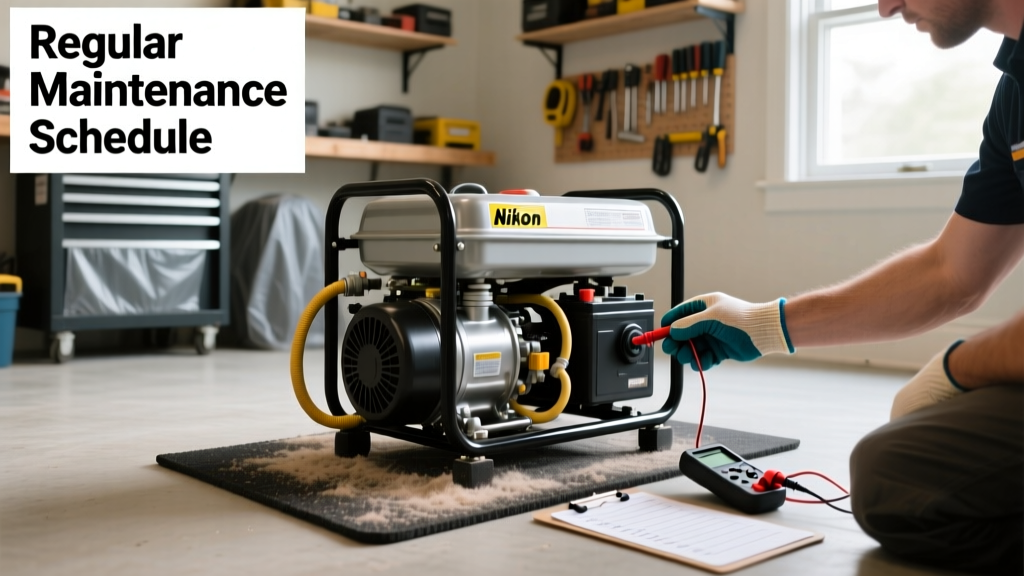
A generator that won’t start during a storm or power outage isn’t just inconvenient—it’s dangerous. Medical equipment, sump pumps, refrigeration, and heating can all fail when backup power doesn’t kick in. Most startup failures aren’t due to sudden breakdowns; they’re the result of months—or years—of overlooked maintenance.
Why This Happens
Generators sit idle for long stretches, making them vulnerable to predictable degradation. Fuel goes stale in as little as 30 days, especially with ethanol-blended gasoline. Carburetors gum up. Batteries lose charge or sulfation sets in. Oil thickens or drains down, leaving cylinders dry at startup. Belts crack. Corrosion builds on terminals and sensors. According to the National Fire Protection Association’s Standard for Emergency and Standby Power Systems (NFPA 110, 2023), 68% of documented standby generator failures were traced to fuel system issues or battery neglect—not manufacturing defects.
Maintenance Checklist
| Frequency | Task |
|---|---|
| Daily | Check for obvious leaks (oil, fuel, coolant); verify no obstructions near air intake or exhaust |
| Weekly | Test run under load for 15–20 minutes; inspect battery terminals for corrosion |
| Monthly | Check oil level and condition (dark, milky, or foamy oil needs replacement); inspect air filter for debris |
| Yearly | Replace spark plugs, fuel filter, and oil; clean carburetor or fuel injectors; load-bank test output |
Warning Signs
Don’t wait for total failure. These early indicators mean action is needed now:
- Slow cranking or repeated clicking instead of ignition
- Fuel smell without engine turnover (suggests flooded carburetor or bad spark)
- Dim or flickering control panel LEDs—even when utility power is present
- Unusual knocking, sputtering, or white/blue exhaust smoke during test runs
- Battery voltage below 12.4V (measured with multimeter after 1 hour off)
Recommended Products
Not all products are equal—and using the wrong ones can accelerate wear. Stick with manufacturer-specified fluids and parts, but these categories consistently deliver reliability:
- Fuel stabilizers: STA-BIL 360° Protection (for gasoline) or PRI-D (for diesel), added every time you refill
- Battery maintainers: NOCO Genius G750 (float-charges AGM and flooded batteries without overcharging)
- Synthetic oils: SAE 5W-30 full-synthetic rated for generator use (e.g., Briggs & Stratton Fully Synthetic)
- Pre-filtered fuel cans: Gasboy or Transfer Flow models with 10-micron filtration to reduce tank contamination
How often should I run my generator under load?
At least once per month for 20 minutes—ideally with at least 30% of its rated load. Light or no-load running causes wet stacking in diesel units and carbon buildup in gasoline engines. The U.S. Department of Energy’s Residential Backup Generator Guide (2022) states that generators run less than once monthly are 3.2× more likely to fail at first demand.
Can old fuel really prevent startup—even if the tank looks full?
Absolutely. Ethanol-blended gasoline begins oxidizing after 30 days, forming gums and varnishes that clog fuel lines, filters, and carburetor jets. Diesel degrades slower but grows microbial colonies ("diesel bug") in as little as 90 days when water is present. Always treat fuel at point of purchase—not just before use.
My generator starts fine during testing—but fails during real outages. Why?
This usually points to automatic transfer switch (ATS) or control wiring issues—not the generator itself. Loose lugs, corroded contacts, or outdated firmware can delay or block the start signal. Have a licensed electrician verify ATS operation annually, including voltage drop tests across all connections. See our guide on generator transfer switch troubleshooting for diagnostic steps.
Is it safe to use aftermarket oil or fuel additives?
Only if certified by your generator’s OEM. Briggs & Stratton, Generac, and Kohler publish strict lubricant and additive compatibility lists. Using unapproved synthetics or detergents can void warranties and damage emission systems. For example, some zinc-free oils lack the anti-wear protection required for overhead valve (OHV) engines—leading to premature camshaft wear.
What’s the #1 thing homeowners forget during winter prep?
Battery insulation. Cold reduces cranking amps dramatically: a fully charged 12V battery delivers only ~65% of its rated CCA at 20°F. Wrap batteries in an insulated thermal blanket (not foam—look for UL-listed, vented designs like those from Arctic Fox) and confirm charger output remains active below freezing. As one Generac-certified technician told us:
"I replace more frozen, cracked batteries in January than any other part—and 90% were never checked after October."
Should I hire a pro for annual maintenance—or can I DIY?
You can handle oil changes, air filter swaps, and visual inspections—but load-bank testing, fuel system cleaning, and control board diagnostics require calibrated tools and factory training. NFPA 110 mandates annual third-party certification for life-safety systems (e.g., medical or fire pump backup). Even for residential units, skipping professional service voids extended warranties on most Generac and Cummins models. Consider it insurance: generator maintenance costs average $180–$320/year, far less than a $2,500+ emergency repair.
Prevention isn’t about perfection—it’s about consistency. A 5-minute weekly check and a disciplined monthly test run eliminate most startup failures before they happen. Pair that with fuel discipline and battery care, and your generator becomes the reliable lifeline it was designed to be—not a source of stress when the grid drops.