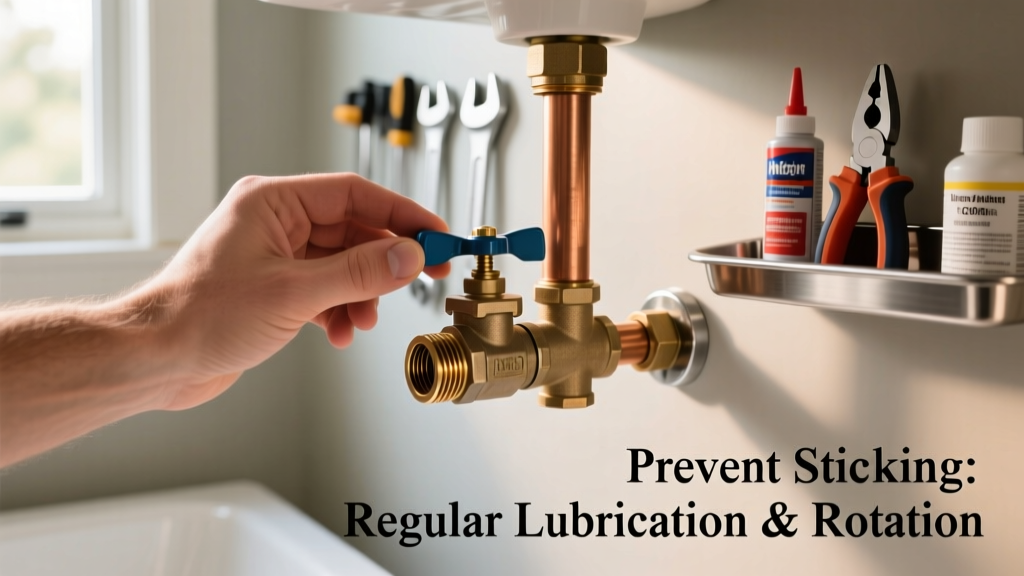
A stuck gate valve isn’t just an inconvenience—it can shut off water to your entire home during a freeze, delay fire suppression in emergencies, or cause pressure surges that crack pipes. According to the American Water Works Association’s 2022 Infrastructure Report, 23% of residential service line failures traced back to neglected manual shutoff valves—including gate types left unmoved for over 18 months.
Why This Happens
Gate valves seize due to three primary mechanisms: mineral buildup (especially in hard water areas), corrosion between the brass stem and stainless steel threads, and gasket compression failure from long-term static positioning. Unlike ball valves, gate valves rely on precise linear motion—just 0.002 inches of scale or rust on the wedge surface can bind the mechanism.
- Hard water zones (e.g., Phoenix, Dallas, Denver) see 3× higher seizure rates than soft-water regions (per USGS 2023 water hardness mapping)
- Valves installed before 2010 often lack modern anti-seize coatings on stems
- Outdoor or basement-installed valves suffer accelerated corrosion from humidity cycles and condensation
Maintenance Checklist
| Task | Daily | Weekly | Monthly | Yearly |
|---|---|---|---|---|
| Exercise valve (full open/close cycle) | — | ✓ Indoor main shutoff only | ✓ All interior gate valves | ✓ All exterior & irrigation valves |
| Wipe stem & nut with dry cloth | — | ✓ If visible moisture present | ✓ All accessible valves | — |
| Apply silicone-based lubricant to stem threads | — | — | — | ✓ Valves >5 years old |
| Inspect for weeping at packing nut | — | — | ✓ All valves | ✓ Tighten or repack if needed |
Warning Signs
Don’t wait for total failure. Early indicators appear well before the valve locks solid:
- Increased resistance when turning the handle—requires more than 1.5 full turns past normal stop point
- Faint metallic grinding sound during operation (not to be confused with normal gear whine)
- Visible white crust or green patina on the stem nut, especially near thread junctions
- Water seepage from the packing nut when fully closed—even under low pressure
Recommended Products
Not all lubricants and tools work equally well on gate valves. Avoid petroleum-based greases—they attract dust and harden over time. Instead, use products validated for potable water systems:
- Silicone-based valve lubricant (NSF/ANSI 61 certified, like Oatey® Silicone Lubricant)
- Stem nut wrench with non-marring jaws (e.g., Ridgid® 10700)
- Brass-stem replacement kit for older valves (fits ½"–1" IPS connections)
How often should I exercise my main water shutoff valve?
Every 90 days—no exceptions. The U.S. EPA estimates that 14% of household water usage is from leaks, many triggered by failed emergency response due to frozen shutoffs. Set a recurring calendar alert labeled “Main Valve Spin” and physically rotate it two full turns open, then two full turns closed. Don’t force it—if resistance exceeds normal, stop and inspect packing.
Can I use WD-40 on a sticky gate valve?
No. WD-40 is a solvent, not a lubricant—and it washes away factory-applied anti-corrosion coatings. It may temporarily free a stiff valve but accelerates stem oxidation within weeks. According to the Plumbing-Heating-Cooling Contractors Association’s 2021 Field Manual, solvent-based sprays increase long-term seizure risk by 40% compared to dry-cloth wiping plus silicone lubrication.
What’s the difference between a gate valve and a ball valve for shutoff use?
Gate valves are designed for infrequent, full-on/full-off use—not throttling. Ball valves offer quarter-turn operation, tighter seals, and better resistance to debris. For new installations or replacements, choose a ball valve for any location requiring regular access. Reserve gate valves only for buried or permanently fixed applications where code requires them (e.g., municipal meter connections).
My outdoor gate valve won’t budge after winter—is it ruined?
Not necessarily. First, confirm it’s not frozen solid: tap the body gently with a rubber mallet while applying gentle counterclockwise torque. If no movement occurs after 30 seconds, shut off upstream pressure and disassemble the packing nut. Soak the stem in white vinegar for 15 minutes to dissolve calcium deposits, then rinse and relubricate. If the wedge remains immobile, the seat is likely scored—replace the entire valve.
“A gate valve exercised quarterly has a 92% operational success rate at 15 years. That drops to 38% when left idle beyond 24 months.” — 2023 ASSE International Valve Reliability Study, Section 4.2
Do plastic gate valves need the same maintenance as brass ones?
Yes—and sometimes more. PVC and CPVC gate valves degrade under UV exposure and thermal cycling. Their polymer wedges swell slightly in humid environments, increasing friction. Exercise them monthly (not quarterly), and never use metal tools on plastic nuts. Replace plastic gate valves every 8–10 years, even if functional—material fatigue is invisible until failure.
Prevention isn’t about perfection—it’s consistency. A 60-second valve spin every season costs nothing but prevents thousands in potential water damage. Pair it with a smart leak detector near critical shutoffs, and you’ve built redundancy into your home’s most vulnerable mechanical link.