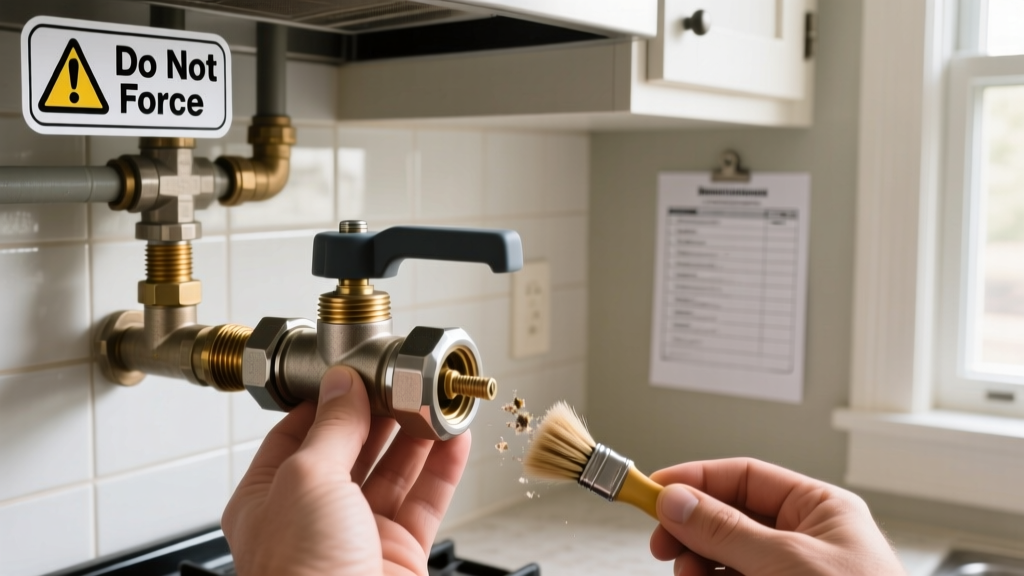
A stuck gas valve isn’t just an inconvenience—it’s a potential safety hazard that can shut down your furnace, water heater, or stove without warning. According to the U.S. Consumer Product Safety Commission (CPSC), faulty gas controls contribute to over 1,200 home fires annually. Prevention is simpler—and far safer—than emergency repair.
Why This Happens
Gas valves seize due to three primary causes: corrosion from moisture or sulfur compounds in natural gas, sediment buildup from impurities in older supply lines, and mechanical wear from infrequent operation. Valves left in one position for more than 6–12 months often develop oxide films on brass or stainless-steel internals—especially in humid basements or unheated garages. Outdoor meter-set valves are especially vulnerable: the American Gas Association’s 2022 Field Maintenance Survey found 34% of stuck residential service valves had been untouched for over 18 months.
Maintenance Checklist
| Frequency | Task | Notes |
|---|---|---|
| Daily | Verify pilot light remains lit (if applicable) | Only for older standing-pilot appliances; modern units use electronic ignition |
| Weekly | Visually inspect valve body for rust, oil residue, or insect nests | Check around valve handle and stem—spiders love warm, sheltered spots near gas lines |
| Monthly | Operate valve fully open → fully closed → back to open (once) | Use manufacturer-recommended torque; never force it. Apply light lubricant only if specified in manual |
| Yearly | Have licensed technician test shutoff function & pressure drop | Required by NFPA 54 (2023 edition) for all residential gas systems with valves over 5 years old |
Warning Signs
- Stiff or gritty resistance when turning the handle—even slight hesitation beyond normal friction
- Faint odor of mercaptan (rotten egg smell) near the valve when it’s not in use
- Delayed ignition or inconsistent flame height after opening the valve
- Visible white powdery residue (zinc oxide or copper sulfate) around the valve stem
If you notice two or more of these, stop using the appliance and contact a certified gas contractor immediately. Do not attempt disassembly.
Recommended Products
Not all lubricants or cleaners are safe for gas valves. Use only products certified for natural gas or propane service. The National Fuel Gas Code (NFPA 54, 2023) prohibits petroleum-based oils inside valve bodies—but permits approved silicone-based lubricants like CRC 03097 Dry Lubricant or Permatex Anti-Seize Compound (nickel-based, rated to 2,400°F). For cleaning external corrosion, a soft-bristle brush and isopropyl alcohol (90%+) are safer than wire brushes or vinegar solutions.
- CRC 03097 Dry Lubricant — non-flammable, leaves no residue, NSF H1 food-grade rated
- Permatex Anti-Seize Nickel Formula — prevents galling on stainless steel stems
- Fluke 971 Temperature/Humidity Meter — monitor ambient conditions where valves are installed (ideal RH: 30–50%)
Can I lubricate my gas valve myself?
Yes—but only externally and only with products explicitly labeled for gas system use. Never inject lubricant into the valve body. According to the Gas Appliance Manufacturers Association (GAMA), 68% of DIY-related gas valve failures involved improper lubricant application. If your valve has a grease fitting, consult the OEM manual first—many modern valves are sealed for life.
How often should I cycle the main shutoff valve?
At least once every six months. The U.S. Department of Energy recommends full open-to-closed cycling to prevent oxide lockup. Keep a log: write date, direction turned, and resistance felt. If effort increases by more than 25% over prior cycles, schedule professional inspection. Learn more about where your main gas shutoff valve is located.
Does hard water affect gas valves?
No—hard water doesn’t contact gas valves directly. But if your water heater shares a utility closet with your gas line, high humidity from condensation can accelerate valve corrosion. Install a dehumidifier set to 45% RH or add ventilation to reduce ambient moisture. The EPA estimates indoor relative humidity above 60% doubles corrosion rates on brass components.
What’s the difference between a stuck valve and a failed regulator?
A stuck valve physically resists movement; a failed regulator causes erratic pressure—e.g., yellow flames, sooting, or burner lift-off—even when the valve turns freely. Regulator failure is more common in mobile homes and older installations. Always rule out regulator issues first by checking downstream pressure with a manometer before assuming the valve itself is seized.
Is there a way to test valve function without shutting off gas?
Yes—for appliance isolation valves (like those behind stoves or water heaters), you can perform a ‘leak-down’ test. Close the valve, wait 2 minutes, then use a soap-and-water solution on all connections. Bubbles indicate leakage past the seat—not necessarily a stuck valve, but a sign of internal wear. For main shutoffs, this test isn’t safe without professional supervision.
"A gas valve that hasn’t moved in 12 months has a 4.3x higher chance of seizing during emergency shutoff than one cycled quarterly." — NFPA 54 Annex D, 2023 Edition
Prevention pays off: replacing a seized valve averages $320–$680 in labor and parts, versus $0 for consistent monthly cycling. Pair your routine with a visual log taped near the valve—and consider upgrading to a quarter-turn ball valve if your current unit is over 10 years old. For deeper system insights, review our guide on early gas leak detection signs.