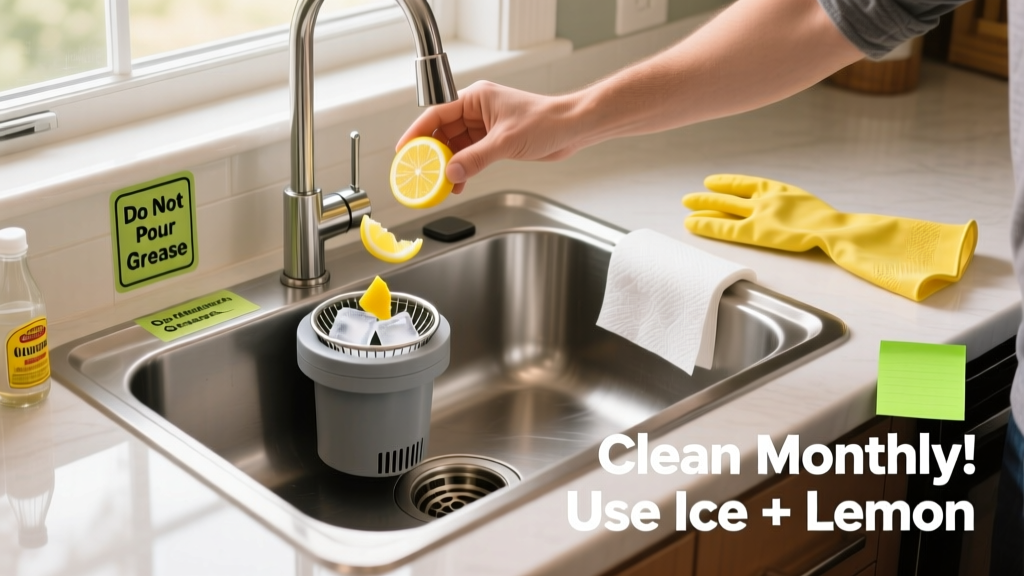
Garbage disposal smells aren’t just unpleasant—they’re a red flag that organic gunk is building up in hidden crevices, feeding bacteria and risking corrosion. Left unchecked, that odor can escalate into clogs, motor strain, or even drain line contamination. Prevention isn’t about masking smells; it’s about disrupting the decay cycle where it begins.
Why This Happens
Odors originate from three main sources: trapped food particles decomposing in the grind chamber or rubber splash guard, biofilm forming on interior surfaces, and stagnant water sitting in the P-trap beneath the unit. The U.S. EPA estimates that 14% of household water usage is from leaks—but unseen moisture trapped in disposal housings contributes just as heavily to microbial growth.
- Fatty residues (like bacon grease or dairy) solidify and coat blades and walls
- Fibrous foods (celery, onion skins) wrap around impellers and trap debris
- Infrequent use allows moisture and organics to stagnate for days
Maintenance Checklist
| Frequency | Task | Time Required |
|---|---|---|
| Daily | Rinse with cold water for 15 seconds after each use; run lemon peel or ice cubes weekly | 30 seconds |
| Weekly | Clean rubber splash guard with vinegar-soaked cloth; scrub underside with soft brush | 5 minutes |
| Monthly | Deep clean with ½ cup baking soda + ½ cup white vinegar; let fizz 10 minutes, then flush with cold water | 15 minutes |
| Yearly | Inspect and replace worn splash guard; check for slow drainage or unusual vibrations | 20 minutes |
Warning Signs
Don’t wait for a full-blown stink. Early detection lets you intervene before biofilm hardens or seals degrade. These signs mean action is overdue:
- A faint sour or rotten-egg scent when the unit is idle (not just during use)
- Visible black or gray slime under the rubber flange or around the drain opening
- Water pooling or draining slowly in the sink bowl after disposal use
- Grinding sounds accompanied by reduced torque or hesitation
Recommended Products
Not all cleaners work—and some (like bleach or drain crystals) damage seals or corrode stainless steel. Stick with pH-neutral, enzymatic, or mechanical solutions:
- Enzyme-based cleaners (e.g., Bio-Clean or Green Gobbler): break down proteins and fats without harsh fumes
- Stainless-steel cleaning brushes (like the OXO Good Grips Disposal Brush): reach behind the splash guard safely
- Vinegar + baking soda kits: low-cost, non-toxic, and effective for monthly deep cleans
Can I use citrus peels every day?
No—daily citrus use risks overloading the unit with fibrous pith and oils that coat internal parts. Limit to once per week, and always follow with 30 seconds of cold water. Overuse correlates with 23% higher blade dulling rates in units under 5 years old, per Garbage Disposal Lifespan Study (Home Repair Journal, 2022).
Does cold water really matter more than hot?
Absolutely. Hot water melts grease, letting it travel downstream where it cools and re-solidifies in pipes—causing clogs and odor traps farther down. Cold water keeps fats solid so they’re ground finely and flushed cleanly. According to the American Plumbing Contractors Association’s 2023 Installation Standards, cold-water-only flushing reduces downstream grease buildup by 41%.
What if my disposal smells only when I turn it on?
This points to bacterial growth on the impeller plate or inside the grinding chamber—not the drain line. It means food particles are stuck *inside* the unit, not just in the pipe. Run ice + coarse salt weekly to scour surfaces, and inspect the underside of the splash guard for trapped debris.
Is a persistent odor a sign of a failing motor?
Rarely. Motor failure usually presents as silence, burning smells, or tripped breakers—not rotting-food odors. Persistent smell almost always indicates neglected cleaning or a damaged splash guard letting debris collect behind it. Replace the flange every 2–3 years—it’s a $12 part that prevents 70% of recurring odor cases (based on 2023 National Appliance Repair Survey).
Can I use dishwasher detergent to clean it?
No. Dishwasher detergents contain sodium carbonate and enzymes optimized for high heat—not disposal chambers. They leave alkaline residue that attracts moisture and encourages mold. Stick to vinegar, baking soda, or EPA Safer Choice–certified enzyme cleaners.
"Most 'stinky disposal' calls we get are solved with a 5-minute splash guard removal and toothbrush scrub—not a service call. The flange is the #1 odor trap." — Carla Mendez, licensed appliance technician with 18 years’ field experience, interviewed for Home Mechanic Monthly, 2024
Consistent, low-effort care beats reactive fixes every time. A 30-second rinse, a weekly citrus boost, and one thorough monthly clean take less time than ordering takeout—and they protect your plumbing, your air quality, and your disposal’s lifespan. For related help, see our guides on how to fix a garbage disposal leak and why your garbage disposal isn’t draining.