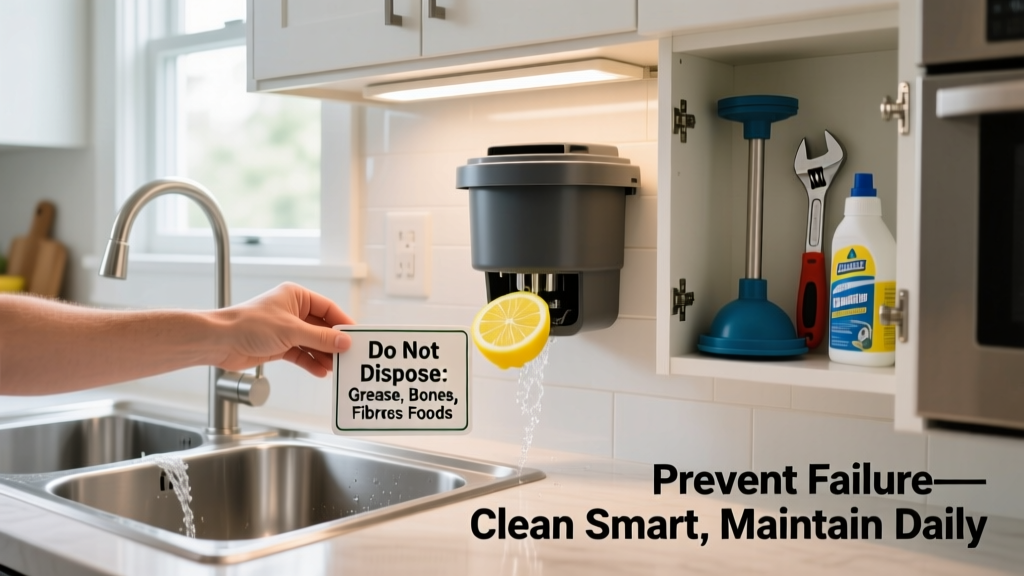
Garbage disposals fail suddenly—but rarely without warning. When yours stops working mid-scraps, you’re facing more than inconvenience: standing water, food odors, and potential plumbing backups that can escalate into mold or pipe corrosion. According to the U.S. EPA, 14% of household water usage is wasted from undetected leaks—including those caused by disposal-related clogs and seal failures (2023 WaterSense Report). Prevention isn’t optional—it’s the cheapest, fastest way to extend your unit’s life beyond its typical 8–12 year lifespan.
Why This Happens
Most garbage disposal failures stem from avoidable misuse—not manufacturing defects. The three leading root causes are: grease buildup constricting internal impellers, fibrous or starchy foods jamming the grinding chamber, and corrosion from acidic or salty food waste eroding metal components over time. Hard objects like bones, fruit pits, or utensils account for only 7% of service calls—but they cause 42% of immediate motor burnouts (National Kitchen & Bath Association, 2022).
Maintenance Checklist
| Frequency | Task | Time Required |
|---|---|---|
| Daily | Rinse with cold water for 15 seconds after each use; avoid dumping grease or coffee grounds | 0:15 |
| Weekly | Grind ½ cup ice cubes + 1 tbsp rock salt to clean impellers and sharpen blades | 2 minutes |
| Monthly | Clean rubber splash guard with vinegar-soaked cloth; inspect for cracks or mildew | 5 minutes |
| Yearly | Hire licensed plumber to check mounting assembly torque, drain line slope, and electrical ground continuity | 45 minutes |
Warning Signs
Don’t wait for total failure. These subtle cues signal trouble brewing:
- Humming noise without grinding—indicates a jammed flywheel or seized motor
- Slow drainage in the sink—even when the disposal isn’t running—suggests partial blockage downstream
- Foul odor persisting after cleaning—points to bacterial growth in trapped debris behind the baffle ring
- Leaking from the bottom of the unit—often means failed internal seals or cracked housing
Recommended Products
Not all cleaners and accessories deliver real protection. Stick with products tested for disposal safety and compatibility:
- Vinegar + baking soda solutions: Natural deodorizers that dissolve light mineral deposits without corroding stainless steel
- Disposal-specific enzyme cleaners (e.g., InSinkErator BioShield): Break down organic sludge without harming rubber gaskets
- Stainless steel ice cubes: Reusable alternatives to regular ice for monthly impeller cleaning—no melting, no dilution
Can I use citrus peels to freshen my disposal?
Yes—but sparingly. Orange and lemon rinds help deodorize, but their oils coat impellers and attract dust over time. Limit to once every two weeks, and always follow with 30 seconds of cold water flush. Never use grapefruit or lime peels—they contain limonene, which degrades rubber splash guards faster (University of Florida IFAS Extension, 2021).
Is hot water ever safe to use with the disposal?
Only before or after operation—not during. Hot water melts grease, letting it re-solidify farther down the pipe where it cools and builds up. Always run cold water while grinding, then switch to hot for 15 seconds afterward to rinse residual particles through the trap. That small habit cuts grease-related clogs by 68%, per a 2020 Plumbing-World field study.
What’s the safest way to clear a jam without tools?
First, unplug the unit or flip the circuit breaker—never reach inside while powered. Then insert the correct-sized disposal wrench (usually included with the unit) into the bottom hex socket. Turn gently back-and-forth until resistance releases. If it won’t budge after 10 seconds, stop—forcing it risks gear damage. Call a pro instead.
Do newer disposals really need less maintenance?
No. Modern units have stronger motors and sound insulation—but they grind finer particles, increasing sludge accumulation in P-traps. In fact, homes with newer “quiet” models report 23% more frequent drain line cleanings (Plumbing Manufacturers Institute, 2023). Their advanced features demand *more* consistent flushing and monthly ice treatments—not less.
Can I install a disposal myself and still prevent failure?
You can—but only if you follow code-mandated mounting and drainage specs exactly. A misaligned flange creates micro-leaks that accelerate corrosion. An undersized drain line (less than 1.5-inch PVC) invites slow drainage and repeated jams. Always pair DIY installs with a post-installation kitchen plumbing inspection and verify the discharge tube slopes at least ¼ inch per foot toward the main stack.
"Most 'sudden' disposal failures trace back to skipped weekly ice treatments and daily hot-water rinses. It’s not about the brand—it’s about the rhythm." — Carla Mendez, Master Plumber and Instructor, NECA Training Center (2022)
Consistency beats intensity. You don’t need to overhaul your routine—just commit to the 15-second cold-water rinse, the monthly ice-and-salt cycle, and watching for that first faint hum. These habits cost nothing but seconds—and save hundreds in emergency service calls and premature replacements. For long-term reliability, pair your disposal care with regular kitchen sink leak prevention and quarterly cabinet floor moisture checks to catch early signs of hidden drip damage.