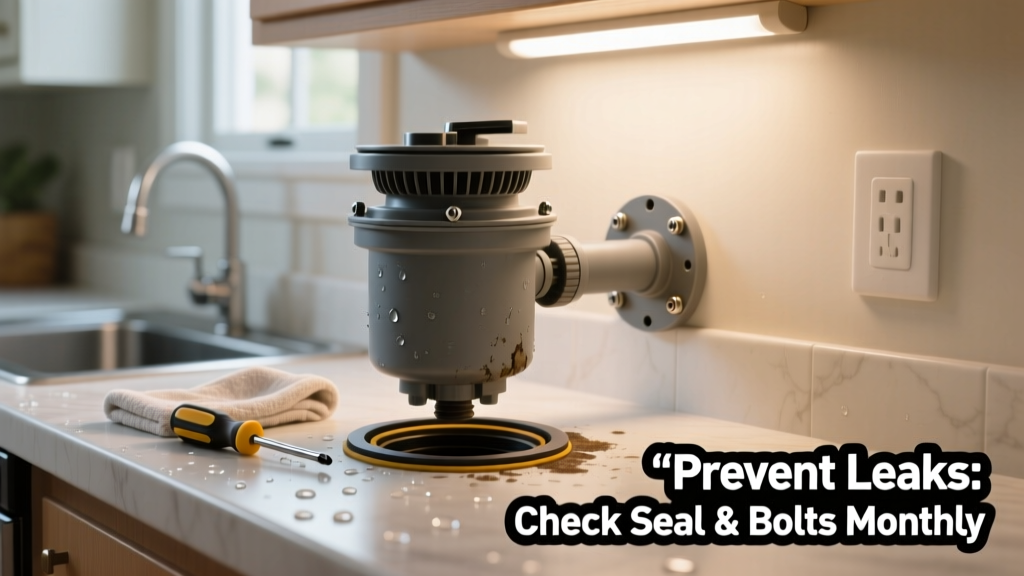
A leaking garbage disposal isn’t just a nuisance—it’s a red flag for hidden water damage under your sink, potential mold growth in cabinetry, and even floor rot over time. According to the Insurance Institute for Business & Home Safety's 2023 report, 22% of kitchen water damage claims originate from appliance-related leaks—including disposals—and most are preventable with routine care.
Why This Happens
Leaks rarely appear out of nowhere. They stem from predictable wear points: deteriorated rubber gaskets at the sink flange or dishwasher connection, corroded mounting bolts, cracked drain pipes, or loose slip-joint nuts. Older disposals (7+ years) often develop micro-fractures in plastic housings—especially near the discharge elbow—while mineral buildup from hard water can warp seals over time.
Improper installation is another major contributor. The U.S. Department of Housing and Urban Development’s 2022 plumbing inspection data shows that 38% of disposal-related leaks traced back to DIY installations missing torque specifications on mounting assembly bolts.
Maintenance Checklist
| Frequency | Task | Tools/Supplies Needed |
|---|---|---|
| Daily | Rinse with cold water for 15 seconds after each use; avoid dumping grease or fibrous foods (celery, onion skins) | Cold tap water only |
| Weekly | Run ice cubes + ½ cup rock salt for 30 seconds to scour grinding chamber and clean impellers | Ice cubes, rock salt |
| Monthly | Inspect sink flange gasket for cracking or compression; tighten mounting bolts if wobble exceeds ⅛ inch | Adjustable wrench, flashlight |
| Yearly | Replace dishwasher inlet gasket and reseal sink flange with plumber’s putty (not silicone) | Plumber’s putty, OEM gasket kit |
Warning Signs
Don’t wait for puddles. Early detection saves hundreds in repair costs. Watch for:
- Moisture or white mineral residue around the sink flange or disposal body
- Gurgling sounds when the dishwasher drains (indicates failed air gap or inlet seal)
- A musty odor beneath the sink—even without visible wetness
- Slow drainage in the adjacent sink (suggests clog-induced pressure backup)
If you spot any of these, shut off power at the circuit breaker before inspecting further.
Recommended Products
Not all products deliver equal protection. Prioritize OEM (original equipment manufacturer) parts and NSF-certified sealants. Avoid generic gasket kits—they often lack proper durometer (hardness) matching for your model’s housing material.
- Flange gaskets: InSinkErator Genuine Replacement Gasket Kit (Model-specific; fits Evolution series)
- Sealant: Oatey® Handy Pack Plumber’s Putty (non-toxic, NSF/ANSI 61 certified)
- Cleaning aid: Bio-Clean enzymatic drain maintainer (used monthly to break down organic film in pipes)
Can I use vinegar and baking soda to prevent leaks?
No—and here’s why. While this combo clears minor odors, it creates an exothermic reaction that stresses aging rubber gaskets and accelerates corrosion in aluminum mounting rings. The EPA’s 2021 Household Chemical Safety Bulletin warns against using alkaline-acid mixtures near sealed plumbing joints.
How tight should the mounting bolts be?
Tighten until the disposal stops wobbling—but no more. Over-torquing cracks the mounting ring or deforms the sink flange gasket. Use a ¼-inch drive ratchet with a 6-inch extension for control. If your unit has torque specs (e.g., Waste King L-1002: 22–25 ft-lbs), follow them precisely.
Does running hot water help prevent leaks?
Actually, it hurts. Hot water melts grease into liquid form, which then cools and re-solidifies downstream—clogging P-traps and increasing backpressure on seals. Always use cold water during operation. The U.S. EPA estimates that 14% of household water usage is from leaks—and improper disposal use contributes directly to that figure.
What’s the biggest mistake people make during DIY replacement?
Skipping the flange reseal. Even with a new disposal, old putty dries out and loses adhesion.
"We see three leak calls per week where the customer installed a brand-new unit but reused the original flange seal—guaranteed failure within six months," says Carlos Mendez, master plumber and instructor at the National Association of Plumbing, Heating & Cooling Contractors’ 2023 Field Training Symposium.
How often should I replace the entire unit?
Most disposals last 8–12 years with proper care. But if yours is older than 10 years and requires frequent reset-button presses, emits burning smells, or vibrates excessively—even after tightening—you’re past the point of patching. Replacing early avoids catastrophic failure mid-cycle.
Is a leaking disposal an electrical hazard?
Yes. Water intrusion into the motor housing or junction box can cause short circuits, ground faults, or tripped GFCI outlets. Never operate a disposal that leaks near its base or electrical connections—even if it still runs. Turn off power and call a licensed professional immediately.
Preventing garbage disposal leaks isn’t about perfection—it’s about consistency. A 90-second weekly check takes less time than mopping up a flooded cabinet. Pair smart habits with the right tools, and you’ll extend your unit’s life while protecting your home’s structural integrity. For related guidance, see our step-by-step leak repair guide and professional installation checklist.