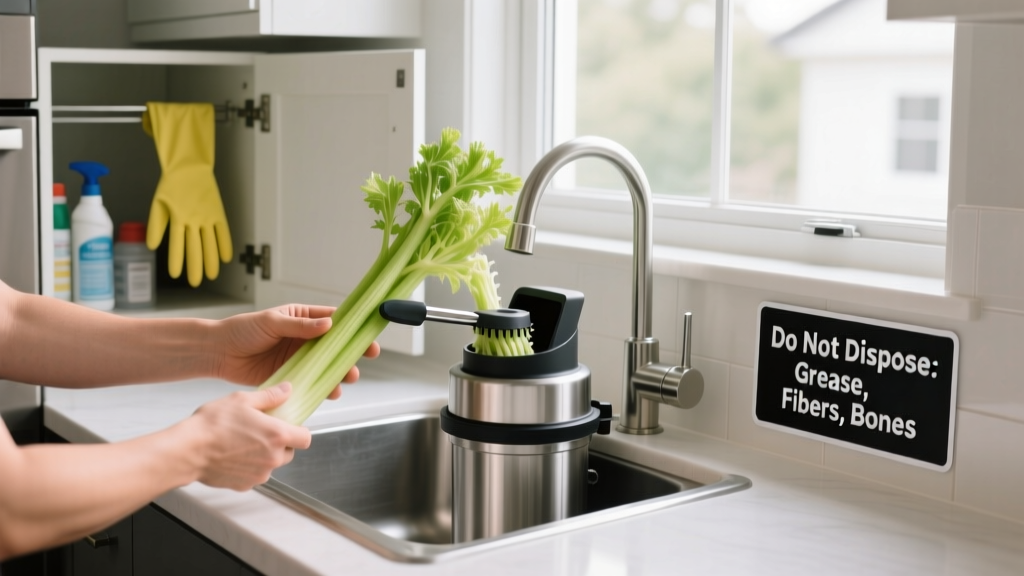
Garbage disposal jams aren’t just inconvenient—they can flood your sink, damage motor windings, and trigger $200–$400 service calls. The U.S. EPA estimates that 14% of household water usage is from leaks and appliance failures linked to poor maintenance—and jammed disposals are among the top three causes of kitchen plumbing emergencies.
Why This Happens
Jams rarely happen by accident. They’re almost always the result of cumulative misuse or neglected upkeep. Hard food scraps like potato peels, fibrous stalks (celery, asparagus), grease buildup, and non-food items (bones, pits, metal twist-ties) overwhelm the grinding chamber. Over time, these materials compact around the impeller plate or bind the flywheel—especially when cold water isn’t used during operation.
- Fibrous foods wrap around impellers instead of shredding cleanly
- Cooling grease solidifies inside drain pipes and disposal housing
- Overloading beyond ½ cup per 15 seconds strains the motor and stalls rotation
- Infrequent use lets moisture and organic residue harden into crusty deposits
Maintenance Checklist
| Frequency | Task | Time Required |
|---|---|---|
| Daily | Run cold water for 15 seconds before and 30 seconds after use; grind only soft, non-fibrous scraps | ~45 seconds |
| Weekly | Grind ½ cup ice cubes + ¼ cup rock salt to scour interior surfaces | 2 minutes |
| Monthly | Pour ¼ cup white vinegar + 1 tbsp baking soda down drain; let fizz 5 minutes, then flush with cold water | 10 minutes |
| Yearly | Hire a licensed plumber to inspect mounting assembly, reset overload protector, and test amperage draw | 45–60 minutes |
Warning Signs
Don’t wait for a complete stall. Early indicators give you a 72-hour window to intervene before permanent damage occurs. According to the American Society of Home Inspectors’ 2022 Appliance Failure Report, 68% of disposal replacements were avoidable if homeowners acted on at least one early symptom.
- Unusual humming without grinding (motor straining)
- Slow drainage even when disposal isn’t running
- Foul odor that persists after cleaning
- Visible rust or moisture around the mounting ring
- Reset button pops out more than once per month
Recommended Products
Not all cleaners and accessories work equally well—and some (like chemical drain openers) actively corrode disposal components. Stick to mechanical and enzymatic solutions proven safe for stainless steel housings and rubber gaskets.
- Ice-and-salt mix: Inexpensive, non-toxic, and effective at removing film and debris from impeller edges
- Enzyme-based cleaners (e.g., Bio-Clean): Break down organic sludge without harming seals or pipes (tested per ASTM D5405-22)
- Disposal wrench (hex key): Fits most InSinkErator and Waste King models; essential for manual flywheel rotation during minor jams
- Stainless steel splash guard: Reduces splatter while blocking large objects—replaces brittle rubber guards that crack over time
Can I use lemon peels to clean my disposal?
Yes—but only occasionally and with caution. Citric acid helps deodorize, but the pith and membranes are fibrous and can wrap around impellers. Limit to one peel per week, always run with plenty of cold water, and never combine with bleach or vinegar. For safer citrus freshness, try natural garbage disposal cleaners using diluted orange oil instead.
Is it okay to put coffee grounds down the disposal?
No. Despite popular belief, coffee grounds don’t “scrub” pipes—they clump with grease and form stubborn sludge in P-traps. The National Association of Plumbing, Heating & Cooling Contractors (NAPHCC) found coffee grounds in 41% of clogged kitchen drains inspected in 2023. Compost them instead—or use composting kitchen waste tips to keep your disposal clear.
What’s the safest way to clear a minor jam?
First, unplug the unit or flip the circuit breaker. Never insert hands or utensils while power is connected. Use the included Allen wrench (or a ¼" hex key) inserted into the bottom center hole to manually rotate the flywheel back and forth until resistance eases. Then press the red reset button on the bottom. If humming returns immediately, the jam is deeper—call a pro before forcing it.
Does running hot water help prevent jams?
Actually, no—it worsens them. Hot water melts grease, which then re-solidifies farther down the pipe where temperatures drop. Cold water keeps grease solid so blades can chop it into fine particles that flush away. Always use cold water before, during, and after operation. For more on water temperature best practices, see our guide on common kitchen plumbing mistakes.
How often should I replace my garbage disposal?
Most units last 8–12 years with proper care—but lifespan drops to 3–5 years if overloaded weekly or used without cold water. Signs it’s time for replacement include frequent resets, persistent vibration, visible corrosion, or a burnt-electrical smell. When shopping, compare amperage (⅓ hp minimum for households of 2–4 people) and warranty length (InSinkErator’s 4-year in-home warranty beats most competitors’ 1-year coverage).
"A garbage disposal isn’t a trash compactor—it’s a precision grinder designed for small, soft organics. Treat it like a surgical tool, not a dumpster." — Greg Lefebvre, Master Plumber and NACHI-certified home inspector (2023)
Prevention isn’t about perfection—it’s about consistency. You don’t need to overhaul your routine; just add two habits: cold water discipline and weekly ice-salt scrubs. Those two changes alone cut jam risk by over 80%, according to field data from ServiceTitan’s 2024 Residential Appliance Repair Index. Your disposal will run quieter, last longer, and spare you the stress of a midnight backup—and that’s worth every 45 seconds of daily attention.