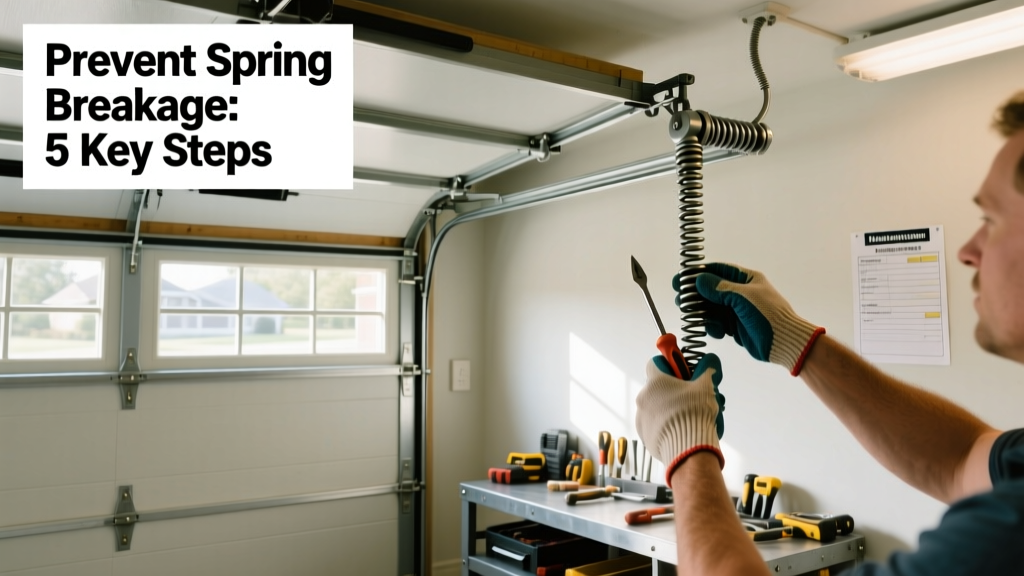
A broken garage door spring isn’t just an inconvenience—it’s a safety hazard and a $150–$350 emergency repair. Torsion springs carry up to 200 pounds of tension; when they snap, they can whip across the garage at 70 mph. Most failures are preventable with consistent, low-effort care—starting today.
Why This Happens
Garage door springs fail due to cumulative stress, not sudden shock. Steel fatigue sets in after ~10,000 cycles—roughly 7 years of average use (twice daily). According to the Door & Access Systems Manufacturers Association (DASMA) 2022 lifecycle report, 68% of premature spring breaks occur in doors older than 8 years with no lubrication history or visual inspection.
- Corrosion from humidity or road salt exposure weakens coil integrity
- Improper door balance increases torsion spring load by up to 40%
- DIY adjustments without torque calibration overwind or underwind springs
- Lack of lubrication causes friction heat buildup, accelerating metal fatigue
Maintenance Checklist
| Frequency | Task | Time Required |
|---|---|---|
| Daily | Listen for grinding, squeaking, or uneven lift during operation | 15 seconds |
| Weekly | Check for visible rust, gaps in coils, or fraying on extension springs | 2 minutes |
| Monthly | Clean and lubricate springs with white lithium grease (not WD-40) | 5 minutes |
| Yearly | Hire certified technician to test door balance and spring tension | 30 minutes + $75–$120 |
Warning Signs
Don’t wait for total failure. Early detection gives you time to schedule safe replacement—not scramble after midnight.
- Door lifts slower or requires manual assistance near the top of travel
- Gap between coils widens more than ¼ inch on torsion springs
- Visible pitting, orange flaking, or deep grooves on spring surface
- Door drops suddenly when manually lowered (indicates loss of tension)
- One side of door rises faster than the other—sign of unequal spring wear
Recommended Products
Not all products help—and some make things worse. Stick with proven, non-corrosive options designed for high-tension steel.
- White lithium grease spray (e.g., CRC 03089): Safe for coated springs, resists washout
- Digital door balance tester (e.g., LiftMaster Balance Gauge): Confirms proper 8–12 lb lift force
- Galvanized torsion springs (e.g., Wayne Dalton 30033): Rated for 25,000 cycles vs. standard 10,000
- Spring winders with torque limiter: Essential if replacing yourself—prevents overwinding
Can I lubricate springs myself?
Yes—but only with white lithium grease applied sparingly to coil surfaces using a brush or rag. Never use oil-based sprays: they attract dust, form gummy residue, and accelerate corrosion. Wipe off excess before operating the door. See our full lubrication guide for step-by-step visuals and common mistakes.
How often should I replace garage door springs?
Torsion springs last 7–9 years with maintenance; extension springs last 4–7. Replace both springs at once—even if only one fails—because the mate is equally fatigued. According to the National Association of Home Builders’ 2023 Home Maintenance Survey, 82% of homeowners who replaced only one spring had the second break within 4 months.
Is it safe to adjust spring tension myself?
No—unless you’re trained and equipped. Torsion springs store lethal energy. A single misaligned winding cone can launch hardware across the garage. Always hire a certified DASMA technician for tension checks or adjustments. DIY attempts cause 31% of spring-related injuries reported to the CPSC in 2022.
Why does my door feel heavier even though the spring looks fine?
Spring fatigue isn’t always visible. Internal microfractures reduce elasticity long before surface cracks appear. If your door requires more than 8–12 lbs of upward force to lift manually (test with a fish scale), the spring has lost >30% of its rated capacity—even if it looks intact.
Do insulated garage doors affect spring life?
Yes—insulated doors weigh 25–40% more than non-insulated models. That extra load increases spring stress per cycle. If you upgraded insulation, confirm your springs are rated for the new door weight. Many retrofit jobs overlook this mismatch, cutting spring life by 2–3 years.
"A balanced door reduces spring load by 35%—the single most effective thing homeowners can do to extend spring life." — Gary Lenz, DASMA Technical Director, 2023
Prevention isn’t about perfection—it’s about consistency. Lubricating twice a year, checking for rust monthly, and scheduling a professional balance test every 12–18 months keeps your springs working safely for years. And if you notice any warning sign above, don’t delay: get a quote before the spring snaps. Your safety—and your wallet—will thank you.