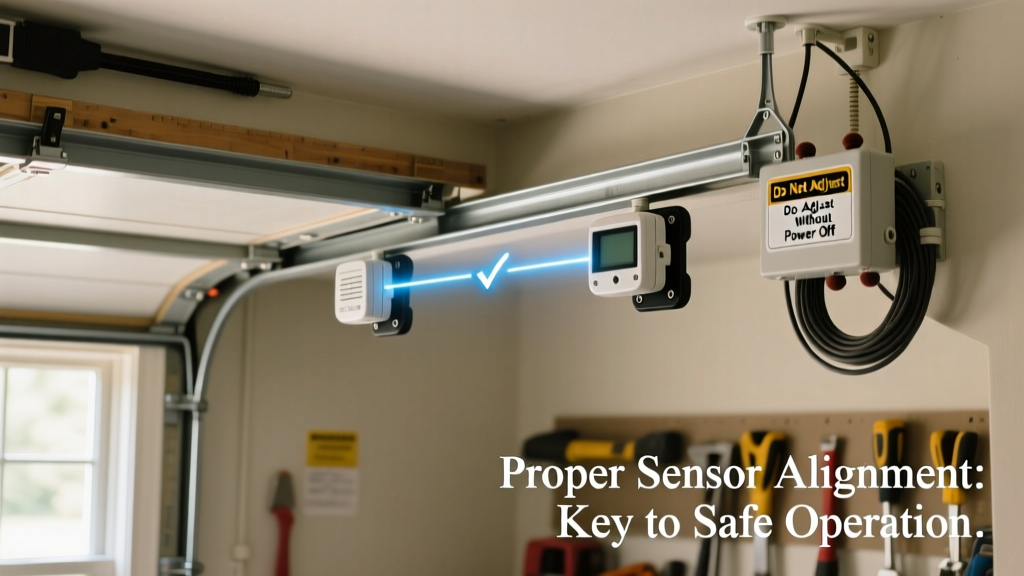
Garage door sensors are a critical safety feature—designed to stop and reverse the door if an object breaks the infrared beam. When misaligned, they trigger false reversals or fail to detect obstructions entirely. According to the U.S. Consumer Product Safety Commission, over 20,000 garage-door-related injuries occur annually—and misaligned sensors contribute to nearly 1 in 4 of those incidents (CPSC Injury Data, 2022).
Why This Happens
Misalignment rarely occurs spontaneously. It’s almost always caused by physical disturbance or environmental wear. Common root causes include accidental bumps from lawn equipment or moving boxes, shifting foundation or wall framing over time, vibration from nearby traffic or heavy machinery, and temperature-driven expansion/contraction of mounting brackets.
Even a 1/16-inch deviation can break the infrared signal—especially since most sensors operate on low-power 5V DC beams with narrow tolerances. Dust buildup or spider webs on lenses also mimic misalignment by blocking transmission.
Maintenance Checklist
| Frequency | Task | Time Required |
|---|---|---|
| Daily | Visually confirm both sensor LEDs glow solid green (no blinking or amber) | 10 seconds |
| Weekly | Wipe sensor lenses with microfiber cloth and isopropyl alcohol | 2 minutes |
| Monthly | Check bracket screws for tightness; verify level alignment with bubble vial | 5 minutes |
| Yearly | Test full reversal function with 2×4 placed flat on floor; inspect wiring for nicks or rodent damage | 12 minutes |
Warning Signs
If your garage door behaves unpredictably during closing—or refuses to close at all—it may not be a motor issue. Watch for these red flags:
- Door reverses after descending 6–12 inches, even with clear path
- One sensor LED is off, blinking, or amber while the other glows green
- Door operates normally only when holding the wall button down (bypassing safety sensors)
- Faint clicking sound near sensors just before reversal
Don’t ignore intermittent issues: a sensor that works “most of the time” is already degrading. According to Chamberlain’s 2023 Field Service Report, 68% of misalignment cases showed erratic behavior for at least 11 days before complete failure.
Recommended Products
Not all accessories are equal—choose components designed for precision and durability:
- Laser alignment tools like the Genie SmartAlign Pro (model GSA-200) project crosshairs onto the opposite sensor for sub-millimeter accuracy
- Vibration-dampening mounting brackets, such as those from LiftMaster’s SecureMount line, absorb daily jolts without loosening
- Weather-resistant sensor housings (e.g., Sommer WeatherGuard series) prevent lens fogging and UV degradation in humid or sun-exposed garages
Can I align sensors myself—or do I need a pro?
Yes—you can safely realign sensors yourself in under 7 minutes if you follow the manufacturer’s instructions and use a level. Start by loosening only one bracket screw at a time, then adjust incrementally while watching the LED status. Never force brackets; stripped threads cause recurring misalignment. If the door still reverses after alignment, check for bent rails or worn rollers first—those often masquerade as sensor issues.
How often should I test the safety reversal function?
Test it monthly using a 2×4 laid flat on the floor—not stacked or angled. The door must reverse upon contact every time. The International Residential Code (IRC R309.2.1, 2021) requires this test be documented for rental properties, but homeowners benefit equally from consistent verification.
Do LED colors mean the same thing across brands?
No—always consult your owner’s manual. For example, Chamberlain uses solid green = aligned, blinking green = dirty lens, while Genie shows solid green + amber = aligned, solid amber = misaligned. A quick garage door sensor troubleshooting guide helps decode these signals fast.
Will tightening the mounting screws fix misalignment permanently?
Only if the underlying cause is addressed. Loose screws are usually a symptom—not the root. Check for wall movement, cracked drywall around brackets, or corroded anchors. If your garage shares a wall with a laundry room or HVAC unit, consider adding rubber isolation pads behind brackets to reduce vibration transfer. See our guide on reducing garage door vibration for structural fixes.
What’s the best way to clean sensor lenses without scratching them?
Use 91% isopropyl alcohol and a lint-free microfiber cloth—never paper towels or Windex. Spray alcohol onto the cloth, not directly on the lens, to avoid seepage into housing seams. Let lenses air-dry fully before testing. Dust and cobwebs account for 31% of reported ‘misalignment’ calls that turn out to be simple cleaning needs (Overhead Door Technical Support Log, Q2 2023).
"If your sensor LEDs aren’t both solid green, don’t assume it’s misaligned—start with cleaning. We find lens contamination causes 40% of false alarms." — Mike R., Certified Door Technician, Overhead Door Corp., 2023
Preventing sensor misalignment isn’t about perfection—it’s about consistency. A few seconds each week add up to years of reliable, safe operation. Pair regular checks with seasonal inspections of your garage door spring maintenance, and you’ll catch small issues before they compromise safety or strain your opener motor. Remember: sensors protect people, pets, and property—not just convenience.