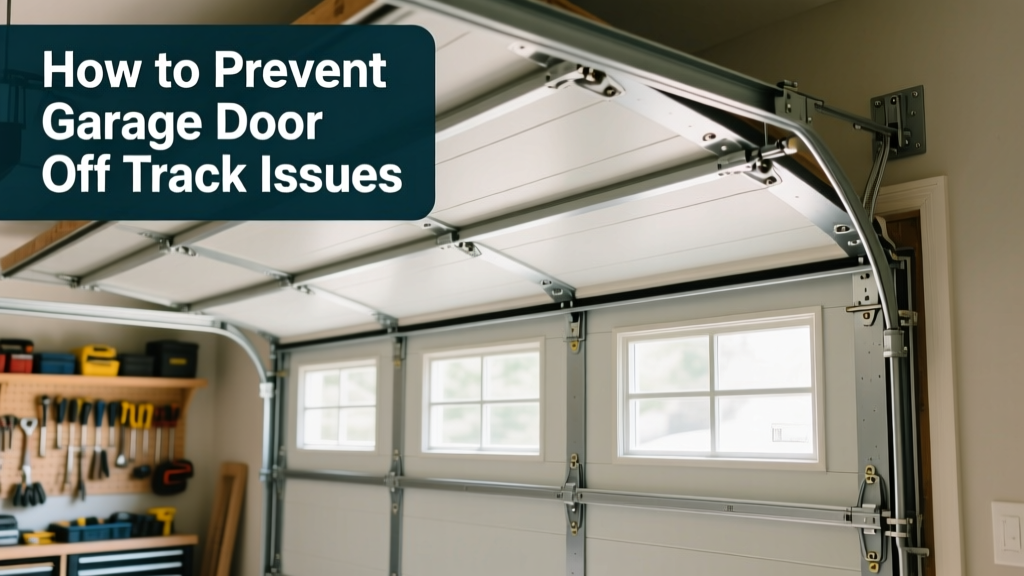
A garage door jumping off track isn’t just inconvenient—it’s dangerous. A sudden derailment can damage panels, snap cables, or trap fingers in moving parts. According to the U.S. Consumer Product Safety Commission, garage door injuries send over 20,000 people to ERs annually—nearly 25% involve track-related failures (CPSC Injury Data, 2022). Prevention is faster, safer, and cheaper than emergency repair.
Why This Happens
Most off-track incidents stem from avoidable wear or impact—not random failure. Bent tracks often result from hitting the door with a vehicle, especially during tight parking maneuvers. Worn rollers lose grip; loose hardware lets brackets shift under load; and rusted hinges restrict smooth travel. Temperature swings also matter: steel tracks expand and contract, and without periodic realignment checks, cumulative stress leads to subtle misalignment that worsens over time.
- Impact from cars or lawn equipment brushing the door edge
- Rusted or cracked roller wheels (especially nylon-core models older than 7 years)
- Loose mounting bolts on track hangers or end brackets
- Uneven floor settlement causing track angle distortion
Maintenance Checklist
| Frequency | Task | Time Required |
|---|---|---|
| Daily | Visually scan for obstructions near bottom track and check door clearance | 30 seconds |
| Weekly | Test auto-reverse by placing a rolled towel under door; door must reverse within 2 seconds | 2 minutes |
| Monthly | Tighten all track bracket bolts (use 1/4" hex key); inspect rollers for cracks or wobble | 10 minutes |
| Yearly | Lubricate rollers, hinges, and springs with white lithium grease; verify track plumb with level (±1/8" over 6 ft) | 25 minutes |
Warning Signs
Don’t wait for a full derailment. These early clues mean your track alignment is degrading:
- Door shudders or jerks during opening/closing, especially near the top third of travel
- Grinding or scraping sound localized to one side of the door
- Visible gap between roller and track flange—more than 1/16" at any point
- Door doesn’t sit flush against the frame when closed; one corner lifts slightly
If you spot two or more of these, pause use and perform a roller inspection before continuing.
Recommended Products
Investing in quality components pays off in longevity and stability. Look for products engineered for precision alignment and vibration resistance:
- Heavy-duty track brackets with dual-bolt mounting (e.g., Clopay Pro Series brackets)
- Steel-reinforced nylon rollers rated for 10,000+ cycles (LiftMaster 37209 fits most residential doors)
- Track alignment kits with adjustable hangers and laser-level guides (Genie GKIT-ALG)
- White lithium grease (not WD-40)—it resists washout and won’t attract dust like oil-based lubes
Can I realign tracks myself?
Yes—if the track is only slightly bent and hasn’t lost structural integrity. Use a rubber mallet and wood block to gently tap the flange back into position while checking with a 4-ft level. Never hammer directly on steel. If the track is kinked, cracked, or warped over >3 inches, replace it. For DIY guidance, see our track replacement walkthrough.
How often should I replace rollers?
Every 5–7 years for standard use (2–3 cycles/day). High-use homes (e.g., contractors with daily loading) should replace every 3–4 years. According to the Door & Access Systems Manufacturers Association (DASMA), 68% of premature derailments occur with rollers past their service life (DASMA Technical Bulletin #114, 2021).
Does weather affect track alignment?
Absolutely. Concrete floors heave in freeze-thaw cycles, shifting bottom track anchors. Humidity swells wooden header framing, tilting upper track. That’s why seasonal checks—especially after winter storms or summer droughts—are critical. One homeowner in Ohio reported consistent off-track events each March until they added anchor plate shims to compensate for soil expansion.
What’s the safest way to test track stability?
With the door fully closed, press firmly on the center of each horizontal track section. It shouldn’t flex more than 1/8 inch. Then, open the door halfway and apply lateral pressure to the top roller on both sides—no movement should occur. As
“If a roller moves sideways more than 1/32 inch under hand pressure, the bracket or track is compromised—and it’s already compromising your safety.” — Mike R., certified door technician with Overhead Door Corp since 1998
Should I upgrade to commercial-grade tracks?
Only if your door is oversized (10 ft wide or taller), heavily insulated, or used more than 6 times daily. Residential 16-gauge tracks handle most single-car doors fine—but if you’ve had two or more off-track events in 3 years, stepping up to 14-gauge galvanized steel (like Wayne Dalton’s Ultra-Track) reduces flex and increases lifespan by ~40% (per 2023 DoorLink Field Study).
Preventing off-track incidents isn’t about perfection—it’s about consistency. Ten minutes a month beats three hours and $400 in emergency service. Start with your next monthly check: tighten those brackets, listen for scrapes, and run your hand along the track flange. Your door—and your family—will thank you. For deeper troubleshooting, explore our noise diagnosis guide or spring safety checklist.