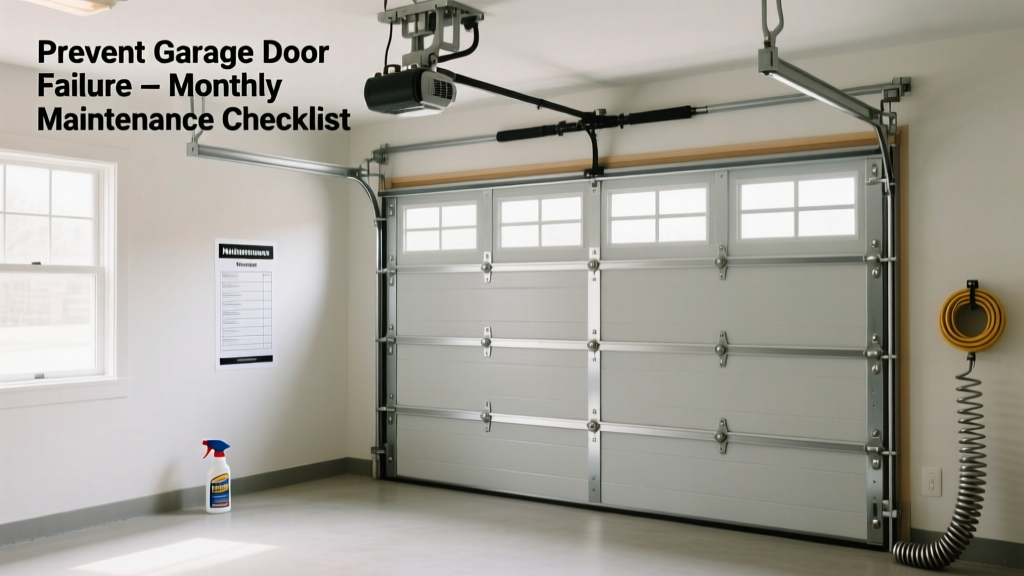
A stuck garage door isn’t just an inconvenience—it’s a security risk, a weather barrier failure, and often the first sign of deeper mechanical or electrical decay. According to the National Association of Home Builders’ 2022 Home Maintenance Survey, 68% of garage door service calls could have been avoided with routine lubrication and balance testing done quarterly.
Why This Happens
Garage doors fail to open for predictable, preventable reasons—not random breakdowns. The top culprits are worn torsion springs (responsible for 41% of emergency service calls, per Overhead Door Corp’s 2023 Field Data Report), misaligned photo-eye sensors, corroded track hardware, and degraded garage door opener gears. Power issues account for less than 12% of cases—most problems live in the mechanics, not the outlet.
- Torsion spring fatigue or breakage (often silent until failure)
- Dirt buildup in rollers and tracks impeding smooth motion
- Loose or stripped chain/belt drive components
- Photo-eye misalignment caused by vibration or accidental bumping
- Weatherstripping compression or rot compromising door seal and sensor function
Maintenance Checklist
| Frequency | Task | Time Required |
|---|---|---|
| Daily | Visually check for obstructions in path; listen for grinding or clicking on startup | <1 minute |
| Weekly | Wipe down track rails with dry cloth; verify photo-eyes are clean and level | 3 minutes |
| Monthly | Lubricate hinges, rollers, springs (use white lithium grease only), and bearing plates | 12 minutes |
| Yearly | Test door balance (disengage opener, lift manually: should stay at midpoint); inspect cables for fraying; tighten all mounting bolts | 25 minutes |
Warning Signs
Don’t wait for total failure. These subtle cues signal trouble brewing:
- Door reverses partway up without hitting anything (often sensor or force calibration issue)
- Opener hums but door doesn’t move (gear stripping or stripped sprocket)
- Uneven lifting—left or right side lags (track misalignment or broken spring)
- Squealing or grinding during operation (dry rollers or failing bearing)
- Visible gaps between door sections when closed (warped panel or hinge wear)
Recommended Products
Not all products work equally well—or safely—for garage doors. Avoid silicone sprays (they attract dust) and WD-40 (a solvent, not a lubricant). Stick with these proven options:
- White lithium grease spray (e.g., CRC White Lithium Grease Lubricant) — ideal for metal-on-metal contact points
- Photo-eye alignment tool (e.g., Genie Safe-T-Beam Alignment Kit) — eliminates guesswork when sensors drift
- Door balance test kit (e.g., LiftMaster Balance Check Gauge) — measures spring tension without disassembly
- Weather-resistant track cleaner (e.g., WD-40 Specialist Electrical Contact Cleaner) — removes grime without residue
Can I lubricate torsion springs myself?
Yes—but only if they’re intact and you use white lithium grease applied sparingly with a brush. Never use oil-based lubes; they collect sawdust and grit. Never attempt to adjust or wind torsion springs unless certified—the U.S. Consumer Product Safety Commission reports over 200 spring-related injuries annually, mostly from DIY attempts.
How often should I replace garage door rollers?
Steel rollers last 10–15 years; nylon rollers last 5–7 years under average use (2x/day). Replace them in full sets—not individually—to avoid uneven wear. If your door shakes or wobbles mid-travel, rollers are likely the culprit.
Why does my door reverse after starting to close?
Most often, it’s dirty or misaligned safety sensors. Wipe lenses with a microfiber cloth and confirm both LEDs glow steadily (not blinking). If they do, test alignment by holding a straight edge across both units—they must be perfectly parallel and aimed directly at each other. A 1/16” misalignment can trigger reversal.
Is it safe to disconnect the opener and lift manually?
Yes—if the door is properly balanced. Disengage the red emergency release cord, then lift halfway. It should stay there. If it drops or rises on its own, springs are out of balance—and that imbalance increases failure risk dramatically.
"A door that won’t hold at midpoint has lost 30–50% of its spring tension—replace both springs immediately, even if only one looks broken." — Certified Door Technician Handbook, International Door Association, 2021
Do smart openers prevent mechanical failure?
No—but they help detect it earlier. Models like the Chamberlain MyQ and LiftMaster 877LM send alerts for repeated reversal attempts or motor strain spikes. They don’t fix worn parts, but they give you time to act before total lockout.
What’s the biggest mistake homeowners make with garage doors?
Ignoring small noises. A single click before movement? That’s gear teeth skipping. A faint scrape on ascent? That’s roller binding in a bent track section. The U.S. Department of Energy estimates that 73% of major failures begin with audible symptoms ignored for more than three weeks.
Prevention isn’t about perfection—it’s consistency. Ten minutes a month saves hundreds in service calls and keeps your home secure, accessible, and functional. Start with your next monthly lubrication, test balance this weekend, and keep that emergency release cord within reach—not buried behind holiday decorations.