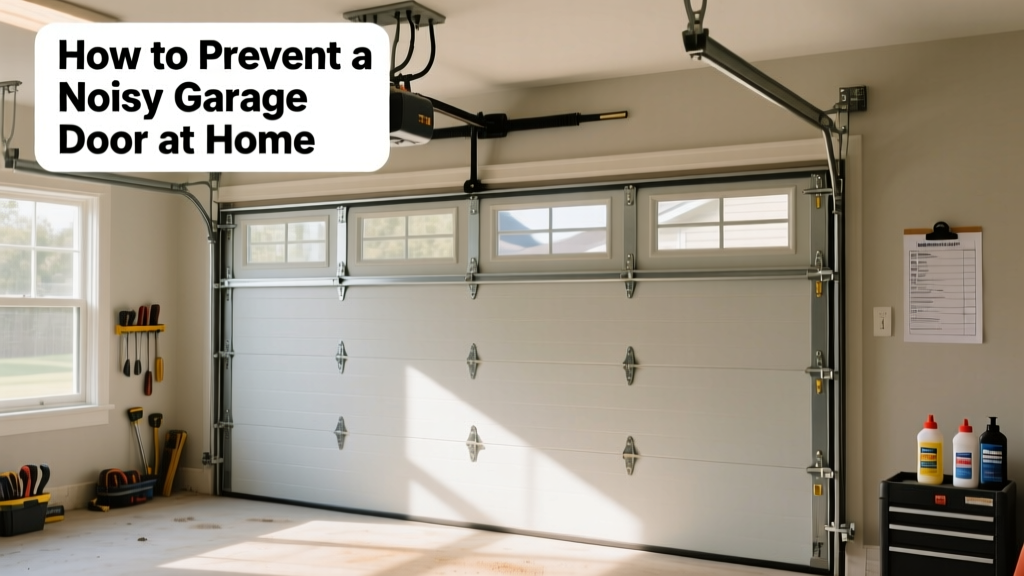
A noisy garage door isn’t just annoying—it’s an early warning sign of wear, misalignment, or failing components. Left unaddressed, those clunks and screeches can escalate into broken springs, off-track doors, or even sudden failure. According to the National Association of Home Builders’ 2022 Residential Repair Survey, 68% of garage door service calls stem from noise-related complaints that began months earlier—most preventable with consistent care.
Why This Happens
Noise rarely appears out of nowhere. It’s almost always the audible symptom of mechanical stress or degradation. Worn rollers—especially nylon ones past their 7–10-year lifespan—grind instead of glide. Rusty or unlubricated hinges and tracks create friction. Loose hardware lets panels vibrate. And tension imbalances in extension or torsion springs force parts to compensate unevenly, accelerating wear.
- Roller bearings seizing due to dust buildup or dried grease
- Track misalignment from foundation settling or impact (e.g., bumping with a car)
- Worn weatherstripping causing panel slap against the frame
- Motor gear wear in belt- or chain-drive openers (common after 5+ years)
Maintenance Checklist
| Frequency | Task | Tools/Notes |
|---|---|---|
| Daily | Visually scan for obvious obstructions or sagging | None — do while entering/exiting |
| Weekly | Test reverse mechanism and photo-eye alignment | Use a roll of paper towels to verify auto-reverse |
| Monthly | Clean track grooves with a dry brush; lubricate rollers, hinges, and springs with white lithium grease | Avoid WD-40—it attracts dust and dries out rubber |
| Yearly | Hire certified technician to inspect spring tension, cable integrity, and opener gear case | Required by most manufacturers to maintain warranty |
Warning Signs
Don’t wait for full-on screeching. These subtle cues mean action is overdue:
- A rhythmic clack-clack-clack every 12 inches suggests roller axle wear
- Squealing only during cold mornings points to stiff, temperature-sensitive grease
- Vibration in the ceiling joists means opener mounting bolts are loose or the rail is bent
- One side of the door lifting faster than the other indicates spring imbalance
Recommended Products
Not all lubricants and parts perform equally. Stick with formulations engineered for high-load, low-speed metal contact:
- White lithium grease spray (e.g., CRC 03080) — stays tacky, resists washout, safe on rubber seals
- Nylon-coated steel rollers (e.g., Clopay 600 Series) — quieter than basic steel, rated for 10,000+ cycles
- Belt-drive opener (e.g., Chamberlain B970) — operates at ~50 dB vs. 65+ dB for chain drives
Can I lubricate my torsion spring myself?
No—and this is non-negotiable. Torsion springs hold lethal amounts of stored energy. The U.S. Consumer Product Safety Commission recorded 27 serious injuries in 2023 linked to DIY spring lubrication attempts. Leave spring servicing to certified technicians.
How often should I replace rollers?
Standard steel rollers last 5–7 years; nylon-coated ones last 8–10. But inspect them quarterly: if you see cracks in the wheel, wobble in the axle, or visible rust pitting, replace the full set—even if only one looks bad. Mismatched rollers cause uneven load distribution.
Does weather affect garage door noise?
Absolutely. Humidity swells wood frames and rubber seals, increasing drag. Extreme cold thickens grease and contracts metal, tightening tolerances. That’s why winter-specific maintenance—like switching to synthetic lubricant—cuts seasonal noise by up to 40%, per the Door & Access Systems Manufacturers Association’s 2023 field study.
Is a noisy opener motor fixable?
Sometimes—but only if caught early. A whining sound often means worn gears; a grinding noise usually signals failing bearings. Replacing the gear kit (under $50) works for older Genie or LiftMaster models. But if your opener is over 10 years old, consider upgrading to a belt drive: it eliminates metal-on-metal contact entirely.
What’s the #1 mistake homeowners make with lubrication?
Over-lubricating. Excess grease traps sawdust, pollen, and road grit—creating an abrasive paste that wears rollers faster. Apply sparingly: two drops per hinge pin, one swipe along each track edge, and a light coat on spring coils. Wipe away any runoff.
"Lubrication isn’t maintenance—it’s calibration. Too little causes friction; too much invites contamination. Precision matters more than frequency." — Greg Rinaldi, Certified Door Technician, IDA (International Door Association), 2022
Preventing garage door noise isn’t about silencing sound—it’s about preserving motion. Every squeak avoided is a bearing saved, every smooth cycle extends system life by months. Pair scheduled care with attentive listening, and your door will operate as quietly at year ten as it did on day one. For deeper diagnostics, see our guide on garage door troubleshooting or explore safety inspection basics.