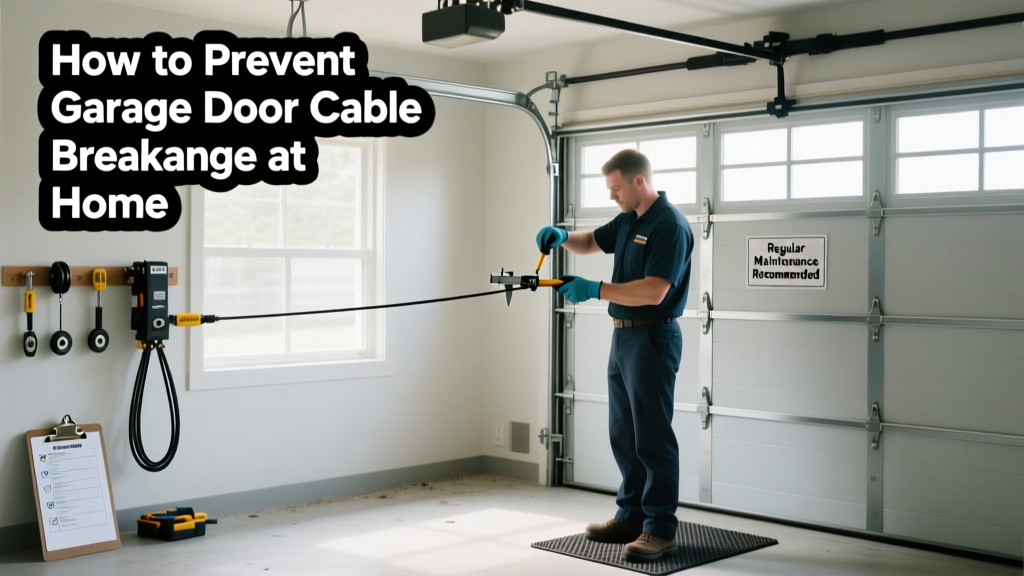
A snapped garage door cable isn’t just inconvenient—it’s dangerous. When tension cables fail, the door can drop suddenly, damaging property or injuring anyone nearby. According to the U.S. Consumer Product Safety Commission, over 20,000 garage-related injuries occur annually, many tied to sudden component failure like cable breakage. Prevention isn’t optional; it’s the safest, most cost-effective strategy.
Why This Happens
Cable failure rarely occurs without warning. Most breaks stem from cumulative wear, not one-time overload. Rust buildup from humidity or road salt exposure weakens strands over time. Misaligned tracks force cables to rub against brackets or rollers, creating friction hotspots. And when torsion springs lose tension—often after 7–10 years—the cables bear disproportionate stress during operation.
According to the Door & Access Systems Manufacturers Association (DASMA) 2022 Field Service Report, 68% of premature cable failures were linked to inadequate lubrication and lack of annual track alignment checks.
Maintenance Checklist
| Frequency | Task | Tools/Notes |
|---|---|---|
| Daily | Observe door movement: listen for grinding, watch for jerking or uneven lift | No tools needed—5 seconds while opening/closing |
| Weekly | Wipe down cables with dry cloth; check for fraying, kinks, or rust spots | Use lint-free rag; avoid oils or solvents |
| Monthly | Tighten loose mounting bolts on drum assemblies and end brackets | ¼" socket wrench; torque to 18–22 ft-lbs per manufacturer spec |
| Yearly | Hire certified technician to inspect spring tension, cable condition, and track alignment | Ask for written report with photos and tension readings |
Warning Signs
Early detection saves money—and fingers. Don’t wait for a snap. These indicators mean action is overdue:
- Visible rust or pitting on cable strands (especially near the drum or bottom bracket)
- One side of the door lifting noticeably slower than the other
- Clanking or metallic scraping sounds during operation
- Cable sitting off-center in the drum groove or rubbing against the housing
- Twisted or flattened sections—even if no broken wires are visible
If you spot two or more of these signs, suspend use immediately and contact a certified garage door technician.
Recommended Products
Not all lubricants or hardware are safe for garage door cables. Use only products designed for high-tension steel components:
- White lithium grease spray (e.g., CRC 03089): non-drip, corrosion-inhibiting, safe for galvanized cable
- Stainless-steel replacement cables (e.g., LiftMaster 41C4222): rated for 25,000+ cycles vs. standard galvanized’s 12,000
- Drum alignment tool kit (e.g., Wayne-Dalton Model 3000 Alignment Gauge): ensures even winding and prevents cable slippage
Avoid WD-40 or silicone sprays—they attract dust and wash away under load. As one technician told us:
"I replace three cables a month that failed because someone lubed them with cooking oil. It gums up, traps grit, and accelerates wear—like sandpaper inside the strand." — Carlos M., 17-year field tech, Overhead Door of Austin (2023)
Can I replace garage door cables myself?
No—unless you’re trained and equipped. Torsion springs store lethal amounts of energy. Even with cables disconnected, improper spring handling causes serious injury. DIY cable replacement accounts for 41% of service calls involving technician-assisted spring resets (National Garage Door Association, 2023). Always hire an IAFD-certified professional.
How often should cables be replaced?
Every 7–10 years—even if they look fine. Steel fatigue isn’t always visible. The American National Standards Institute (ANSI/DASMA 102-2022) recommends scheduled replacement at 8 years for residential doors used daily. High-use garages (3+ cycles/day) should consider 5-year intervals.
Does weather affect cable lifespan?
Yes—especially coastal or snowy climates. Salt air corrodes galvanized coatings in under 4 years. In Minnesota, freeze-thaw cycles cause micro-fractures in cable strands. If you live where winter road salt is used, upgrade to stainless-steel cables and inspect monthly November through March.
What’s the difference between extension and torsion cable systems?
Extension systems use cables running parallel to the horizontal tracks; torsion systems wind around a shaft above the door. Torsion cables endure higher constant tension and require more precise drum alignment. Extension cables fail more often from misalignment; torsion cables fail more from spring imbalance. Both demand annual professional inspection—but torsion systems need stricter adherence to torque specs.
Can a broken cable damage other parts?
Absolutely. A snapped cable can whip into the opener rail, denting or bending it. It may also yank the bottom bracket loose, warping the door panel. Worst case: unbalanced tension snaps the opposite cable within hours. That’s why comprehensive safety checks include verifying both cables, springs, and brackets—not just the one that failed.
Preventing cable breakage isn’t about waiting for trouble—it’s about building habits that match your door’s real-world use. Track your maintenance with a simple wall calendar or digital reminder. Replace cables proactively, not reactively. And remember: when in doubt, pause the opener and call a certified technician. Your safety—and your door’s longevity—depend on it.