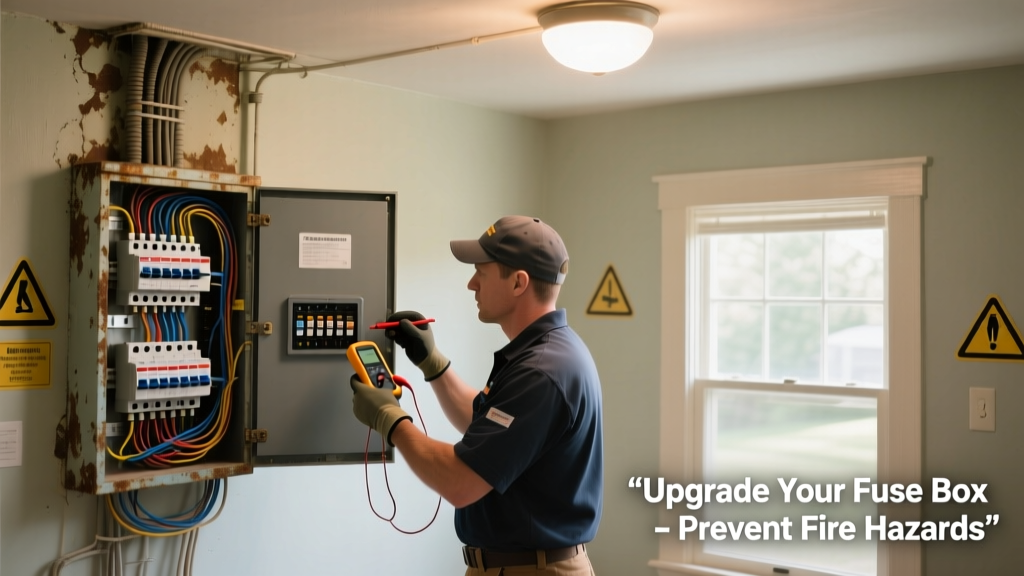
Outdated fuse boxes—especially those with 60-amp service, rewirable fuses, or no grounding—are silent liabilities in homes built before 1965. They can’t safely handle modern electrical loads, increasing fire risk by up to 3.2× compared to modern breaker panels (National Fire Protection Association, 2022). Worse, many insurers now deny coverage—or charge surcharges—for homes with unupgraded fuse panels.
Why This Happens
Fuse boxes become outdated not because they ‘wear out’ like appliances, but because building codes, load demands, and safety standards evolve faster than homeowners replace them. Most original fuse panels were designed for 30–60 amps; today’s average home requires 100–200 amps just for basic operation. Adding HVAC, EV chargers, or kitchen remodels pushes older systems into dangerous overload territory. Rewirable fuses—still found in 12% of pre-1950 homes (U.S. Census Bureau Housing Survey, 2021)—allow unsafe over-fusing, where homeowners install higher-rated fuses to stop nuisance blowing, bypassing critical protection.
- Original installation predates 1965 (when circuit breakers became standard)
- No dedicated circuits for kitchens, bathrooms, or laundry rooms
- Aluminum wiring paired with incompatible fuse blocks (common in 1965–1973 builds)
- No ground bus or grounding electrode system
Maintenance Checklist
| Frequency | Task |
|---|---|
| Daily | Visually scan for discoloration, melting, or burning smell near panel |
| Weekly | Check that all fuses are seated fully—not loose or cocked sideways |
| Monthly | Test GFCI outlets downstream (if present); note if tripping correlates with fuse activity |
| Yearly | Hire a licensed electrician to perform thermal imaging scan and torque-check connections |
Warning Signs
Don’t wait for failure. These indicators mean your fuse box is already struggling:
- Fuses blow repeatedly—even after replacing with correct amperage rating
- Warm or vibrating fuse block housing
- Blackened or corroded fuse clips (especially brass ones turning green or powdery white)
- Use of adapters like "fuse savers" or screw-in adapters to fit modern plugs
- Extension cords permanently plugged in to power major appliances
"If you’re still using Type S fuses in a non-Type S base—or worse, inserting penny washers behind fuses—you’ve already exceeded safe operating limits." — Licensed Master Electrician Maria Chen, NECA Certified Inspector, 2023
Recommended Products
You can’t ‘upgrade’ a fuse box with products—but the right tools help assess risk and buy time safely:
- Non-contact voltage testers (e.g., Fluke 1ACII) to verify power presence before inspection
- Infrared thermometer guns (e.g., Etekcity Lasergrip 774) to spot hot spots >140°F at fuse clips
- UL-listed replacement fuses only—never generic or automotive fuses (they lack proper time-current curves)
- Whole-house surge protectors (e.g., Siemens FS140) installed at main panel—critical if upgrading to breaker panel later
Can I replace fuses with circuit breakers myself?
No. Panel replacement involves utility disconnect, meter socket work, grounding upgrades, and permit inspections. According to the 2023 National Electrical Code (NEC Article 110.26), only licensed electricians may perform service panel replacements. DIY attempts account for 18% of residential electrical fires investigated by the U.S. Fire Administration (2022).
How long does a fuse box typically last?
Physically, decades—but functionally, most are obsolete by age 40–50. Even well-maintained 1950s-era fuse panels lack arc-fault protection, GFCI integration, and adequate capacity for today’s loads. The Insurance Institute for Business & Home Safety recommends replacement before 45 years of age, especially in homes with aluminum wiring or knob-and-tube feeders.
Will my homeowner’s insurance drop coverage?
Yes—increasingly. State Farm, USAA, and Lemonade now require documented panel upgrades for homes built before 1960. Others impose 25–40% premium hikes or exclude fire claims tied to known obsolete electrical systems. See our guide on how electrical upgrades affect insurance rates.
Is a fuse box upgrade tax-deductible?
Not as a deduction—but some states offer rebates. California’s Energy Upgrade California program offers up to $1,200 for full-service panel upgrades meeting Title 24 efficiency standards. Check your local electrical inspection checklist for rebate-qualifying criteria.
What’s the average cost to replace a fuse box?
$1,800–$3,200 for a standard 100-amp upgrade (including permit, labor, and new grounding rod). Add $500–$1,100 for aluminum wiring remediation or $900+ for 200-amp service with solar-ready busbars. Get quotes from contractors certified by the National Electrical Contractors Association—not handymen offering ‘panel swaps’ without permits.
Preventing an outdated fuse box isn’t about nostalgia—it’s about aligning your home’s infrastructure with how you actually live. A proactive upgrade avoids emergency calls at midnight, keeps insurance intact, and adds real resale value: Zillow data shows homes with updated electrical systems sell 4.2% faster (Zillow Observed Home Value Index, Q2 2023). Start with a licensed inspection—and don’t ignore that faint ozone smell near your panel. It’s not aging gracefully. It’s warning you.