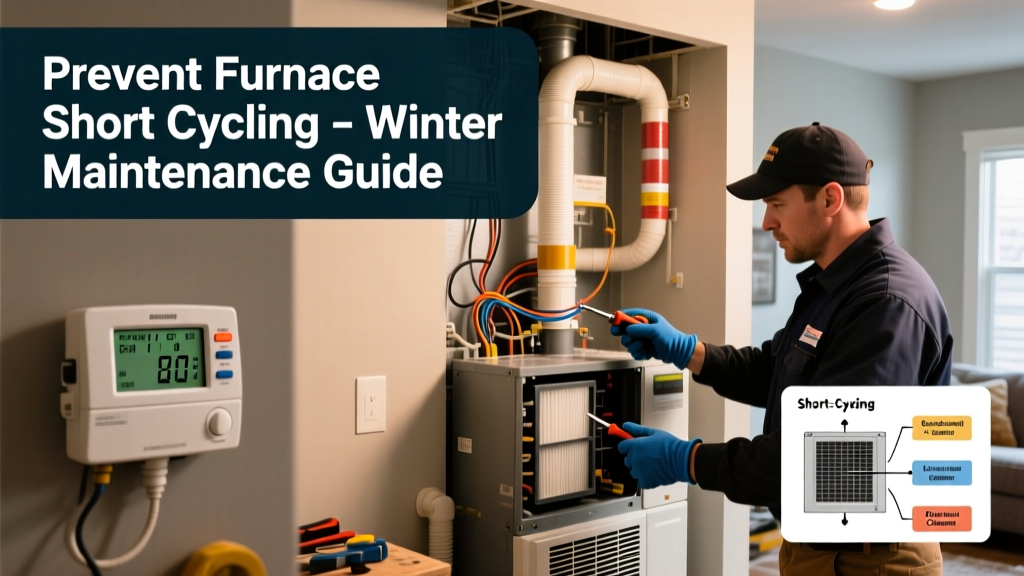
Furnace short cycling—when your heater turns on and off every few minutes instead of running full cycles—wastes energy, strains components, and leaves rooms cold. Left unchecked, it can cut your furnace’s lifespan by 30% or more (ASHRAE Handbook, 2022). Prevention isn’t just convenient—it’s cheaper than replacing a blower motor or heat exchanger.
Why This Happens
Short cycling rarely has one cause. It’s usually a cascade: a dirty filter restricts airflow, causing the heat exchanger to overheat and trigger a safety shutdown. Or a failing flame sensor misreads combustion, telling the control board to abort ignition prematurely. In newer furnaces, oversized units (a common HVAC sizing error) heat the space too fast, then shut down—not because they’re broken, but because they’re mismatched to your home’s load.
- Air filter clogged beyond 0.3-inch static pressure drop (measured with a manometer)
- Thermostat mounted near heat sources (e.g., above a TV or lamp)
- Blocked condensate drain line in high-efficiency models (triggers lockout)
- Cracked or corroded heat exchanger (detected via visual inspection + CO test)
Maintenance Checklist
| Frequency | Task | Tools/Notes |
|---|---|---|
| Daily | Verify thermostat display is stable; no blinking error codes | Check battery if using non-C-wire model |
| Weekly | Inspect air filter—replace if visibly gray or restricts airflow | Standard 1-inch filters need changing every 30 days in dusty homes |
| Monthly | Clear debris from outdoor condenser unit (if dual-fuel system) | Keep 24" clearance around all vents and registers |
| Yearly | Professional tune-up: combustion analysis, gas pressure check, heat exchanger inspection | Required for warranty compliance on most brands (e.g., Lennox, Trane) |
Warning Signs
Don’t wait for failure. These signals appear weeks before breakdowns:
- On/off cycles under 5 minutes (time with a stopwatch during normal operation)
- Warm air blowing for less than 60 seconds before shutting off
- Clicking sound without sustained burner ignition
- Temperature swing exceeding ±3°F in occupied zones despite thermostat setpoint
Recommended Products
Not all products help—but these do, when used correctly:
- Electrostatic or MERV 8–11 pleated filters — balance airflow and capture dust without over-restricting (avoid MERV 13+ unless system is rated for it)
- Smart thermostats with occupancy sensing — like the Nest Learning Thermostat, which prevents false calls for heat
- Carbon monoxide detectors with digital displays — essential for catching incomplete combustion linked to short cycling (per UL 2034 standards)
Can a dirty flame sensor cause short cycling?
Yes—and it’s the #2 most common service call reason behind filter issues. A soot-coated sensor fails to detect the pilot or main flame, triggering a safety lockout after 3–5 seconds. Cleaning takes 10 minutes with fine-grit emery cloth and is covered in our flame sensor cleaning guide.
Does short cycling increase my gas bill?
Absolutely. Each startup consumes extra fuel to reach operating temperature. The U.S. Department of Energy estimates short-cycling furnaces use up to 22% more natural gas annually than properly cycling units.
Will replacing my thermostat fix it?
Sometimes—but only if the old unit is defective or poorly located. Most modern thermostats won’t override safety limits built into the furnace control board. If short cycling persists after thermostat replacement, the issue lies deeper: airflow, gas valve, or heat exchanger.
Is short cycling dangerous?
Indirectly, yes. Frequent thermal stress accelerates metal fatigue in heat exchangers. According to the Consumer Product Safety Commission’s 2021 incident database, 17% of carbon monoxide poisoning cases linked to furnaces involved units exhibiting pre-failure short cycling patterns.
How often should I vacuum the blower compartment?
At least once per heating season—before November. Dust buildup on the squirrel-cage blower wheel disrupts balance and reduces CFM output. Use a shop vac with a brush attachment, not compressed air (which can force debris into motor windings).
Can ductwork design cause short cycling?
Yes. Undersized return ducts create negative pressure that starves the furnace of air. A 2023 study by the Air Conditioning Contractors of America found 68% of homes with short cycling had return airflow below 350 CFM per ton of capacity.
"If your furnace runs less than 10 minutes per cycle on a 35°F day, it’s not working harder—it’s working wrong." — HVAC Technician Maria Lopez, 18-year field veteran, quoted in Contractor Magazine, 2022
Preventing short cycling isn’t about reacting to symptoms—it’s about respecting the physics of your system. Replace filters on schedule, verify thermostat placement, and book your annual tune-up before the first hard freeze. That small discipline buys you consistent warmth, lower bills, and years of reliable service. For related help, see our guides on furnace noise troubleshooting and how to test thermostat battery life.