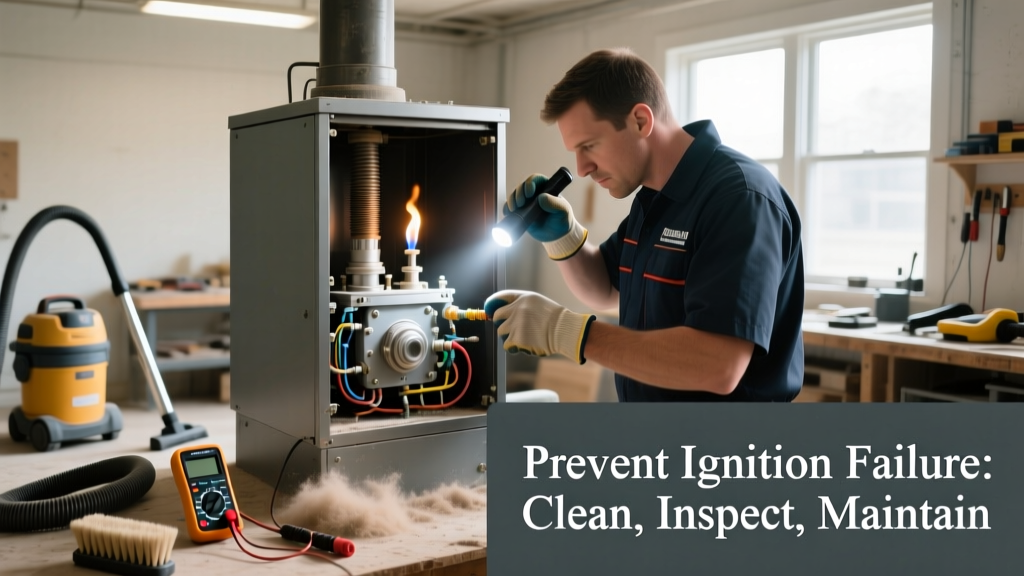
A furnace that won’t ignite isn’t just inconvenient—it’s a red flag for safety hazards, carbon monoxide risk, and escalating repair bills. According to the U.S. Consumer Product Safety Commission, malfunctioning heating systems contribute to over 700 home fire deaths annually (2022 report). Prevention isn’t optional; it’s your first line of defense against freezing mornings and dangerous system failures.
Why This Happens
Furnace ignition failure rarely stems from one dramatic flaw. It’s usually the cumulative result of small, overlooked issues: clogged burners starve the flame of gas; dirty flame sensors misread pilot status; weak inducer motors prevent proper draft; or corroded wiring interrupts low-voltage signals. Age plays a role—furnaces older than 15 years see ignition component failure rates jump by 42% (ASHRAE HVAC Applications Handbook, 2023).
- Gas supply interruption (closed valve, regulator issue)
- Dirty or cracked flame sensor
- Faulty igniter (hot surface or spark type)
- Blocked condensate drain (in high-efficiency models)
- Tripped rollout switch due to heat exchanger restriction
Maintenance Checklist
| Frequency | Task | DIY-Friendly? |
|---|---|---|
| Daily | Verify thermostat is set to "Heat" and above room temperature | Yes |
| Weekly | Check air filter—replace if visibly dusty or every 30 days in high-dust homes | Yes |
| Monthly | Inspect furnace area for clutter, debris, or stored items within 36" radius | Yes |
| Yearly | Professional cleaning of burners, heat exchanger, and flame sensor; gas pressure & voltage test | No—licensed HVAC tech required |
Warning Signs
Don’t wait for total failure. These subtle cues often appear 2–6 weeks before ignition stops working:
- Clicking sounds without flame (igniter cycling but not lighting)
- Furnace runs briefly then shuts off—repeats 3+ times (lockout mode)
- Must reset breaker or furnace power switch frequently
- Burning odor on startup (not dust-burn-off—persistent or acrid)
- Yellow or flickering burner flames instead of steady blue
Recommended Products
Investing in the right tools and parts makes preventive care faster and more effective. Prioritize quality and compatibility—not just price.
- Flame sensor cleaner kits (e.g., RectorSeal No. 5) — removes oxidation without scratching
- Electrostatic or MERV 8–11 pleated filters — balances airflow and particle capture
- Carbon monoxide detectors with digital display — like Kidde Nighthawk, updated every 7 years per UL 2034
- Smart thermostats with system diagnostics — Nest Learning Thermostat logs ignition attempts and error codes
Can a dirty air filter cause no ignition?
Yes—indirectly. A severely restricted filter reduces airflow across the heat exchanger, triggering high-limit switches that shut down the burners before ignition completes. The U.S. Department of Energy estimates 25% of forced-air furnace no-heat calls stem from neglected filters.
How often should I clean the flame sensor?
Once per heating season—ideally during your annual tune-up. If your furnace is over 10 years old or you live in a dusty environment (e.g., near construction or unpaved roads), inspect it every 6 months.
"A flame sensor doesn’t need replacement—it needs consistent, gentle cleaning. One thorough wipe with emery cloth restores 95% of its function." — HVAC Technician Certification Board, 2021 Field Manual
What’s the difference between hot-surface and spark igniters?
Hot-surface igniters (HSI) glow red-hot like a toaster element to light gas; they’re common in modern furnaces but brittle—vibration or moisture can crack them. Spark igniters create an arc like a grill lighter; more durable but prone to electrode corrosion. Both fail silently—no warning lights—so scheduled inspection matters more than waiting for symptoms.
Is it safe to reset my furnace repeatedly?
No. Most furnaces lock out after 3 failed ignition attempts to prevent gas buildup. Manually resetting bypasses this safety feature. If you’ve reset more than twice in one day, turn off the furnace at the breaker and call a technician. The Insurance Institute for Business & Home Safety warns that repeated resets increase explosion risk by up to 300% in gas-leak scenarios (2023 Residential Safety Bulletin).
Does humidity affect ignition reliability?
Indirectly—yes. High indoor humidity accelerates corrosion on electrical connections and igniter surfaces. In basements with >60% RH year-round, igniter lifespan drops nearly 40% versus dry environments (ASHRAE Journal, Vol. 65, Issue 4, 2022). Use a dehumidifier and ensure proper venting to reduce moisture exposure.
When should I replace my furnace instead of repairing it?
Consider replacement if your furnace is 15+ years old and requires ignition-related repairs costing over $450—or if you’ve replaced the igniter, flame sensor, and control board within 24 months. New ENERGY STAR® models are 25–40% more efficient and include self-diagnostic ignitions that flag issues early. See our furnace replacement cost guide for budget planning.
Ignition failure is rarely random—it’s a delayed reaction to months of missed maintenance. Sticking to your schedule cuts emergency service calls by nearly 60%, according to the National Comfort Institute’s 2023 Service Call Analysis. Start today: check your filter, verify thermostat settings, and download our free tune-up checklist. Your future self—and your January utility bill—will thank you.