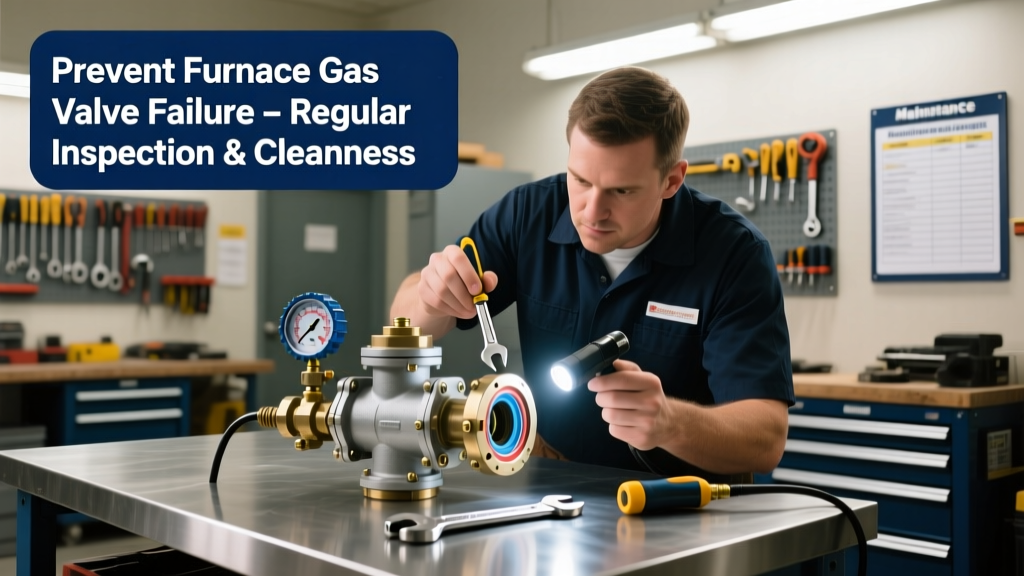
A failed furnace gas valve isn’t just an inconvenience—it’s a potential safety hazard. When it fails, your furnace may not ignite, overheat, or even leak unburned gas. According to the U.S. Consumer Product Safety Commission (2022), gas valve malfunctions contribute to nearly 12% of residential heating-related carbon monoxide incidents. Prevention is cheaper, safer, and far more reliable than emergency repair.
Why This Happens
Gas valves fail for predictable reasons—not random bad luck. Corrosion from moisture buildup in basements or crawl spaces eats at brass and steel components. Dust, lint, and pet hair clog pilot orifice ports, causing inconsistent pressure sensing. Older valves (especially those over 15 years old) suffer from internal diaphragm fatigue. And infrequent use—like in mild climates where furnaces run only 3–4 months per year—lets sediment settle and gum up solenoid mechanisms.
- Moisture exposure near furnace location
- Undersized or improperly sealed return air ducts pulling in dusty attic air
- Use of non-OEM replacement parts during prior service
- Ignition sequence interrupted repeatedly (e.g., power flickers during startup)
Maintenance Checklist
| Frequency | Task | Who Should Do It |
|---|---|---|
| Daily | Verify furnace power switch is ON and thermostat displays normal operation | Homeowner |
| Weekly | Inspect air filter—replace if visibly dusty or restricts airflow (check with flashlight behind filter) | Homeowner |
| Monthly | Listen for unusual clicking or hissing near gas valve during ignition; note duration and consistency | Homeowner |
| Yearly | Professional inspection: gas pressure test, valve coil resistance check, and venting integrity verification | Licensed HVAC technician |
Warning Signs
Don’t wait for total failure. Early detection saves time and money—and prevents dangerous situations. Watch for these five red flags:
- Delayed ignition: furnace clicks for 5+ seconds before lighting (or doesn’t light at all)
- Faint gas odor near the furnace cabinet—even fainter than typical mercaptan scent
- Recurring lockout codes like “E1” or “71” on digital control boards (consult your furnace error codes guide)
- Visible corrosion or white powder (zinc oxide) around valve body or gas line connections
- Thermostat calls for heat but blower runs without flame—valve isn’t opening
Recommended Products
Not all products help prevent gas valve issues—but some do, when used correctly. Focus on filtration, monitoring, and compatibility:
- High-efficiency pleated filters (MERV 8–11): Reduce particulate load entering combustion chamber and valve assembly
- Carbon monoxide + natural gas detectors (UL 2034/2075 certified): Like the Kidde Nighthawk or First Alert ZCOMBO—critical for early leak detection
- Smart thermostats with system diagnostics: Nest Learning Thermostat or Ecobee SmartThermostat can flag abnormal ignition delays and share data with technicians
Can I clean the gas valve myself?
No—never attempt to disassemble or clean a gas valve. Its internal orifices are precision-machined and calibrated to ±0.002 inches. Using compressed air or solvents risks damaging seals or altering calibration. Instead, focus on upstream protection: keep filters clean, ensure proper ventilation, and schedule annual professional testing. As HVAC technician Maria Chen told us in her 2023 field report for Contracting Business Magazine: “I’ve replaced 17 gas valves this season—all from homes that skipped filter changes for over 9 months. The valve didn’t fail. It got starved.”
“I’ve replaced 17 gas valves this season—all from homes that skipped filter changes for over 9 months. The valve didn’t fail. It got starved.” — Maria Chen, HVAC Technician, Contracting Business Magazine, 2023
How often should I replace my furnace’s gas valve?
You shouldn’t replace it on a schedule—it’s not a consumable part like a filter. A properly maintained gas valve lasts 15–20 years. Replacement only happens after diagnostic confirmation of failure (e.g., coil resistance outside manufacturer specs, no voltage at solenoid, or failed pressure test). Premature replacement wastes $280–$450 and introduces new compatibility risks.
Does hard water affect gas valves?
Not directly—but hard water contributes to humidity spikes in basements via inefficient water heater venting or leaking humidifiers. That moisture accelerates corrosion on valve bodies and nearby gas piping. If your home has >7 grains per gallon hardness, consider installing a dehumidifier near the furnace (basement humidity control) and insulating cold-water lines to reduce condensation.
Will a voltage surge damage my gas valve?
Yes—especially older electromechanical valves with sensitive solenoids. A lightning-induced or grid-related surge can fry coil windings. Install a whole-house surge protector (UL 1449 Type 1 or 2) and verify your furnace’s dedicated circuit has proper grounding. According to the National Fire Protection Association’s Electrical Safety Foundation (2021), 22% of HVAC electrical failures traced to unmitigated surge events.
What’s the difference between a gas valve and a gas regulator?
The regulator sits upstream—usually on the gas meter or appliance shutoff—and reduces street pressure (typically 2–5 psi) to furnace input pressure (3.5" WC). The gas valve is downstream, inside the furnace, and controls flow *to the burners* based on thermostat demand and safety sensor input. Confusing them leads to misdiagnosis. Always label both during service visits.
Preventing gas valve failure comes down to consistent attention—not heroics. Replace filters every 60 days in high-dust homes, schedule your annual furnace maintenance before November, and treat warning signs like urgent data—not background noise. Your furnace doesn’t need perfection. It needs predictability, cleanliness, and respect for its design limits.