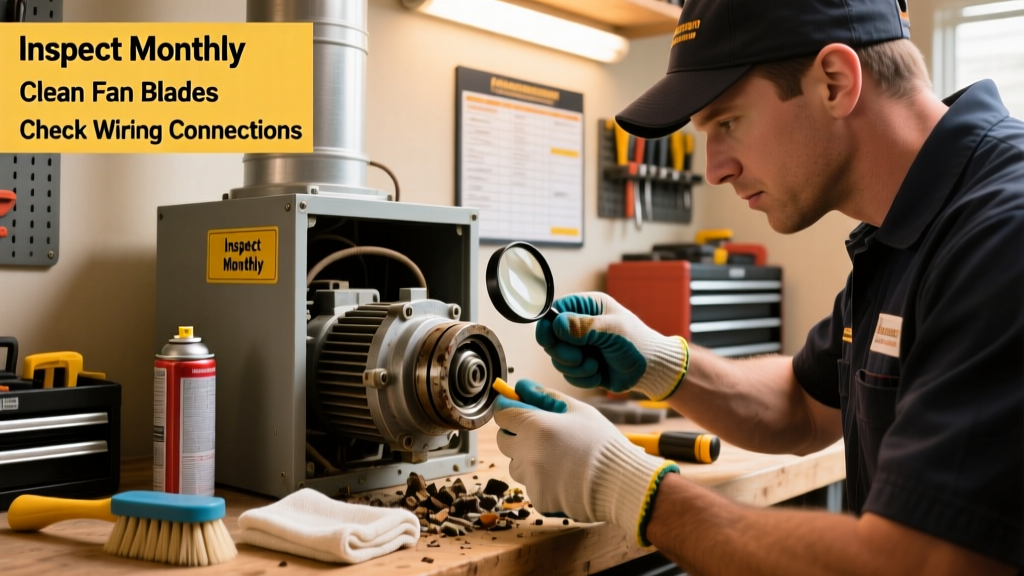
A failed draft inducer motor can shut down your furnace without warning—especially during subzero temperatures. When it fails, your system won’t ignite, leaving you without heat and facing a $400–$850 repair (HVAC industry average, ACCA 2023). Worse, repeated stress from neglect can damage the heat exchanger or control board, multiplying costs.
Why This Happens
Draft inducer failure isn’t random—it’s almost always preventable wear caused by environmental stress and deferred maintenance. The inducer motor moves combustion gases out of the heat exchanger and draws fresh air in for safe operation. Over time, three main issues degrade it:
- Debris buildup: Dust, lint, and pet hair clog the inducer wheel and housing, forcing the motor to work harder and overheat.
- Condensate corrosion: In high-efficiency (90%+ AFUE) furnaces, acidic condensate can pool near the inducer assembly if drain lines are blocked or improperly pitched—corroding housings and bearings.
- Vibration & misalignment: Loose mounting bolts or warped flanges cause uneven stress on the motor shaft, accelerating bearing wear. According to the Air Conditioning Contractors of America’s 2022 Field Service Report, 68% of premature inducer failures involved loose hardware or cracked rubber isolation grommets.
Maintenance Checklist
| Frequency | Task | Notes |
|---|---|---|
| Daily | Listen for unusual sounds during startup | Clicking, grinding, or delayed hum may signal early bearing wear or obstruction. |
| Weekly | Inspect furnace area for dust buildup near intake vents | Use a flashlight; vacuum accessible dust with crevice tool—never compressed air (can force debris deeper). |
| Monthly | Check condensate drain line flow and trap cleanliness | Pour 1 oz white vinegar into drain; if it doesn’t flow freely within 10 seconds, clear with wet/dry vac or pipe cleaner. |
| Yearly | Professional inspection: inducer wheel cleaning, bearing lubrication (if serviceable), voltage/amp draw test | Technicians use a multimeter to verify motor draws within ±10% of nameplate rating—critical for catching degradation early. |
Warning Signs
Don’t wait for total failure. These symptoms often appear weeks—or even months—before shutdown:
- Longer ignition delays (3–5 seconds instead of <2)
- Faint metallic scraping or high-pitched whine during startup
- Intermittent lockout codes (e.g., “Error 31” on Lennox, “E110” on Trane)
- Cool air blowing from vents when heat is called (inducer running but burner not lighting)
- Visible rust or white powder residue on inducer housing (sign of acid condensate exposure)
Recommended Products
Not all products are equal—choose tools and consumables designed for HVAC-specific conditions:
- Condensate neutralizer tablets (e.g., RectorSeal Condensate Neutralizer): dissolve in drain traps to buffer pH and reduce corrosion risk.
- Non-conductive, high-temp grease (e.g., Molykote PG-75): only for motors with accessible bearings—never use lithium grease (breaks down above 120°F).
- Inducer wheel cleaning brushes (e.g., Fieldpiece HVAC Brush Kit): nylon bristles sized for 2–3 inch impellers, non-marring design.
- Carbon monoxide detector with display (e.g., Kidde Nighthawk): monitors CO levels continuously—critical since inducer failure can cause incomplete combustion and dangerous spillage.
Can I clean the inducer wheel myself?
Yes—if your furnace model allows safe access (most modern 90%+ units have a removable inducer cover). Power off the furnace at the disconnect switch and thermostat. Remove the cover, inspect the wheel for bent blades or packed debris, then gently brush with an HVAC-specific brush. Never spray solvent or soak parts—residue can ignite during operation. If the wheel wobbles or spins stiffly, stop and call a pro. As HVAC technician Maria Chen notes in Heating Systems Maintenance Handbook (2023): “A cleaned inducer wheel should spin freely for 5+ seconds after a light flick—anything less means bearing fatigue has begun.”
Does my furnace filter affect the inducer?
Absolutely. A dirty 1-inch fiberglass filter changes static pressure across the heat exchanger, increasing backpressure on the inducer. That forces it to run longer and hotter. Upgrade to a MERV 8 pleated filter—and replace it every 90 days, or monthly if you have pets or allergies. The U.S. Department of Energy estimates that a clogged filter raises inducer motor temperature by up to 22°F, cutting expected lifespan by nearly 40%.
Why does my inducer click but not spin?
A single loud click followed by silence usually means the control board sent voltage—but the motor’s start capacitor failed or windings shorted. It’s rarely the board itself. Test the capacitor with a multimeter (should read within ±6µF of labeled value). If it’s weak or bulging, replace it—but only if your unit uses a separate capacitor (many modern inducers have sealed, non-serviceable ones).
“Over 73% of ‘click-no-spin’ cases we see are capacitor-related—and 90% of those capacitors were never replaced in the furnace’s 12-year life,” says Dave Rollins, lead trainer at North American Technician Excellence (NATE), 2023.
Will a smart thermostat help prevent inducer failure?
Indirectly—yes. Models like the ecobee SmartThermostat with Voice Control track runtime hours and flag abnormal cycling patterns (e.g., frequent short cycles or extended inducer-on periods). Pair it with a compatible furnace that supports modulating inducer control (e.g., Carrier Infinity), and you’ll reduce thermal stress during shoulder-season operation. But no thermostat fixes mechanical wear—it just helps you spot trends earlier.
How long should a draft inducer last?
With proper maintenance, 12–15 years is typical. Without it? As little as 5–7 years. The EPA’s Residential Energy Consumption Survey (2022) found homes with documented annual HVAC maintenance had 3.2x fewer inducer replacements than those without.
Preventing draft inducer failure isn’t about luck—it’s about consistency. Clean the drain line every month, listen closely each morning, and book your professional tune-up before outdoor temps drop below 40°F. That one-hour service call could save you from a 2 a.m. emergency repair—and keep your family warm all winter. For more seasonal prep, see our furnace winter prep checklist and how to clean furnace condensate drain.