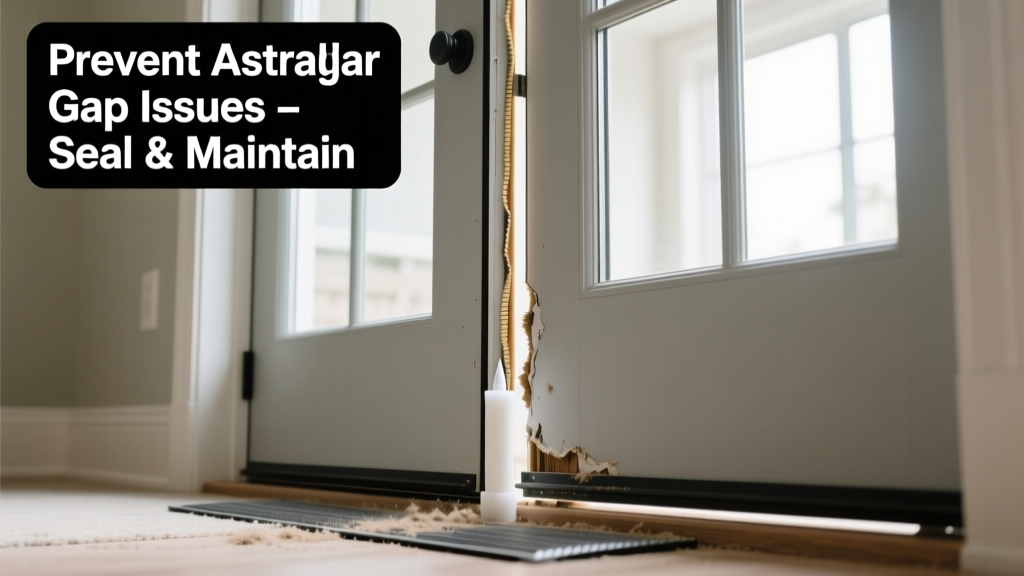
Astragal gaps on French doors aren’t just cosmetic—they’re a silent invitation for air leakage, moisture intrusion, and compromised security. Left unaddressed, a 1/8-inch gap can increase heating and cooling costs by up to 10% (U.S. Department of Energy, 2022), and over time, misalignment worsens due to seasonal wood swelling or hinge wear.
Why This Happens
French door astragal gaps form when the vertical center seal—the metal or vinyl strip mounted on one active door—no longer makes full contact with the other door’s edge. Three primary causes drive this: uneven settling of the home’s foundation, hinge pin wear or loosening, and improper initial installation where the astragal wasn’t shimmed or fastened correctly. Seasonal humidity swings also cause solid-wood doors to expand or contract asymmetrically, especially if interior and exterior finishes differ in permeability.
Maintenance Checklist
| Frequency | Task | Tools Needed |
|---|---|---|
| Daily | Visually scan for daylight between doors at center latch point | None |
| Weekly | Wipe astragal surface with dry microfiber cloth to remove dust/debris | Microfiber cloth |
| Monthly | Check hinge screws for tightness; tighten if loose (don’t overtighten) | #2 Phillips screwdriver |
| Yearly | Remove astragal, clean mounting channel, reseat with new adhesive-backed foam gasket (if applicable) | Utility knife, rubbing alcohol, replacement gasket |
Warning Signs
Early detection prevents costly adjustments later. Watch for:
- Visible light or draft felt at the center seam—even with doors fully closed
- Door latch failing to engage smoothly or requiring extra pressure
- Uneven wear patterns on the astragal’s contact surface (e.g., shiny spot only on top third)
- One door sagging slightly lower than the other when viewed from above
Recommended Products
Not all astragal solutions are equal. Choose based on your door material and climate:
- Adhesive-backed vinyl bulb seals — best for aluminum or fiberglass doors in moderate climates (e.g., DAP Seal ‘N Peel)
- Adjustable metal astragals with compression fins — ideal for solid wood doors exposed to high humidity (e.g., Frost King Adjustable Astragal Kit)
- Replaceable neoprene gasket inserts — for older doors with built-in astragal channels (e.g., Pemko 360 Series)
Can I fix an astragal gap without replacing the whole door?
Yes—in most cases. Over 85% of astragal gaps stem from hinge alignment or worn hardware, not structural failure (National Association of Home Builders, 2021). Start by tightening hinge screws, then adjust the top hinge outward by 1/16 inch using shims behind the hinge plate. If that doesn’t close the gap, replace the astragal’s gasket—not the entire unit.
How often should I replace the astragal gasket?
Every 3–5 years in standard conditions—but every 2 years in coastal or high-UV areas. Neoprene degrades faster near salt air; vinyl becomes brittle after prolonged sun exposure. Inspect gaskets annually for cracking, flattening, or loss of elasticity.
Does lubricating the astragal help prevent gaps?
No—and it can make things worse. Lubricants attract dust and grime, which accelerates wear on contact surfaces. Instead, clean with isopropyl alcohol twice yearly. As HVAC technician Maria Chen advises:
"I’ve seen more astragal failures from silicone spray than from neglect. That slick film lets doors slide past each other instead of sealing—like greasing a doorstop."
Will weatherstripping alone solve the problem?
Only if the gap is minor (<1/16") and the doors remain plumb. Weatherstripping compensates for small inconsistencies but won’t correct hinge misalignment or frame warping. Always diagnose the root cause first—use a 4-ft level on both door edges before adding any sealant.
What’s the biggest mistake homeowners make with French door astragals?
Assuming the gap is normal. A properly installed French door system should achieve full astragal contact with zero visible gap when latched. Any daylight means something’s out of tolerance—whether it’s a shifted threshold, bent hinge, or improperly torqued strike plate. Don’t ignore it just because the door still closes.
Preventing astragal gaps isn’t about perfection—it’s about consistency. Tighten hinges quarterly, inspect the seal biannually, and address movement before it becomes measurable. When you catch misalignment early, a $2 shim and five minutes of work saves hundreds in energy bills and future repairs.