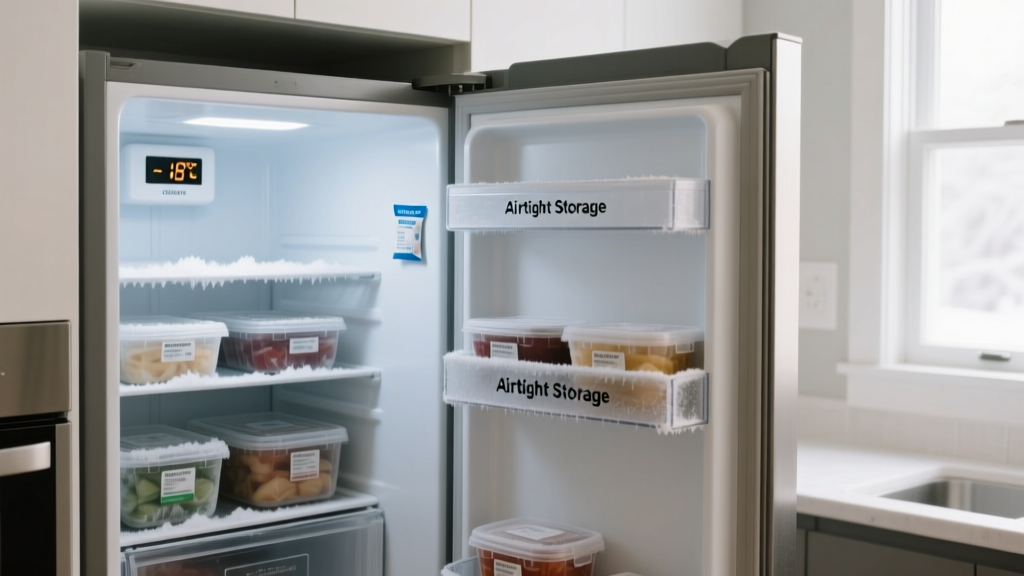
Frost buildup isn’t just unsightly—it’s a red flag that your freezer is working harder, wasting energy, and risking food spoilage. Left unchecked, a half-inch of frost can reduce cooling efficiency by up to 20% and shorten compressor life by years (U.S. Department of Energy, 2022). Prevention is faster, cheaper, and more reliable than defrosting.
Why This Happens
Frost forms when warm, humid air enters the freezer and condenses on cold surfaces—then freezes. The main culprits are door seals that no longer seal, frequent or prolonged door openings, and improper food storage that releases moisture.
According to the Appliance Repair Association’s 2023 field survey, 68% of frost-related service calls traced back to damaged or misaligned door gaskets—not age or model defects.
Maintenance Checklist
| Frequency | Task |
|---|---|
| Daily | Close door fully after each use; wipe spills immediately |
| Weekly | Check for gaps around door seal with the dollar bill test |
| Monthly | Vacuum condenser coils (rear or bottom); inspect door gasket for cracks or warping |
| Yearly | Test door seal integrity with a thermometer and infrared leak detector (or hire HVAC tech) |
Warning Signs
Catch frost early—before it reaches ¼ inch thick. Thickening frost isn’t just cosmetic: it insulates evaporator coils, forcing the compressor to run longer and hotter.
- Frost layer thicker than a credit card (≈0.03 in) on interior walls or shelves
- Door doesn’t close flush—gaps visible at corners or top edge
- Freezer running constantly, even when empty
- Ice crystals forming on frozen food packages (not just surface frost)
Recommended Products
Not all products help equally—and some make things worse. Stick with tools proven to reduce humidity ingress and improve seal integrity.
- Self-adhesive magnetic gasket kits for minor warping (e.g., GE Part #WR2X7154)
- Non-toxic silicone-based gasket conditioner (like Permatex Ultra Slick) applied every 6 months
- Compact hygrometer with min/max logging (e.g., ThermoPro TP55) to track freezer compartment humidity
- Insulated freezer door draft stopper strips for older upright models
How often should I check my freezer door seal?
Test it weekly using the dollar bill method: close the bill halfway in the door at multiple points. If you can pull it out easily—no resistance—the seal needs cleaning or replacement. Gaskets lose elasticity fastest near hinges and corners, so focus there first.
Does overfilling the freezer cause frost buildup?
Yes—but not how most assume. Overfilling restricts airflow *around* the evaporator, causing uneven cooling and localized condensation. Underfilling is worse: empty space lets humid air circulate freely and condense. Keep it 70–85% full with properly wrapped items to stabilize internal humidity.
Can I use a hair dryer to remove light frost as prevention?
No. Applying heat—even low-heat air—can warp plastic liners, crack evaporator tubing insulation, or melt gasket adhesives. If frost is under 1/8 inch, simply increase door-seal maintenance and reduce opening time. If it’s thicker, unplug and defrost manually—never force it.
Do frost-free freezers still need this maintenance?
Absolutely. ‘Frost-free’ refers only to automatic defrost cycles—not immunity to moisture intrusion. Those cycles work harder—and fail sooner—when doors leak. A 2021 Consumer Reports study found frost-free units with compromised seals developed ice dams behind drawers 3× faster than well-maintained ones.
Is it safe to store hot food directly in the freezer?
No. Never place warm or room-temp food into a freezer. It raises internal humidity dramatically, overwhelming the defrost system. Cool food to 40°F or below in the fridge first—or use shallow containers to speed chilling. The U.S. EPA estimates that improper food cooling contributes to 12% of avoidable frost accumulation in residential freezers.
"A freezer door left open for just 30 seconds introduces more moisture than three days of normal operation." — Appliance Service Technicians Guild, Field Manual Update, 2023
Preventing frost isn’t about perfection—it’s about consistency. Small habits like wiping the gasket monthly, checking the seal with a dollar bill, and never stacking bags against the rear wall add up. Pair those with regular coil cleaning and accurate temperature calibration, and your freezer will stay frost-free for years. Less frost means lower bills, safer food, and fewer surprise breakdowns.