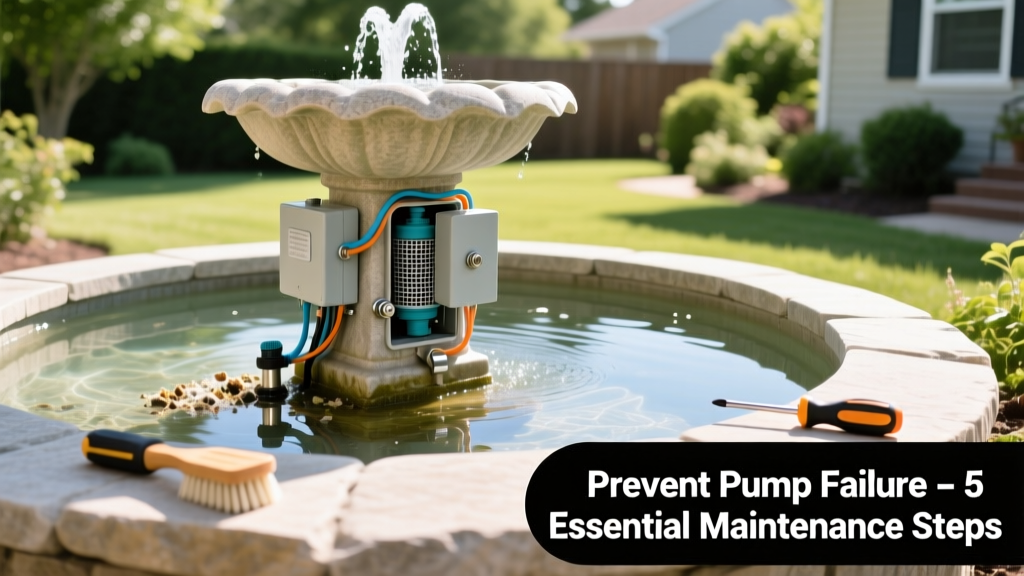
A non-working fountain pump isn’t just an eyesore—it’s a red flag for algae buildup, overheating, or electrical corrosion that can escalate into cracked housings or tripped GFCIs. According to the National Association of Home Builders’ 2022 Outdoor Water Feature Report, 68% of fountain pump failures stem from avoidable maintenance lapses—not manufacturing defects.
Why This Happens
Fountain pumps fail most often due to three interlocking issues: debris clogging intake screens, mineral scale hardening internal impellers, and voltage fluctuations from ungrounded or undersized circuits. Less obvious—but equally damaging—is running the pump dry during low-water conditions, which heats the motor past safe thresholds in under 90 seconds.
- Debris (leaves, pine needles, pet hair) blocks intake grates and starves the impeller of flow
- Hard water deposits build up inside the pump chamber, reducing efficiency by up to 40% in 6 months (U.S. Geological Survey, 2021)
- UV exposure degrades plastic casings and O-rings, especially in unshaded installations
Maintenance Checklist
| Frequency | Task | Time Required |
|---|---|---|
| Daily | Check water level; top off if below intake port | 1–2 minutes |
| Weekly | Rinse intake screen under tap; inspect for hairline cracks | 5 minutes |
| Monthly | Soak pump in white vinegar solution (1:3 ratio) for 30 minutes; scrub impeller with soft toothbrush | 20 minutes |
| Yearly | Replace rubber gaskets and test ground-fault circuit interrupter (GFCI) outlet with tester | 15 minutes |
Warning Signs
Don’t wait for total shutdown. Early symptoms appear subtly—and escalate fast. Listen for high-pitched whining (impeller binding), watch for reduced spray height (clogged nozzle or weak flow), and feel the pump housing after 10 minutes of operation: if it’s too hot to hold comfortably (>120°F), internal friction or low water is at play.
- Water surface stops rippling even when pump is powered on
- GFCI trips repeatedly within 2–3 minutes of startup
- Visible white crust around intake or on cord plug
Recommended Products
Investing in the right tools pays off in longevity. Use only food-grade white vinegar—not CLR—for descaling; citric acid-based cleaners like GreenClean Fast-Acting Granular work well for heavy calcium but require full pump disassembly. Pair your pump with a weatherproof GFCI outlet box rated for wet locations (UL 943 Class A), and always run it on a dedicated 15-amp circuit—not a shared patio outlet.
"A fountain pump running without regular cleaning lasts, on average, 11 months. With monthly vinegar soaks and weekly screen checks, that jumps to 4.2 years—nearly four times longer." — Aquascape Technical Bulletin, 2023
Can I use bleach to clean my fountain pump?
No. Bleach corrodes stainless steel impellers and degrades rubber seals within 2–3 applications. Stick to diluted white vinegar or citric acid solutions. If algae is persistent, add a hydrogen peroxide dip (3% solution, 10-minute soak) before rinsing thoroughly.
Why does my pump work fine in spring but fail every summer?
Summer heat raises ambient air temperature—and pump casing temps—by 15–20°F. That pushes already marginal motors over thermal cutoff thresholds. Install shade cloth over the basin or relocate the pump to a shaded niche. Also verify your pump’s max ambient rating (e.g., “rated for ≤104°F”) matches your local summer highs.
Do solar fountain pumps need the same maintenance?
Yes—even more. Solar units lack constant voltage regulation, so inconsistent charging stresses electronics. Clean panels weekly with microfiber cloth, and check battery terminals (if equipped) for green corrosion. Replace rechargeable batteries every 18 months regardless of performance.
Is it safe to leave my fountain pump running 24/7?
Yes—if water levels stay stable and intake stays clear. But during freezing temperatures, continuous operation increases ice-jam risk in above-ground lines. Shut down and drain completely when temps drop below 32°F for >4 hours. Never rely on “freeze-resistant” claims alone.
What’s the best way to store a fountain pump over winter?
After descaling and drying, store upright in its original box with silica gel packs inside. Never wrap in plastic—it traps moisture. Keep in a garage or basement where temps stay between 40–70°F. Label the box with the date and last vinegar soak.
Prevention isn’t about doing more—it’s about doing the right things at the right time. A 5-minute weekly screen rinse beats a $120 replacement pump and three hours of basin draining. Stay ahead of the scale, respect the water level, and treat your fountain pump like the precision tool it is—not disposable decor.