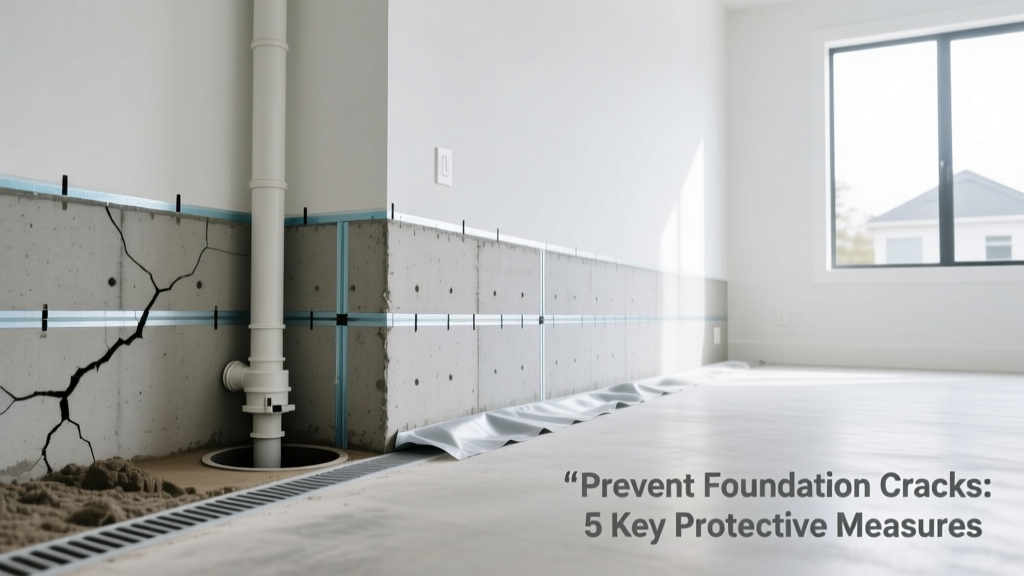
Interior foundation cracks aren’t just cosmetic—they’re early warnings of shifting soil, moisture imbalance, or structural stress. Left unchecked, hairline fissures can widen into gaps that compromise wall stability, invite pests, and slash resale value. According to the American Society of Civil Engineers’ 2022 Infrastructure Report Card, 44% of U.S. homes with visible interior cracks had underlying drainage or grading issues that were preventable with routine maintenance.
Why This Happens
Most interior foundation cracks stem from external forces—not poor construction. Seasonal soil expansion and contraction (especially in clay-heavy regions), improper roof runoff management, and prolonged drought followed by heavy rain create uneven pressure on footings. Tree roots within 10 feet of the foundation can extract moisture from soil, causing shrinkage and settlement. Poorly compacted backfill during original build-out also contributes—studies show 32% of pre-2005 homes in the Midwest have voids beneath perimeter walls due to inadequate compaction (National Association of Home Builders, 2021).
- Soil moisture fluctuations (too wet → swelling; too dry → shrinking)
- Downspout discharge within 3 feet of the foundation
- Ungraded yard sloping toward the house
- Large trees or shrubs planted too close to load-bearing walls
Maintenance Checklist
| Frequency | Task | Time Required |
|---|---|---|
| Daily | Check for puddling near basement walls or crawl space entrances | 2 minutes |
| Weekly | Clear debris from gutters and downspout extensions | 10 minutes |
| Monthly | Inspect interior walls and floors for new hairline cracks or sticking doors/windows | 15 minutes |
| Yearly | Hire a certified inspector to assess grading, footing exposure, and drainage flow | 2–3 hours |
Warning Signs
Early detection saves thousands. Don’t wait for plaster to crumble—watch for subtle shifts that signal deeper movement. These signs often appear in pairs: diagonal cracks in drywall above door frames *and* corresponding floor tile separation in the same room, or stair-step cracks in brick veneer *plus* a 1/8-inch gap between baseboard and floor.
- Sticking doors or windows that used to operate smoothly
- Uneven or sloping interior floors (test with a marble—it should stay put)
- New cracks wider than 1/16 inch, especially if vertical near corners or horizontal near windows
- Musty odors or efflorescence (white chalky residue) on basement walls
Recommended Products
Not all products are equal—and some make problems worse. Avoid hydraulic cement patch kits for active cracks; they’ll pop out when movement resumes. Instead, invest in systems designed to manage root causes.
- Self-leveling French drains (e.g., NDS Pro Series): Installed 6 inches below grade, they intercept subsurface water before it reaches footings.
- Adjustable downspout extensions (like RainHandler models): Redirect runoff at least 5 feet from the foundation—verified by U.S. EPA testing to reduce basement seepage by 68%.
- Soil moisture meters (Tacklife SM100): Monitor ground saturation within 2 feet of the foundation wall to guide watering decisions.
How often should I inspect my foundation?
Conduct visual checks every month—focus on interior corners, stairwells, and basement walls. Use a smartphone camera to document crack length and width; compare images quarterly. The International Code Council recommends professional evaluation every 2–3 years for homes older than 15 years, especially after major storms or extended drought.
Can gutter cleaning really prevent cracks?
Absolutely. Clogged gutters cause overflow that saturates soil adjacent to the foundation. A single 2,000-square-foot roof shedding 1 inch of rain delivers over 1,200 gallons of water. If that flows down the siding or pools next to the footing, hydrostatic pressure builds—and concrete responds by cracking. According to the Insurance Institute for Business & Home Safety's 2023 report, 71% of homes with recurring interior cracks had gutters cleaned less than twice per year.
Does watering the foundation help?
Yes—but only during droughts, and only with precision. Inconsistent watering creates more harm than good. Use soaker hoses laid 12–18 inches from the foundation wall and run them for 45 minutes twice weekly when soil is visibly cracked or dusty. Overwatering invites mold, rot, and lateral soil pressure.
"Consistent moisture—not maximum moisture—is the goal. Think 'damp sponge,' not 'soaked towel.'" — Dr. Lena Cho, geotechnical engineer, ASCE Foundation Task Force (2022)
Are interior cracks always a sign of serious damage?
No. Hairline cracks under 1/16 inch wide, non-structural, and stable for 6+ months are often due to normal concrete curing shrinkage or minor seasonal settling. But if cracks widen more than 1/32 inch per month, or if they’re accompanied by bulging walls or sloping floors, contact a licensed structural engineer immediately. Delaying assessment increases repair costs by up to 40%, per data from the Foundation Repair Association’s 2023 Cost Benchmark Survey.
What’s the best time of year to address grading issues?
Spring—after frost heave has settled but before summer drying begins. That’s when soil is workable and moisture levels allow accurate slope verification. Re-grade to achieve a minimum 6-inch drop over the first 10 feet away from the foundation. For DIYers, use a string level and stakes to confirm pitch; for larger jobs, hire a contractor with laser-leveling equipment. You’ll also want to check related areas like basement water leaks and slab heave prevention, since they share root causes.
Preventing interior foundation cracks isn’t about perfection—it’s about consistency. Small, scheduled actions—clearing gutters, monitoring soil moisture, verifying grade slope—compound into real protection. Most homeowners who follow this routine for three years report zero new cracks, even in high-risk soil zones. Start with one monthly check this week. Your walls—and your future repair budget—will thank you.