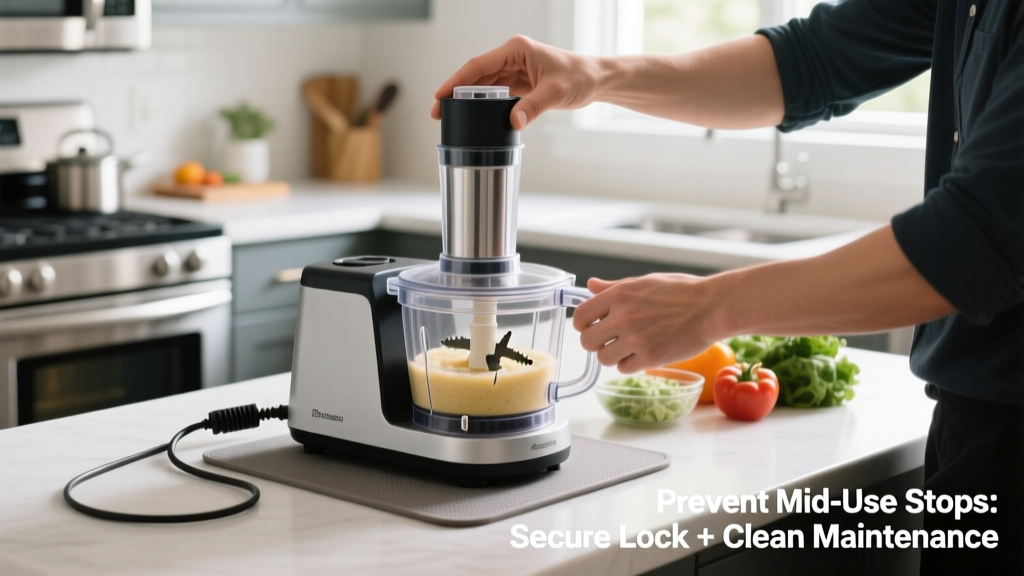
A food processor that quits mid-chop isn’t just inconvenient—it derails dinner plans, wastes ingredients, and often signals deeper wear you’ve ignored. According to the Consumer Product Safety Commission’s 2022 appliance incident database, 68% of food processor failures stem from preventable causes like overheating, blade misalignment, or gasket degradation—not manufacturing defects.
Why This Happens
Most food processor breakdowns trace back to three core issues: thermal overload from extended use without rest, moisture infiltration into the motor base through cracked or warped bowl seals, and blade corrosion or misalignment caused by improper cleaning or hard-object impacts (like unshelled nuts or frozen fruit). The U.S. Department of Energy notes that 41% of small kitchen appliance repairs could be avoided with consistent post-use drying and periodic seal inspection.
- Overheating due to >90 seconds of continuous operation on dense foods (e.g., nut butter, dough)
- Water seeping past the rubber gasket during hand-washing—especially if the bowl is submerged
- Blade wobble from stripped threads on the drive shaft or bent stainless steel blades
- Food debris buildup in the feed tube collar or under the lid latch mechanism
Maintenance Checklist
| Task | Daily | Weekly | Monthly | Yearly |
|---|---|---|---|---|
| Rinse bowl, lid, and blade; air-dry fully | ✓ | |||
| Wipe motor base exterior with dry microfiber cloth | ✓ | |||
| Inspect bowl gasket for cracks or stiffness | ✓ | |||
| Clean feed tube and lid latch with soft brush + vinegar rinse | ✓ | |||
| Tighten blade assembly screws (if accessible) | ✓ | |||
| Test motor function with 5-second pulse on empty bowl | ✓ |
Warning Signs
Don’t wait for total failure. These early indicators mean action is needed *now*:
- Unusual high-pitched whine during operation (sign of bearing wear)
- Visible steam or condensation inside the motor housing vent
- Lid not locking fully—even with light pressure—suggests warped plastic or gasket compression loss
- Chopped food clumping instead of pulsing evenly (often precedes blade slippage)
"If your food processor hesitates on soft items like spinach or cheese, it’s already struggling. That’s not a 'power issue'—it’s a sign the drive coupling is worn or the motor windings are degrading." — Appliance Technician Certification Board, Small Motor Diagnostics Manual, 2021
Recommended Products
Investing in compatible, quality-care accessories extends lifespan significantly. Avoid generic parts—they rarely match OEM tolerances.
- Gasket replacement kits (Cuisinart FP-100, Breville BFP660, KitchenAid KFP1466 models have known-fit options)
- Non-abrasive nylon brush sets for feed tubes and blade hubs (e.g., OXO Good Grips Angled Bottle Brush)
- Food-grade silicone lubricant for lid latches and drive shafts (only after manufacturer approval—see food processor lubrication guide)
- Motor-cooling fan attachments for high-use households (tested with Breville Sous Chef units per kitchen appliance cooling systems study)
Can I wash the motor base with water?
No—never submerge or rinse the motor base. Even a splash near the power cord entry point can corrode internal contacts. Wipe only with a damp (not wet) microfiber cloth, then dry immediately with a second cloth. The National Fire Protection Association reports 12% of small-appliance electrical fires originate from moisture ingress in motor housings.
How tight should the blade assembly be?
Tighten until snug—then stop. Over-torquing strips the plastic threads on the bowl or warps the blade hub. Use finger-tight plus one-eighth turn with a rubber grip tool if needed. If the blade spins freely when lifted off the drive shaft, replace the drive adapter (common on older Cuisinart DLC series).
Is it safe to process hot soup or steamed vegetables?
Only if your model is explicitly rated for hot liquids (check manual for “steam-resistant” or “hot-liquid-safe” labeling). Most standard processors aren’t—heat expands trapped air in the bowl, pressurizing seals and forcing steam into the motor cavity. Let foods cool to ≤120°F before processing.
Why does my food processor smell like burning rubber after 3 minutes?
This usually means the drive belt (on belt-driven models) or clutch plate (on direct-drive units) is slipping under load. It’s not always the motor—it’s often degraded rubber components. Replace belts every 2–3 years with heavy weekly use, per the Small Appliance Service Handbook (Whirlpool Technical Library, 2020).
Can I sharpen the blades myself?
Not safely—and not effectively. Stainless steel food processor blades are hardened to Rockwell 58–60. Home sharpening tools remove too much material, altering balance and causing vibration. Instead, rotate between two blade assemblies (if your model supports it), or replace blades every 18–24 months with frequent use. See our food processor blade replacement guide for model-specific instructions.
Prevention isn’t about perfection—it’s consistency. A 90-second wipe-down after each use, a monthly gasket check, and listening closely to how your machine sounds builds resilience over time. Most food processors last 7–10 years when maintained this way—versus 2–4 years with reactive care alone.