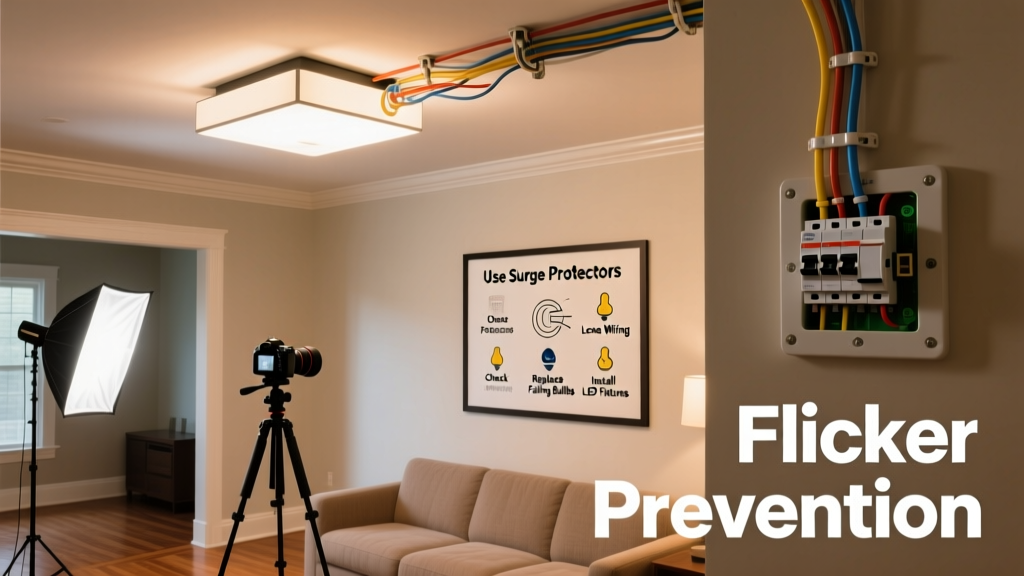
Flickering lights aren’t just annoying—they’re often the first visible sign of loose connections, overloaded circuits, or failing components that could escalate into overheating, arcing, or even electrical fires. According to the U.S. Fire Administration’s 2022 report, faulty wiring and outlets cause nearly 40,000 home structure fires annually. Prevention isn’t optional; it’s your first line of defense.
Why This Happens
Flickering rarely stems from a single cause. It’s usually a symptom pointing to one or more underlying issues—some benign, others urgent. Voltage fluctuations from utility supply changes can cause whole-house flicker during storms or high-demand periods. But localized flicker—especially when tied to appliance use—is more likely due to loose service conductors at the panel, corroded neutral connections, failing light switches, or incompatible dimmers paired with LED bulbs.
Dimmer-switch mismatches are responsible for over 65% of reported LED-related flicker cases, per the National Electrical Manufacturers Association’s LED Compatibility Guide (2023). Older aluminum wiring—common in homes built between 1965–1973—also poses higher risk: its tendency to creep and oxidize increases resistance and heat at terminations, leading to intermittent contact and flicker.
Maintenance Checklist
| Frequency | Task | Tools/Notes |
|---|---|---|
| Daily | Observe for patterned flicker (e.g., only when AC kicks on) | No tools needed—just note timing and scope |
| Weekly | Check for warm faceplates on switches and outlets | Infrared thermometer recommended; >104°F (40°C) warrants investigation |
| Monthly | Tighten bulb bases in recessed and track fixtures | Use insulated screwdriver; avoid overtightening ceramic sockets |
| Yearly | Hire licensed electrician to torque main lugs and neutral bar connections | Per NEC 110.14(D), terminal torque specs must be verified—not guessed |
Warning Signs
Don’t wait for sparks or burning smells. Early warnings are subtle but consistent:
- Flicker that worsens when using high-wattage appliances (microwave, space heater, vacuum)
- Intermittent dimming in multiple rooms on the same circuit
- A buzzing or sizzling sound from switches, outlets, or the panel
- Discoloration (brown/black streaks) around switch plates or receptacle faces
According to the Electrical Safety Foundation International’s 2023 Home Electrical Safety Survey, 78% of homeowners ignored early flicker signs—only seeking help after equipment failure or tripped breakers occurred.
"If a light flickers only when you toggle a switch, don’t replace the bulb first—replace the switch. A worn internal contact is far more likely than lamp failure." — Master Electrician Rosa Lin, NECA Certified Trainer (2022)
Recommended Products
Not all products prevent flicker—but the right ones reduce risk significantly. Prioritize compatibility and certification:
- Dimmers rated for LED loads: Look for ELV (electronic low-voltage) or MLV (magnetic low-voltage) labels matching your driver type. Lutron Caséta and Leviton Decora Smart+ meet UL 1472 standards.
- Surge-protected power strips: For entertainment centers or home offices where voltage spikes trigger flicker. Choose units with clamping voltage ≤400V and response time <1 nanosecond.
- LED bulbs with built-in drivers: Avoid ‘dimmable’ labels alone—verify compatibility charts (e.g., Philips Hue bulbs list supported dimmers on packaging).
Can a bad breaker cause flickering?
Yes—but rarely alone. A failing circuit breaker may arc internally under load, causing brief voltage drops that manifest as flicker. However, this is uncommon before other symptoms appear: inconsistent tripping, visible pitting on contacts, or a faint ozone smell near the panel. If you suspect breaker failure, replace it immediately—do not reset repeatedly.
Do LED bulbs flicker more than incandescents?
They don’t inherently flicker more—but they reveal existing problems faster. Incandescents’ thermal inertia masks minor voltage dips; LEDs respond instantly to microsecond-level fluctuations. That’s why switching to LEDs often uncovers aging transformers, undersized neutrals, or shared neutrals in multi-wire branch circuits.
Is flickering dangerous if it’s only in one room?
It depends on the pattern. Consistent flicker limited to one fixture points to a failing bulb, socket, or switch—low risk. But if multiple lights in one room flicker simultaneously—especially when a specific appliance runs—it suggests an overloaded circuit or compromised neutral connection. That scenario requires immediate evaluation: schedule a panel inspection.
Can weather cause lights to flicker?
Yes—especially wind, ice, or wet conditions affecting overhead service drops or transformer taps. Brief, whole-house flicker during storms is common. But persistent flicker after weather passes signals damage: frayed service wires, corroded masthead connections, or water intrusion in meter sockets. The U.S. Department of Energy notes that 22% of weather-related outages begin with unaddressed flicker reports.
Should I upgrade my home’s wiring to prevent flicker?
Only if testing confirms issues. Homes with knob-and-tube or aluminum wiring benefit most—especially if you’ve added modern loads (EV chargers, HVAC upgrades). But copper NM-B (Romex) installed post-1985 rarely needs replacement solely for flicker. Focus first on connections, grounding, and load balancing. If you’re adding a new EV charger, have an electrician verify neutral integrity before permitting.
Preventing flickering lights starts long before the first blink—it’s built into how you monitor, maintain, and upgrade your system. Catching a loose neutral lug during a yearly panel check costs less than replacing scorched drywall. Replacing a $3 switch today avoids a $2,000 emergency call tomorrow. Stay observant, stay proactive, and trust patterns—not assumptions—when your lights try to tell you something.