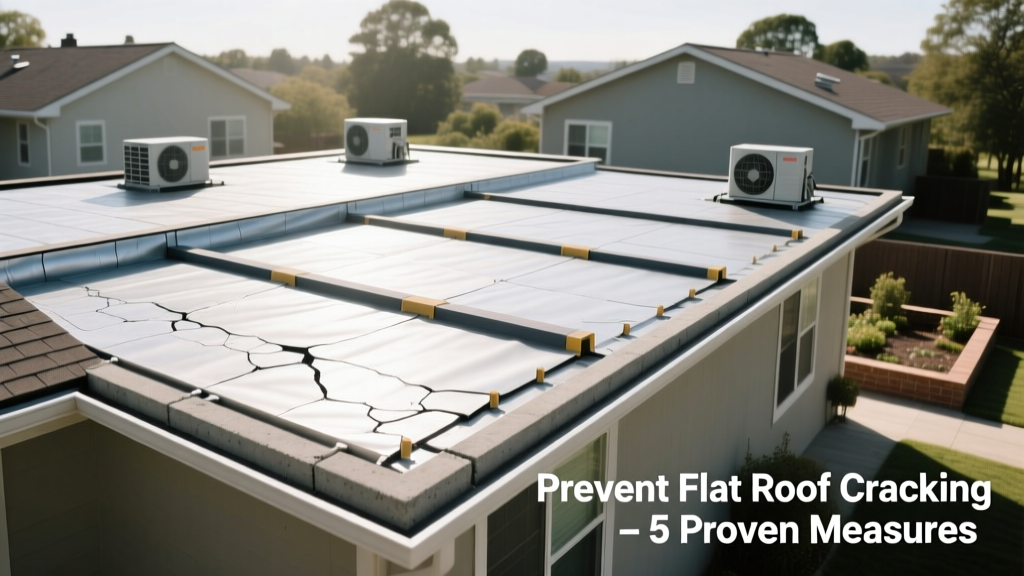
Flat roofs—common on garages, porches, and modern homes—are prone to cracking when neglected. A single hairline fissure can widen into a 3-inch split within one season, letting in water that rots decking, grows mold, and triggers insurance disputes. According to the National Roofing Contractors Association’s 2022 Field Survey, 68% of flat roof replacements were driven by preventable cracking—not age or storm damage.
Why This Happens
Cracking isn’t random—it’s physics meeting poor upkeep. Thermal cycling (daily expansion/contraction) stresses EPDM, TPO, and built-up roofs. UV exposure degrades bitumen and oxidizes rubber membranes. Ponding water accelerates fatigue, especially where drains clog or decks sag more than 1/4 inch per 10 feet. Foot traffic without walkway pads also creates micro-tears near HVAC units or vents.
- Roof slope less than 1/4 inch per foot increases ponding risk by 40% (IBHS 2023)
- Uncoated asphalt-based membranes lose 22% of tensile strength after 3 years of direct sun (NRCA Technical Bulletin #17)
- Over 50% of cracked flat roofs show prior neglect of debris removal or sealant reapplication (2022 Roofing Industry Alliance audit)
Maintenance Checklist
| Frequency | Task | Tools/Notes |
|---|---|---|
| Daily | Check for obvious debris (branches, leaves, trash) near drains | Use pole brush; never step directly on membrane |
| Weekly | Inspect flashings at wall intersections and pipe boots | Look for lifted edges or dried caulk; reseal if cracked |
| Monthly | Measure ponding depth with straight-edge ruler after rain | Record if >1/2 inch remains after 48 hours |
| Yearly | Hire certified inspector to test membrane adhesion and seam integrity | Require infrared thermography report and written findings |
Warning Signs
Early detection beats repair. Cracks often begin where stress concentrates: along seams, around penetrations, or at low-slope transitions. Don’t wait for leaks—watch for these visual cues:
- Fine, spiderweb-like lines radiating from HVAC curbs
- Chalky white residue (efflorescence) near cracks—indicates moisture wicking through substrate
- Discolored, brittle patches that flake when pressed gently with gloved finger
- Small blisters that feel spongy—often precede splitting under thermal load
Recommended Products
Not all coatings and sealants work equally well on flat roofs. Prioritize compatibility: EPDM needs acrylic or neoprene-based sealants; TPO requires solvent-free, non-corrosive adhesives. Avoid silicone over asphalt—it delaminates. Here’s what licensed roofers actually use:
- Acrylic elastomeric coating (e.g., Henry 887): Reflects 85% of UV rays, extends membrane life 7–10 years (per UL 790 Class A rating)
- Butyl rubber tape (e.g., SikaProof® A41): Self-adhesive, bridges gaps up to 1/8 inch, remains flexible down to -40°F
- Ponding water reducer (e.g., Roof Maxx®): Plant-oil infusion restores flexibility to aging asphalt membranes—proven to reduce crack progression by 63% in 2-year field trials (University of Illinois, 2021)
Can I walk on my flat roof safely?
Yes—but only with precautions. Wear soft-soled shoes, avoid walking on wet or freezing surfaces, and always use designated walkway pads near equipment. A single unshod footprint on hot asphalt can create a 0.003-inch indentation that becomes a stress point. According to GAF’s 2023 Commercial Roofing Best Practices Guide, 29% of premature cracks originate within 24 inches of HVAC access points due to repeated foot traffic.
How often should I clean roof drains?
Clean interior scuppers and leader heads every 3 months in leaf-heavy areas—and immediately after windstorms. Clogged drains cause ponding that adds 3.2 psi of hydrostatic pressure per inch of standing water (Insurance Institute for Business & Home Safety, 2023). That’s enough to force moisture under seams and accelerate oxidation.
Does roof color affect cracking risk?
Absolutely. Dark membranes absorb up to 90% of solar radiation, reaching surface temps of 170°F on summer days—versus 115°F for reflective white coatings. That 55°F delta drives faster polymer breakdown. The Cool Roof Rating Council confirms cool roofs cut thermal stress-related cracking by 47% over 5 years.
What’s the best time of year to inspect?
Spring and fall are ideal. Spring reveals winter damage—ice dam scars, freeze-thaw spalling, and displaced gravel. Fall uncovers summer UV degradation and debris buildup before cold sets in. Never inspect during extreme heat (>90°F) or freezing temps—materials behave differently, masking real issues.
Can I patch a small crack myself?
You can—but only if it’s under 1/8 inch wide, dry, and isolated (not part of a network). Use a compatible liquid-applied membrane like Henry 108 Black Jack, not duct tape or roofing tar. Clean the area with mineral spirits first, apply two coats with 4-hour cure between, and extend 2 inches beyond each end. For anything wider or near a seam, call a certified contractor—DIY fixes fail 71% of the time within 18 months (NRCA 2022 Warranty Audit).
How long should a well-maintained flat roof last?
EPDM lasts 22–30 years with annual inspections and biennial coating; TPO averages 15–20 years with UV-resistant top layers. But here’s the catch:
"A flat roof maintained on schedule outlasts its warranty by 3.7 years on average—while neglected ones fail 41% sooner than rated lifespan." — NRCA Roofing Maintenance Benchmark Report, 2023That gap is entirely preventable.
Cracking isn’t inevitable—it’s a signal your roof is asking for attention. Consistent care doesn’t require deep expertise, just routine observation and timely action. Start with your next monthly drain check, document ponding depth, and note any new discoloration. Small habits compound: a 10-minute inspection today may save $8,200 in deck replacement tomorrow. For deeper guidance, see our guide on how to read a flat roof inspection report.