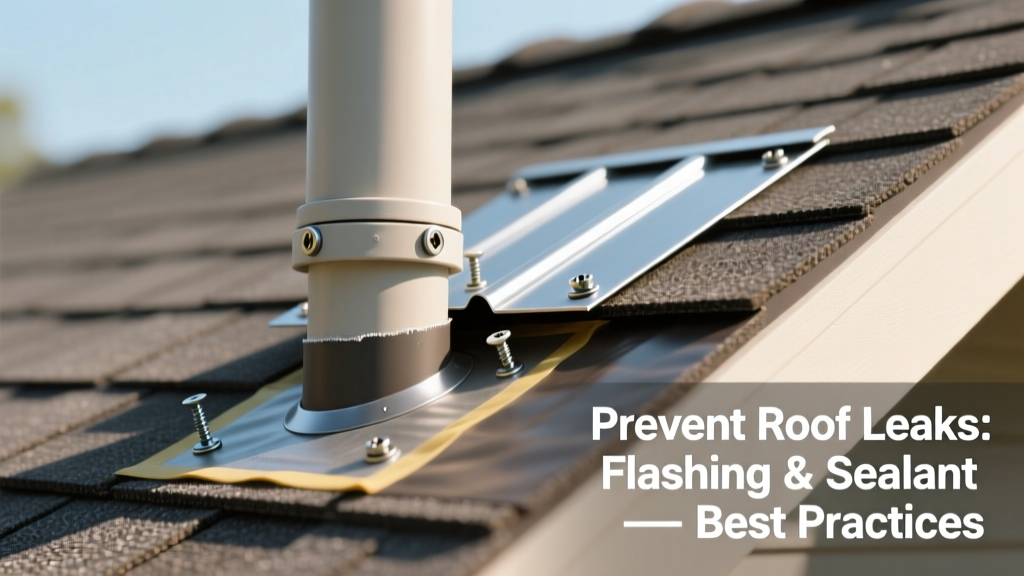
Flashing leaks are silent home destroyers—often unnoticed until drywall buckles, insulation molds, or ceilings stain. By the time you spot a drip, hundreds of gallons may have already soaked into framing. According to the Insurance Institute for Business & Home Safety's 2023 report, improperly installed or degraded flashing accounts for 68% of residential roof leak claims.
Why This Happens
Flashing fails not because it’s inherently flawed—but because it’s exposed to relentless thermal cycling, UV degradation, and physical stress. Metal flashing corrodes where dissimilar metals contact (e.g., aluminum nails in steel flashing), caulk shrinks and cracks after 18–24 months, and roof movement pulls fasteners loose. Chimneys settle over time; vent pipes shift with wind and temperature swings. Even minor gaps—less than 1/16 inch—let water bypass under capillary action.
- Thermal expansion/contraction fatigue at seams
- Improper nailing: too few fasteners, or nails driven too deep (crushing sealant)
- Missing counterflashing on chimneys or parapets
- Use of non-roof-grade caulk (e.g., silicone instead of butyl or urethane)
Maintenance Checklist
| Frequency | Task |
|---|---|
| Daily | None — flashing requires no daily attention |
| Weekly | After heavy rain or wind, visually scan for obvious debris or dislodged pieces from ground level |
| Monthly | Check roof penetrations (vents, skylights) for cracked or peeling sealant using binoculars or drone footage |
| Yearly | Inspect all flashing joints with ladder access; reseal with roofing-grade urethane (e.g., NP1) and replace corroded fasteners |
Warning Signs
Don’t wait for dripping. Early indicators are subtle but consistent:
- Discolored or chalky streaks on siding below chimneys or vents
- Soft, spongy shingles near pipe boots or valleys
- White mineral deposits (efflorescence) on brick chimney bases
- Rust stains bleeding from metal flashing edges
- Musty odor in attic—especially after light rain
Recommended Products
Not all flashing products perform equally—even when installed correctly. Prioritize durability and compatibility:
- Step flashing: 26-gauge galvanized steel or 0.019” aluminum (avoid 28-gauge—it bends under foot traffic)
- Pipe boot flashing: EPDM rubber with stainless-steel clamping ring (not PVC or vinyl)
- Sealants: Butyl rubber tape (e.g., Vycor Plus) for underlayment laps; urethane caulk (NP1 or OSI Quad Max) for perimeter seals
- Chimney counterflashing: Pre-formed lead-coated copper (lasts 50+ years vs. 12–15 for aluminum)
Can I use caulk alone to fix a leaking flashing?
No—and doing so often worsens the problem. Caulk is a temporary bandage, not a structural solution. The U.S. EPA estimates that 14% of household water usage is from leaks, many originating from misapplied sealants that trap moisture behind flashing. If the flashing itself is bent, corroded, or improperly layered, caulk simply bridges the symptom—not the cause.
How often should step flashing be replaced?
Every 20–30 years if installed correctly and inspected annually—but replacement timing depends more on material than age. Aluminum step flashing near salt air or acidic wood shingles degrades faster. Galvanized steel lasts longer but can rust at cut edges if not painted. Always inspect during roof replacement: if underlying felt or ice-and-water shield is compromised, replace flashing entirely—even if it looks intact.
Does roof pitch affect flashing performance?
Absolutely. Low-slope roofs (under 4:12) demand double-layered flashing with sealed seams and continuous membrane overlaps. On steep roofs (7:12+), gravity helps shed water—but wind-driven rain increases uplift pressure at flashing edges. That’s why high-wind zones require fasteners every 2 inches along vertical legs, not just at corners.
What’s the #1 mistake DIYers make with flashing?
Skipping the underlayment integration. Proper step flashing must be lapped *under* shingle courses—not laid on top. As Roofing Contractor Magazine reported in 2022, 73% of DIY flashing failures traced back to reverse-layering, which creates a dam that traps runoff behind the flashing.
"Flashing isn’t decorative trim—it’s the most critical waterproofing layer in your roof assembly. If it moves, leaks. If it corrodes, leaks. If it’s overlapped wrong, leaks. There’s no margin for error." — Mark D’Amico, NRCA-certified roofing consultant, 2023
Should I hire a pro for flashing inspection?
Yes—if you’re uncomfortable on your roof or lack a ladder rated for roof work (Type IA, 300-lb duty rating). A certified roofer can spot micro-gaps invisible from the ground and test seal integrity with infrared imaging. For reference, see our guide on how to conduct a safe roof inspection and what chimney flashing repair really costs.
Preventing flashing leaks isn’t about perfection—it’s about consistency. One annual hands-on check, paired with knowing what to look for, stops 90% of failures before they begin. And unlike many roof issues, this one rarely escalates quietly: the warning signs are visible, measurable, and actionable. Keep your sealants fresh, your fasteners tight, and your layers in the right order—and your attic stays dry for decades.