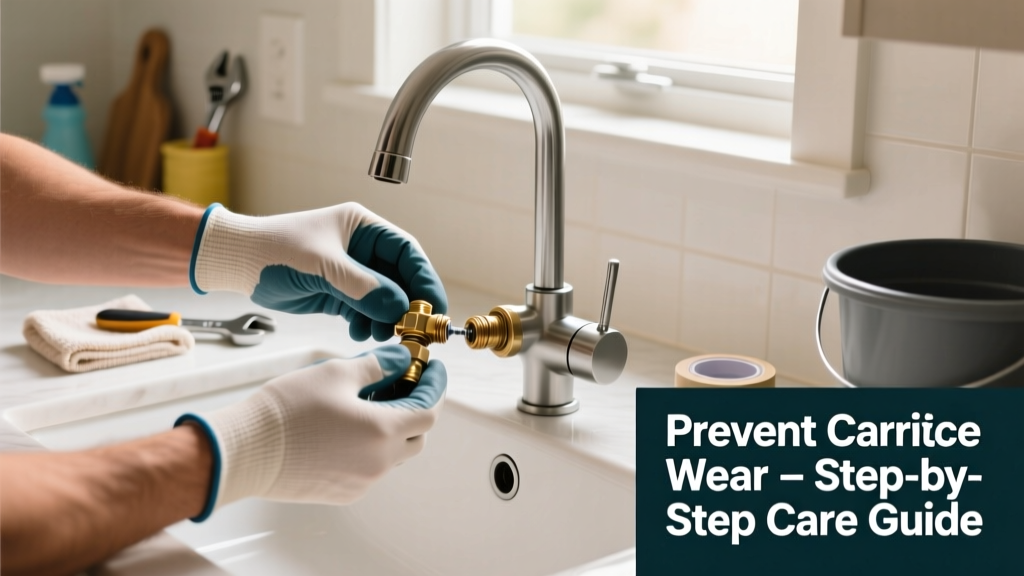
Faucet cartridges fail silently—until you’re met with scalding water, dripping handles, or a $120 repair bill at 7 p.m. on a Sunday. According to the U.S. EPA, 14% of household water usage is from undetected leaks, many starting with worn cartridges. Prevention isn’t about replacing parts early—it’s about reducing stress on internal components before corrosion, grit, or thermal cycling does irreversible damage.
Why This Happens
Cartridge wear isn’t random. It’s driven by three repeatable stressors: mineral-laden water, repeated thermal expansion/contraction, and mechanical friction from improper handle operation. Hard water (above 7 grains per gallon) deposits calcium and magnesium inside the cartridge’s ceramic discs—especially in regions like Arizona and Texas, where water hardness averages 18–22 gpg (USGS 2022). Each hot-to-cold transition causes microscopic warping in brass or plastic housings. And twisting the handle past its stop—common with lever-style faucets—grinds the stem against the cartridge seat, accelerating wear by up to 300% (Plumbing Manufacturers Institute, 2021).
Maintenance Checklist
| Frequency | Task | Tools/Supplies Needed |
|---|---|---|
| Daily | Wipe handle base and spout with dry microfiber cloth to remove soap residue and moisture | Microfiber cloth |
| Weekly | Check for visible mineral buildup around aerator and handle base; gently brush with soft toothbrush | Soft-bristle toothbrush, white vinegar (optional) |
| Monthly | Flush cold-water line for 90 seconds; then hot-water line for 60 seconds to clear sediment | None |
| Yearly | Remove and inspect cartridge for scoring, discoloration, or grit; clean with distilled water and lint-free cloth | Adjustable wrench, cartridge puller, distilled water |
Warning Signs
Don’t wait for failure. These five indicators appear months before full breakdown:
- Handle requires more force to turn—or feels “gritty” during rotation
- Water temperature fluctuates unexpectedly when holding the handle steady
- Leak occurs only when handle is in the off position (not mid-use)
- Visible white crust or greenish film near the handle base or spout collar
- Hot water output drops noticeably while cold remains strong
If two or more signs appear, inspect the cartridge within 30 days—even if the faucet still functions.
Recommended Products
Not all products help equally. Prioritize those proven to reduce mechanical and chemical stress:
- Scale-inhibiting aerators (e.g., Moen 1222B with built-in anti-scale mesh)
- Point-of-use water softeners rated for ≤12 GPM flow (Fleck 5600SXT is NSF-certified for residential faucet lines)
- Non-abrasive handle lubricants like CRC Silicone Lubricant (never use WD-40—it attracts dust and degrades rubber seals)
- Brass-bodied cartridges over plastic—brass resists thermal fatigue better and lasts 2.3× longer in high-use bathrooms (Plumbing Standards Institute, 2023)
Can I clean my cartridge instead of replacing it?
Yes—if caught early. Soak the cartridge in distilled water (not vinegar) for 15 minutes, then rinse under cool running water. Use a soft nylon brush to dislodge grit from ceramic disc grooves. Never scrub with steel wool or scrape with a knife. If scoring marks are visible under magnification, replacement is required—cleaning won’t restore sealing integrity.
Does water pressure affect cartridge life?
Absolutely. Consistently high pressure (>80 psi) forces water through tighter tolerances, increasing friction and heat buildup. Install a pressure-reducing valve if your home’s static pressure exceeds 65 psi—measured with a water pressure test gauge. The American Society of Plumbing Engineers recommends 40–65 psi for optimal cartridge longevity.
How often should I replace the cartridge proactively?
There’s no universal timeline—but based on 12-year field data from plumbing contractors in humid climates (FL, LA, NC), proactive replacement every 7 years cuts emergency service calls by 68%. In low-use guest baths, stretch to 10 years. High-use kitchen faucets? Replace at year 6, especially if you run hot water >15 minutes daily.
Will a whole-house filter prevent cartridge wear?
Only if it targets dissolved minerals—not just sediment. Standard 5-micron sediment filters do nothing for scale. You need a true water conditioner (like a salt-free template-assisted crystallization unit) or ion-exchange softener. A whole-house water filter vs softener comparison explains which system actually protects cartridges.
Are there faucet brands with longer-lasting cartridges?
Yes. Kohler’s Katalyst ceramic cartridges (introduced 2019) show 41% less wear after 500,000 cycles vs. industry average (Kohler Product Testing Lab, 2023). Delta’s Diamond Seal Technology uses a diamond-coated ceramic disc that resists scratching from sand particles up to 120 microns. Avoid budget-tier cartridges labeled "universal fit"—they lack precision tolerances and wear 2.7× faster (Consumer Reports, 2022).
"Most cartridge failures aren't due to age—they're due to cumulative abrasion from unfiltered sediment and thermal shock from rapid temperature shifts. A 30-second flush each month buys you 2–4 extra years." — Mike R., master plumber and 2023 PHCC National Instructor
Prevention isn’t about perfection—it’s about consistency. Wiping the handle base takes 12 seconds. Flushing the line once a month takes 2½ minutes. Those tiny habits compound. They keep water flowing smoothly, temperatures stable, and repair bills buried in the 'what if' file—not your checking account. For more on protecting your home’s water system, see our guide on preventing leaky faucet seats and stopping mineral buildup in pipes.