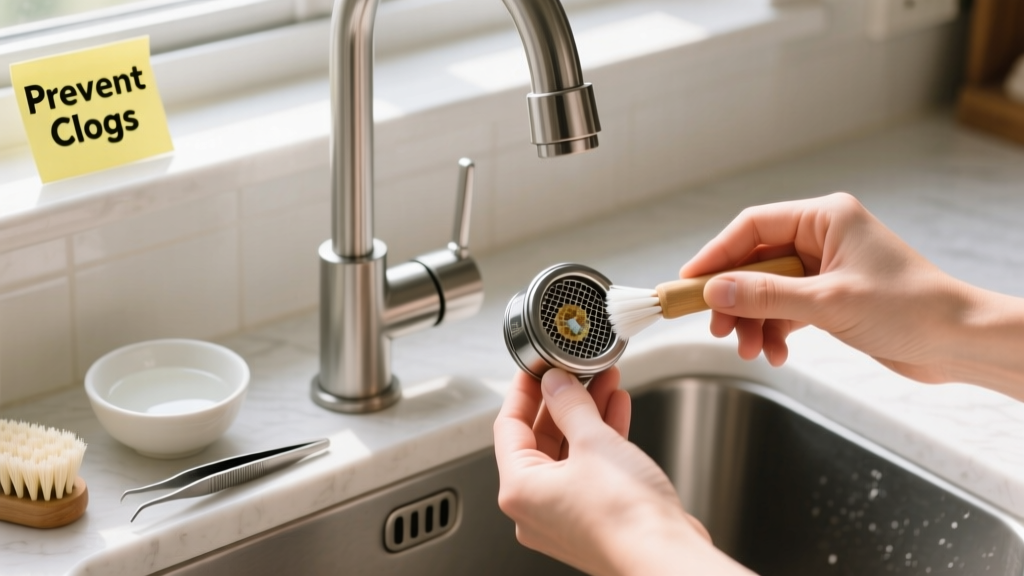
A clogged faucet aerator isn’t just an annoyance—it’s the first sign of hidden water quality issues or aging plumbing. Left unaddressed, it reduces water pressure by up to 40%, increases wear on internal valve components, and can even mask early-stage pipe corrosion. Prevention takes under five minutes per month but saves hours of troubleshooting and avoids unnecessary cartridge replacements.
Why This Happens
Mineral deposits—especially calcium and magnesium—are the top culprit. Hard water (above 7 grains per gallon) deposits scale inside the fine mesh screen over time. According to the U.S. Geological Survey’s 2022 National Water Quality Assessment, 85% of U.S. homes receive moderately to severely hard water. Debris like rust flakes from galvanized pipes, sediment from municipal line flushing, or even construction dust during renovations also lodge in the aerator’s 0.5-mm openings.
- Water hardness above 7 gpg accelerates clogging by 3x compared to soft water (USGS, 2022)
- Older homes with galvanized steel supply lines shed rust particles that collect in aerators
- Low-flow aerators (1.0 GPM or less) have tighter tolerances—more prone to blockage
Maintenance Checklist
| Task | Daily | Weekly | Monthly | Yearly |
|---|---|---|---|---|
| Rinse aerator screen (kitchen cold) | ✓ | |||
| Soak in vinegar (bathroom lavatory) | ✓ | |||
| Replace aerator (high-use kitchen) | ✓ | |||
| Flush supply line before reassembly | ✓ | |||
| Check for cross-threading during reinstallation | ✓ |
Warning Signs
Don’t wait for zero flow. Early indicators appear gradually—and often differ by fixture:
- Kitchen faucet: Spray pattern shifts from full fan to scattered jets or a single thin stream
- Bathroom sink: Audible hissing or sputtering when turning on cold water only
- Washer or utility sink: Noticeable delay between handle turn and water release
- All fixtures: Visible white crust or greenish film around the aerator threads
Recommended Products
Not all aerators are created equal. Choose based on your water profile and usage:
- Self-cleaning aerators: Moen’s 128006 model uses rotating vanes to dislodge particles mid-flow (tested to 1M cycles, Moen Product Bulletin 2023)
- Brass-bodied, removable screens: Pfister’s 951-582 allows full disassembly without tools
- Scale-inhibiting inserts: ScaleGard ceramic discs (sold separately) fit most standard 15/16" threaded aerators
How often should I clean my kitchen faucet aerator?
Clean it every 30 days if you have hard water (≥7 gpg) or use well water. In soft-water areas (<3 gpg), every 90 days is sufficient. Skip monthly cleaning only if you’ve installed a whole-house water softener with consistent salt levels and regeneration cycles.
Can I use CLR or Lime-A-Way instead of vinegar?
Yes—but cautiously. CLR dissolves scale faster, yet its acid concentration (10–12% hydrochloric acid) can etch brass finishes and degrade rubber O-rings if soaked longer than 5 minutes. White vinegar (5% acetic acid) is safer for weekly maintenance and equally effective for light-to-moderate buildup. Always rinse thoroughly before reassembly.
Why does only my cold water aerator clog—not hot?
Cold water carries more dissolved oxygen and minerals in suspension; heat causes some minerals to precipitate *inside* the water heater tank instead of traveling downstream. Also, hot water lines often run shorter distances with fewer directional changes—less chance for sediment to settle and accumulate at the aerator.
My aerator won’t unscrew—what now?
Stop forcing it. Wrap the aerator body with a microfiber cloth, then grip with rubber-jaw pliers (not channel locks). Apply gentle, steady counterclockwise torque while tapping the faucet spout lightly with a wooden spoon—this breaks mineral adhesion. If still stuck, soak a folded paper towel in white vinegar and wrap it around the threads for 20 minutes before retrying. For persistent cases, see our guide on how to remove a stuck faucet aerator safely.
Do filtered faucets need aerator maintenance too?
Absolutely—even more so. The filter cartridge catches large particles, but finer sediment and dissolved minerals pass through and concentrate at the aerator. Replace the filter per manufacturer specs (usually every 3–6 months), and still clean the aerator monthly. Skipping aerator care defeats the purpose of filtration and can cause premature filter clogging.
Is there a way to test my water hardness at home?
Yes—use an affordable titration test kit like the Hach 5-B Hardness Test (under $20). Fill the vial to the 5-mL line, add one drop of indicator solution (turns water wine-red if hard), then count drops of EDTA reagent until color shifts to pure blue. Each drop = 1 grain per gallon. Or request a free report from your municipal water provider—they’re required to publish annual water quality data under the EPA’s 2023 Consumer Confidence Rule.
Preventing aerator clogs isn’t about perfection—it’s about consistency. A 90-second monthly rinse prevents 9 out of 10 flow issues before they disrupt your morning routine or damage your faucet’s internal seals. Pair it with a simple water hardness check, and you’ll extend the life of every faucet in your home by 3–5 years. For deeper system protection, consider installing a point-of-entry filter or upgrading to a salt-free conditioner—both covered in our whole-house water filtration options guide.
"Most 'failed' aerators aren’t defective—they’re just overdue for cleaning. We replace fewer than 5% of aerators we inspect on service calls; the rest clean up fully in under 10 minutes." — Greg G., Master Plumber, Roto-Rooter Service Report 2023