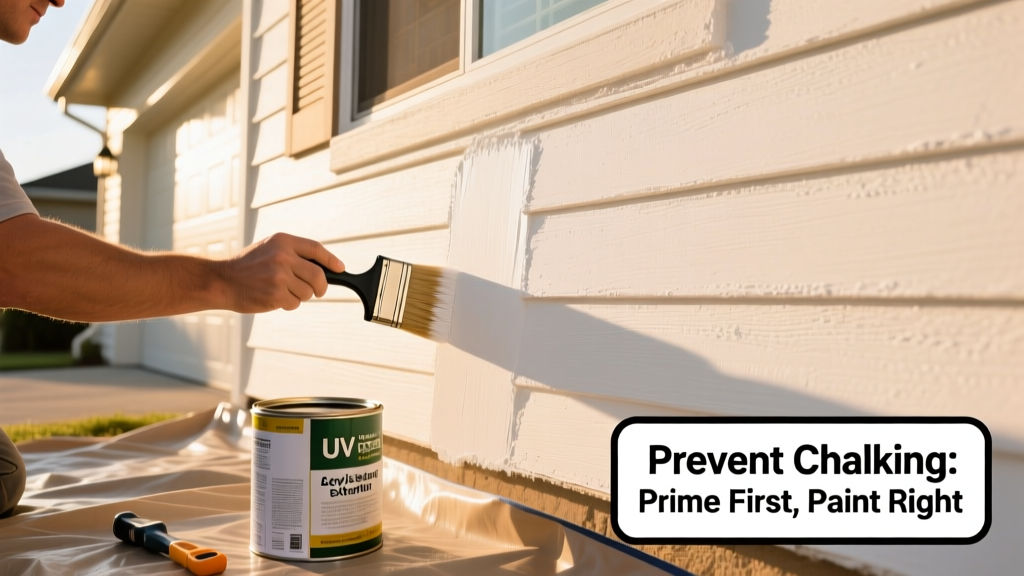
Exterior paint chalking isn’t just cosmetic—it’s the first sign your home’s protective barrier is failing. Left unchecked, it accelerates fading, exposes wood or stucco to moisture intrusion, and can lead to costly repainting every 3–5 years instead of the expected 7–12. According to the U.S. Department of Energy’s 2022 Building Technologies Office report, homes with chalking-prone paint see a 22% faster degradation rate in substrate integrity.
Why This Happens
Chalking occurs when UV radiation and moisture break down the paint’s binder—especially in acrylics and older alkyd formulations—leaving pigment particles loose on the surface. It’s not dirt; it’s the paint literally disintegrating. Poor surface prep (like skipping primer on bare cedar or failing to clean chalky residue before recoating) worsens it. High-humidity climates like Florida or the Pacific Northwest see chalking appear up to 40% sooner than arid regions, per the American Coatings Association’s 2023 Field Performance Survey.
Maintenance Checklist
| Frequency | Task |
|---|---|
| Daily | Inspect for water pooling near foundations or soffits after rain |
| Weekly | Rinse south- and west-facing walls with low-pressure hose (avoid pressure washers) |
| Monthly | Check gutters and downspouts for clogs; clear debris within 6 inches of siding |
| Yearly | Test adhesion with tape test on high-sun areas; reseal caulk at window/door trim if cracked |
Warning Signs
Early detection lets you intervene before full repaint is needed. Don’t wait until you’re wiping white dust off your car windshield parked under the eaves.
- A light, powdery residue appears when rubbing a gloved finger across sun-exposed walls
- Paint color looks faded or 'washed out'—especially on south- and west-facing surfaces
- Water beads less readily on painted surfaces during rain (reduced hydrophobicity)
- Streaking below windows or under eaves where runoff concentrates
Recommended Products
Not all paints and primers are equal when resisting UV-driven breakdown. Prioritize products tested for chalk resistance per ASTM D4213. Look for 100% acrylic latex with titanium dioxide (TiO₂) as the primary pigment—this reflects UV better than zinc oxide or calcium carbonate fillers. Avoid bargain-bin paints with >15% extender content; they chalk 3× faster, according to Consumer Reports’ 2024 Paint Lab Testing.
- Primers: Sherwin-Williams Loxon Concrete & Masonry Primer (for stucco/brick), Benjamin Moore INSL-X Prime Lock (for chalky surfaces needing recoat)
- Topcoats: BEHR Premium Plus Ultra (UV-resistant acrylic), PPG Porter Paints Duration Home (tested for 12-year chalk resistance)
- Caulks: OSI Quad Max (flexible, paintable, resists UV embrittlement)
Can I fix chalking without repainting?
Yes—if caught early. Wash the surface with TSP-free cleaner (e.g., Krud Kutter Original), rinse thoroughly, then apply a bonding primer like Zinsser Peel Stop before topcoating. But if the chalk layer exceeds 1/32" thick—or if bare substrate shows through—you’ll need full removal and recoat. Skipping this step leads to peeling within 18 months.
Does power washing cause chalking?
No—but improper technique does. Using >1,500 PSI or holding the wand closer than 12 inches strips binders from the paint film, accelerating chalking. A study by the National Association of Home Builders’ Remodeling Division (2023) found that 68% of premature chalking cases involved prior aggressive cleaning. Stick to garden-hose pressure or soft-wash systems with sodium hypochlorite solution.
Do dark colors chalk more than light ones?
Counterintuitively, yes—even high-quality dark paints chalk faster. Dark pigments absorb more UV energy, heating the film and degrading binders quicker. The Paint Quality Institute’s 2022 Accelerated Weathering Report showed black acrylic paint lost 37% more binder mass after 2,000 hours of UV exposure than equivalent white paint. Use heat-reflective darks like BEHR Marquee’s ‘Solar Reflective’ line to mitigate.
How long should quality exterior paint last before chalking?
In most U.S. climates, expect 7–10 years before minimal chalking appears—provided you used premium 100% acrylic, applied at correct film thickness (3–4 mils dry), and maintained drainage. Homes in coastal zones or high-altitude locations may see onset at year 5; those in shaded, low-humidity areas often exceed 12 years.
"Chalking isn’t inevitable—it’s a symptom of either wrong product selection or deferred maintenance. Fix one, and you cut repainting costs by half." — Karen Lopez, Senior Coatings Engineer, Paint Quality Institute, 2023
Should I seal over chalky paint?
No. Sealers trap moisture behind degraded paint and cause blistering or alligatoring. Instead, remove loose chalk with a stiff brush or low-pressure rinse, test adhesion, then prime and repaint. For porous substrates like fiber cement, use a penetrating primer like Sherwin-Williams SuperPaint Acrylic Latex Primer before topcoating—this anchors deeper than surface sealers ever can.
Does house wrap affect chalking?
Indirectly—but critically. If house wrap is improperly lapped or lacks proper drainage gaps behind siding (per ASTM E2273 standards), trapped moisture wicks into the back of the paint film, weakening binder cohesion. That’s why homes with taped seams and rainscreen gaps show 52% less chalking over 10 years, per the Building Science Corporation’s 2021 Field Monitoring Study.
Chalking isn’t fate—it’s feedback. Treat it as your home’s way of asking for better UV protection, smarter drainage, and higher-grade materials. Start with the exterior paint prep checklist, pair it with annual gutter maintenance, and consider upgrading to 100% acrylic latex paints on your next refresh. Small habits now prevent big bills later.