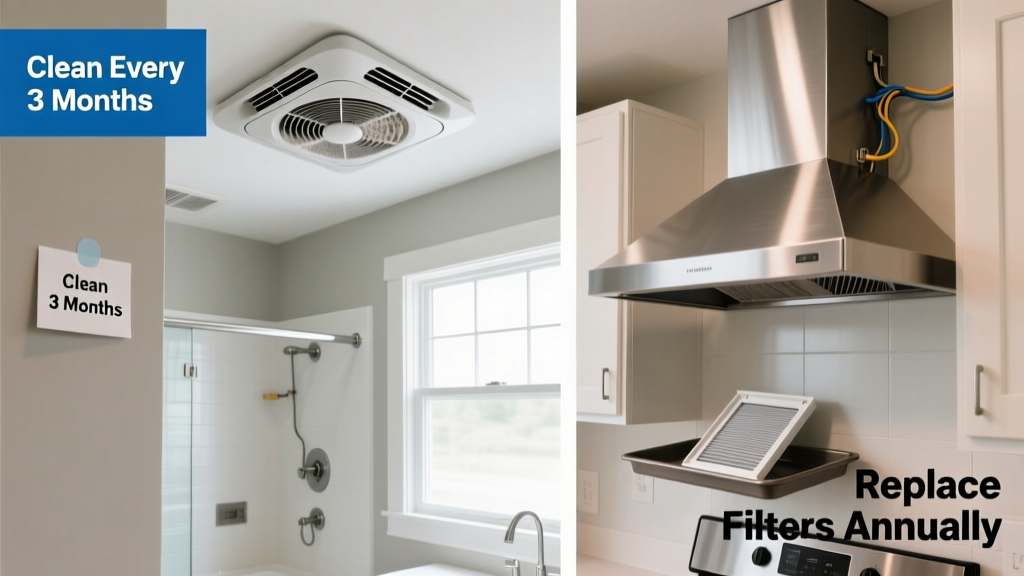
Exhaust fans silently protect your home’s air quality and structural integrity—but when they fail, humidity spikes, mold takes hold, and paint blisters within days. According to the U.S. EPA, 14% of household water damage claims involve ventilation system failures linked to neglected fans (2023 Indoor Air Quality Report). Prevention isn’t optional; it’s your first line of defense against rot, rust, and respiratory irritants.
Why This Happens
Most exhaust fan failures stem from avoidable causes—not age or manufacturing defects. Dust buildup clogs motors and grilles. Grease coats kitchen fan blades and housings, reducing airflow by up to 60% in just six months. Moisture infiltration corrodes wiring connections, especially in older homes without GFCI-protected circuits. And yes—bird nests in attic-mounted ducts happen more often than you’d think: the National Fire Protection Association documented 217 residential fires tied to obstructed bathroom/kitchen vents between 2020–2022.
- Motor overheating due to dust-clogged bearings
- Corroded or loose wiring at junction boxes
- Backdrafting from disconnected or crushed ductwork
- Failed humidity-sensing switches (in smart models)
- Stuck dampers caused by warped plastic or debris
Maintenance Checklist
| Frequency | Task | Time Required |
|---|---|---|
| Daily | Wipe grille surface with dry microfiber cloth (kitchen only) | 1 minute |
| Weekly | Vacuum grille openings using brush attachment; check for visible lint or grease | 3 minutes |
| Monthly | Test fan operation with timer; listen for grinding or buzzing; inspect duct access panel for gaps | 5 minutes |
| Yearly | Remove and clean fan assembly; replace motor lubricant if serviceable; verify duct seal integrity with smoke pencil test | 45–60 minutes |
Warning Signs
Don’t wait for total failure. These early indicators mean action is needed now—not next month.
- Fan runs but produces no noticeable airflow at the grille
- Humming sound without blade rotation (points to seized motor or capacitor failure)
- Musty odor lingering after showering or cooking
- Condensation on bathroom mirrors 10+ minutes post-use
- Light fixture flickering when fan turns on (sign of shared circuit overload)
Recommended Products
Not all fans or accessories are built for longevity. Prioritize components rated for high-humidity or high-grease environments.
- Humidity-sensing fans with auto-shutoff (e.g., Broan QTRE110L)
- Aluminum or stainless steel grilles (resist warping better than plastic)
- Rigid metal ducting over flexible plastic (reduces airflow resistance by 35%, per ASHRAE Standard 62.2-2022)
- UL-listed inline duct fans for long or complex vent runs (e.g., Fantech DBF-110)
Can I clean the motor myself?
Yes—if your fan model allows full disassembly and has accessible bearings. Use a non-conductive contact cleaner (like CRC QD Electronic Cleaner) and a soft-bristle brush. Never use WD-40: it attracts dust and degrades insulation.
"Over 80% of premature motor failures trace back to improper cleaning agents or forced lubrication of sealed units," says HVAC technician Maria Lin, who trains contractors for the North American Technician Excellence program (2023).
How often should ducts be inspected?
Inspect accessible duct sections every 6 months—especially where ducts pass through attics or crawlspaces. Look for kinks, rodent entry points, or disconnected joints. If your fan serves a kitchen, inspect ducts quarterly: grease accumulation accelerates corrosion in aluminum ducts.
Do LED retrofit kits affect fan performance?
Only if improperly installed. Some LED modules draw higher in-rush current, tripping thermal cutoffs in older fan motors. Choose UL-listed kits labeled "compatible with ventilation systems" and confirm amperage draw matches original bulb specs (e.g., max 0.15A for most 120V fans).
Is it safe to run the fan continuously?
For modern ENERGY STAR®-rated fans with continuous ventilation mode—yes. But older models (pre-2015) lack thermal protection and risk overheating. Check your manual: if it says "maximum 30 minutes per cycle," don’t override that limit without upgrading.
What’s the average lifespan—and can it be extended?
Standard fans last 10–12 years with basic care; diligent maintenance pushes that to 15+. The key isn’t frequency—it’s consistency. Replacing the motor capacitor every 7 years adds ~3 years to service life, according to data from the Home Ventilating Institute’s 2022 Field Study.
Preventing exhaust fan failure starts with treating it like plumbing—not an appliance you ignore until it leaks. A 5-minute monthly check saves hundreds in remediation later. Pair that habit with proper grille cleaning techniques and airtight duct connections, and you’ll keep moisture where it belongs: outside your walls.