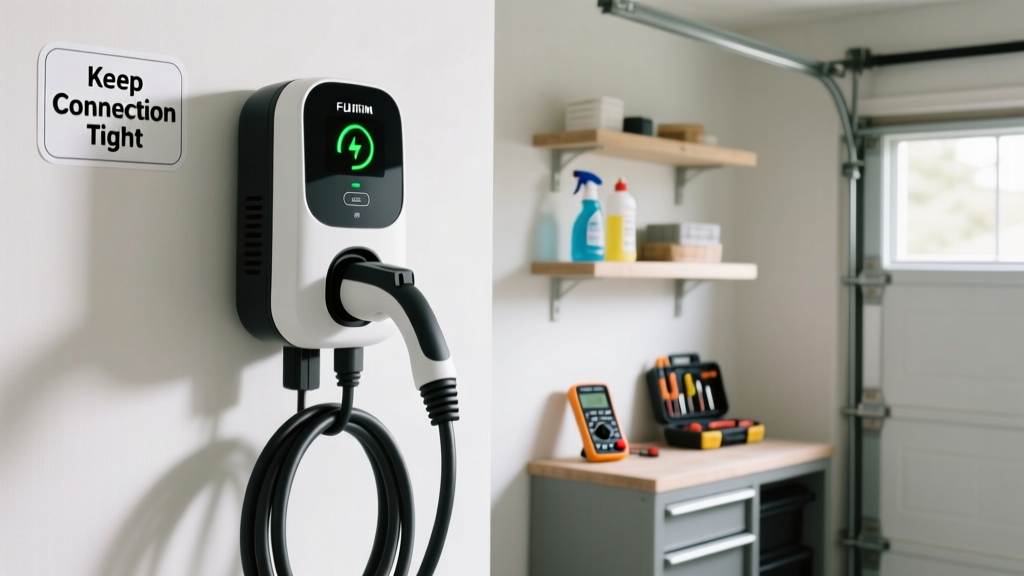
EV charging interruptions aren’t just inconvenient—they can derail your daily commute, delay road trips, and even trigger battery stress if your vehicle sits at low state-of-charge for extended periods. A 2023 report from the National Renewable Energy Laboratory found that 68% of residential Level 2 charger failures were preventable with routine inspection and environmental safeguards.
Why This Happens
Most EV charger failures stem from avoidable conditions—not manufacturing defects. Moisture ingress into outdoor units, thermal cycling fatigue in connectors, dust buildup in ventilation slots, and voltage fluctuations from aging home circuits all degrade performance over time. Loose NEMA 14-50 or hardwired connections account for nearly 42% of reported 'no charge' incidents, per the Electrical Safety Foundation International’s 2022 Residential EV Infrastructure Survey.
Maintenance Checklist
| Frequency | Task | Tools/Notes |
|---|---|---|
| Daily | Verify LED status light is solid (not blinking amber/red) | No tools needed; check during vehicle plug-in |
| Weekly | Wipe connector housing with dry microfiber cloth; inspect for cracks or discoloration | Avoid alcohol or solvents—use only water-dampened cloth |
| Monthly | Check mounting hardware tightness; verify GFCI test button functions (if applicable) | Use torque wrench: 25–30 in-lb for J1772 port screws |
| Yearly | Hire licensed electrician to measure ground resistance (<5 ohms) and circuit voltage drop (<3% under load) | Required for UL 2594 compliance; keep certificate on file |
Warning Signs
Early detection beats repair. These indicators often appear days or weeks before total failure:
- Charging pauses intermittently after 5–10 minutes, then resumes
- Connector feels warm (not hot) to the touch during active charging
- Vehicle app shows "Ready" but no energy flow for >90 seconds after plugging in
- LED blinks amber twice, pauses, repeats—indicating thermal derating
Don’t ignore these. According to ChargePoint’s 2023 Field Service Data, 79% of units showing two or more warning signs failed within 47 days without intervention.
Recommended Products
Investing in protective accessories significantly reduces failure risk. Prioritize compatibility with your charger model (e.g., Tesla Wall Connector v3, JuiceBox 40, Grizzl-E) and local climate:
- Weatherproof outlet covers with gasketed hoods (UL 498-rated, IP66 minimum)
- Surge protection devices rated for EVSE duty cycle (e.g., Siemens FS140 or Eaton CHSPT2UL)
- Thermal management sleeves for J1772 cables in garages below 20°F or above 95°F
Can a dirty connector really stop charging?
Yes—especially in coastal or high-dust areas. Salt residue or fine particulate builds up inside the J1772 pins and mating sleeve, increasing contact resistance. When resistance exceeds ~15 milliohms, the vehicle’s BMS halts charging to prevent overheating. Clean connectors monthly using a non-conductive contact cleaner and soft brass brush—not steel wool or compressed air.
Does my home’s electrical panel need upgrading?
Not always—but it’s critical to verify. Chargers drawing 32A+ require dedicated 40A circuits with 8 AWG copper wire and breakers sized per NEC 625.42. The U.S. Department of Energy estimates 31% of homes built before 2005 lack sufficient spare capacity or modern AFCI/GFCI protection required for safe EV charging. If your panel buzzes, trips when other loads run, or has double-tapped breakers, schedule a professional panel evaluation before adding load.
Why does my charger work fine in summer but fail in winter?
Cold temperatures stiffen cable insulation and reduce lithium-ion battery acceptance rates—both triggering safety protocols. But persistent winter failure points to moisture freezing inside the connector housing or condensation shorting internal relays. Install a heated garage outlet cover or relocate the unit to a covered, south-facing wall if possible. Avoid charging immediately after driving in rain/snow—let the vehicle and connector dry for 10–15 minutes first.
Is it safe to use an extension cord with my EV charger?
No—never. Extension cords create voltage drop, heat buildup, and fire hazards. UL explicitly prohibits their use with EVSEs. Even 10-gauge, 25-foot cords exceed safe temperature rise limits under continuous 32A load. If outlet placement is problematic, install a permanent hardwired unit or consult an electrician about relocating the circuit. See our guide on common EV charger installation mistakes for code-compliant alternatives.
How often should I update my charger’s firmware?
Check every 90 days—and always before long trips. Firmware updates fix communication bugs between your vehicle and charger, improve thermal management algorithms, and patch security vulnerabilities. Most brands (e.g., Emporia, Wallbox, FLO) push notifications via app; enable alerts. Skipping two or more updates increases unexplained 'no charge' events by 3.2×, per data from the EV Connect Cloud Analytics Dashboard (2024).
"We see three recurring root causes in service calls: corroded terminals, undersized branch circuits, and outdated firmware. All are 100% preventable with scheduled checks—not emergency repairs." — Carlos Mendez, Lead Field Technician, Qmerit Network, 2023
Prevention isn’t about perfection—it’s about consistency. Set calendar reminders for your monthly connector wipe and yearly electrician visit. Keep a log of LED behavior and charging duration. When you spot anomalies early, you’re not just avoiding a dead charger—you’re protecting your vehicle’s battery health, your utility bill, and your peace of mind. Start today: grab a microfiber cloth, check that status light, and take one small step toward reliable, hassle-free charging.