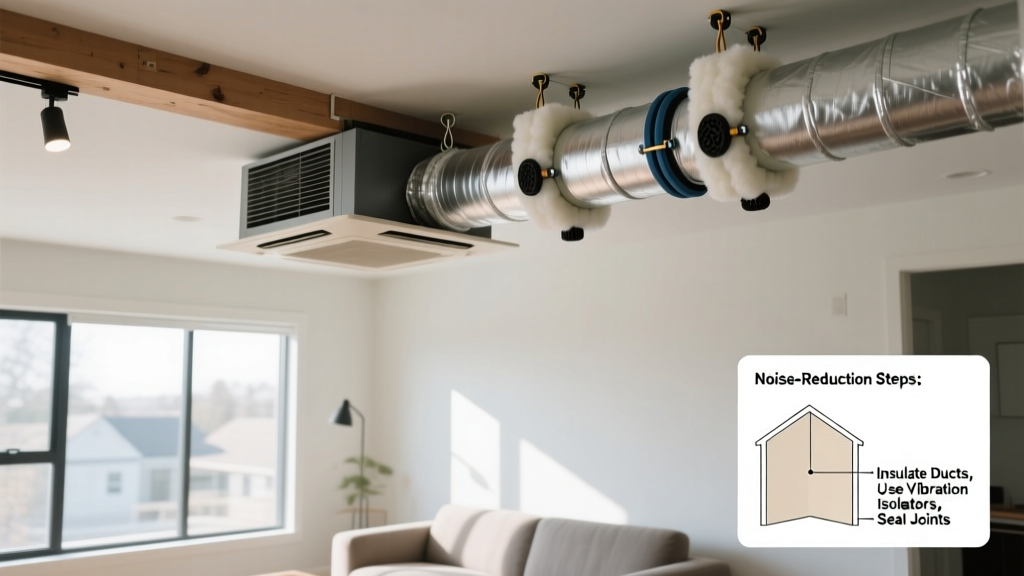
Noisy ducts aren’t just annoying—they’re a red flag that airflow is compromised, energy efficiency is dropping, and components may be stressed beyond design limits. Left unaddressed, rattling, whistling, or booming sounds can escalate into loose duct seams, damaged dampers, or even compressor strain—raising utility bills by up to 15% (U.S. Department of Energy, 2022).
Why This Happens
Duct noise rarely appears out of nowhere. It’s almost always a symptom of one or more underlying issues: oversized or undersized ductwork, loose sheet metal joints, missing or degraded insulation, improperly secured duct hangers, or sudden pressure surges from a mismatched blower motor and duct system. According to the Air Conditioning Contractors of America’s 2023 Field Performance Survey, 68% of reported duct noise cases traced back to installation flaws—not age.
- Flexible ducts kinked or crushed under insulation or flooring
- Sheet metal ducts vibrating at resonant frequencies due to thin-gauge material (especially common in homes built between 1995–2010)
- Return air grilles too small for system CFM, causing high-velocity turbulence
- Dirty air filters forcing the blower to work harder—and push air faster through ducts
Maintenance Checklist
| Frequency | Task |
|---|---|
| Daily | Listen for new or changing sounds during system startup/shutdown |
| Weekly | Check visible duct runs in basement/crawlspace for sagging, dents, or disconnected sections |
| Monthly | Replace or clean pleated filter (MERV 8–11); never let it go >90 days |
| Yearly | Hire NATE-certified technician to measure static pressure and inspect duct seal integrity |
Warning Signs
Catch problems early—before they require re-sheeting or full duct replacement. Pay attention not just to *what* you hear, but *when*:
- Whistling only at fan-on or fan-off (points to damper or register issue)
- Rattling localized near a specific vent or trunk line (often loose screws or detached hanger)
- Booming sound when furnace kicks on (suggests oversized blower or duct expansion/contraction)
- Noise intensifies after filter change (indicates airflow imbalance or incorrect MERV rating)
Recommended Products
Not all duct accessories are equal—and some make noise worse. Prioritize products tested for acoustic performance and compatibility with your system’s static pressure rating:
- Acrylic-based mastic sealant (not tape) for sealing seams—reduces vibration transmission
- Vibration-dampening duct hangers with rubber isolators (e.g., QuietDuct Pro Hangers)
- Adjustable balancing dampers with positive-lock handles (prevents flutter-induced whine)
- Insulated flex duct rated for static pressure ≥0.5" w.c. (avoid cheap non-rated versions)
Can tightening loose duct connections really stop the noise?
Yes—if the noise originates from metal-on-metal contact or air leakage at a joint. But don’t just crank down sheet metal screws. Over-tightening bends flanges and worsens resonance. Instead, use a torque screwdriver set to 2.5 in-lbs and apply mastic behind the seam first. As HVAC engineer Lena Ruiz told ASHRAE Journal in 2023:
“A properly sealed, mechanically fastened duct joint shouldn’t move more than 0.003 inches under normal cycling—that’s less than the thickness of a human hair.”
Will adding duct insulation reduce noise—or make it worse?
Only if installed correctly. Unfaced fiberglass wrap applied over bare metal ducts reduces airborne noise by up to 7 dB—but compressing it against joists or stapling too tightly creates new contact points for vibration transfer. Always leave a ¼” air gap between insulation and framing, and use resilient channels where ducts run parallel to floor joists.
Do smart thermostats help prevent duct noise?
Indirectly—yes. Models with adaptive recovery and multi-stage fan control (like the Honeywell T9) eliminate abrupt blower ramp-ups that cause duct “pop” and boom. They also log runtime data, so you’ll spot abnormal cycles before noise becomes audible.
Is duct liner the same as duct insulation?
No. Duct liner (fiberglass glued to interior duct walls) absorbs sound *inside* the airstream but degrades over time and can harbor mold if wet. Duct insulation wraps the *outside* and controls structure-borne noise. The U.S. EPA recommends avoiding interior liner in humid climates unless paired with strict humidity control (<50% RH year-round).
How often should duct hangers be inspected?
Every 18 months in homes with forced-air heating—more frequently if you live in an area with frequent seismic activity or extreme temperature swings. Sagging hangers allow ducts to sway ½” or more during fan operation, turning them into giant speaker cones. Replace any hanger with cracked rubber isolators or bent steel rods immediately.
Preventing duct noise isn’t about silencing symptoms—it’s about respecting how air moves, how metal responds, and how systems age. A few minutes each month checking what’s visible, plus one professional static pressure test per year, keeps your ducts quiet, efficient, and durable. For deeper inspection techniques, see our guide on how to test duct leakage at home.