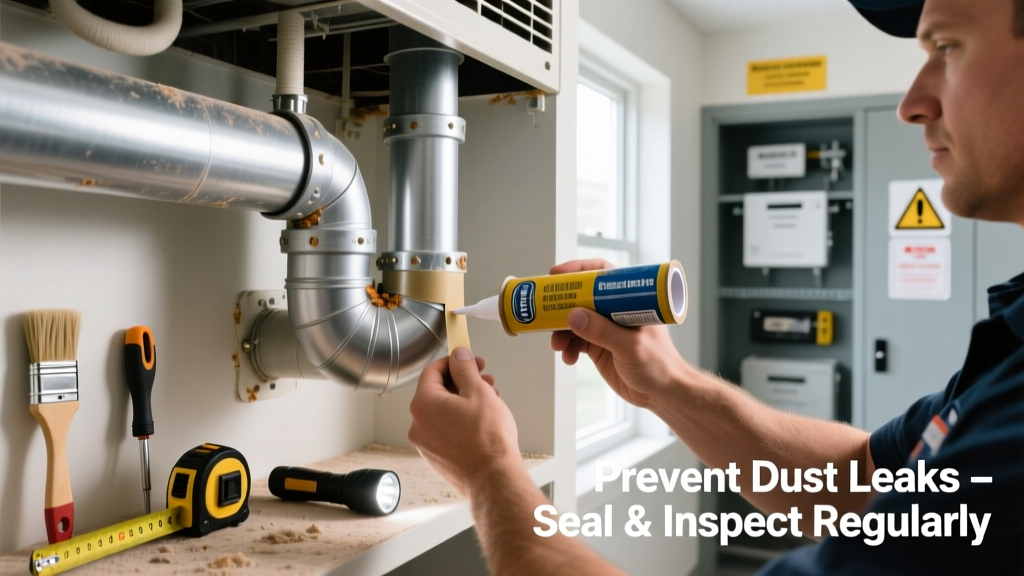
Leaky ducts silently waste up to 30% of your heated or cooled air—driving up utility bills, straining your HVAC system, and circulating dust or mold spores through your home. According to the U.S. Department of Energy, the average home loses 20–30% of conditioned air through duct leaks, mostly in attics, crawl spaces, and garages where joints loosen over time.
Why This Happens
Duct leakage isn’t random—it’s predictable wear tied to material fatigue, poor installation, and environmental stress. Flexible ducts kink or tear when bent too sharply during installation; metal seams separate as expansion-contraction cycles repeat year after year; and tape (especially standard duct tape) dries out and peels within 1–2 years. Rodents in crawl spaces chew through insulation and liner, while attic temperatures above 140°F accelerate sealant degradation.
- Improper initial sealing with non-UL 181–rated tape or mastic
- Undersized or over-tightened duct hangers causing vibration stress
- Use of fiberglass duct board without proper joint reinforcement
- Uninsulated ducts in unconditioned spaces freezing and cracking in winter
Maintenance Checklist
| Task | Daily | Weekly | Monthly | Yearly |
|---|---|---|---|---|
| Inspect visible duct runs for sagging or disconnection | — | — | ✓ | — |
| Check filter status and replace if clogged | — | ✓ | — | — |
| Tighten loose register boots and collar screws | — | — | ✓ | — |
| Verify insulation integrity on attic/crawl space ducts | — | — | — | ✓ |
| Professional duct leakage test + sealing | — | — | — | ✓ (every 3–5 years) |
Warning Signs
Don’t wait for a technician to spot what your own senses can detect. Uneven room temperatures—like a bedroom staying 5°F warmer than the living room despite identical thermostat settings—often point to supply duct leaks downstream. A musty odor near vents may signal moisture buildup from condensation in leaking cold-air ducts. You might also hear faint whistling near registers or feel airflow around duct seams when holding your hand 1 inch away.
- Higher-than-normal energy bills with no change in usage patterns
- Dust accumulation around vents or on baseboards despite regular cleaning
- Visible gaps, crushed sections, or disconnected flex duct near air handlers
Recommended Products
Not all duct sealants perform equally—and some make problems worse. Avoid gray cloth-backed 'duct tape' entirely: it fails under temperature swings and humidity. Instead, use products tested and listed to UL 181A-P (for pressure-sensitive tape) or UL 181B-FX (for mastic). For DIY sealing, water-based mastic with fiberglass mesh tape works well on rigid metal joints. For flexible duct connections, metal clamps with neoprene gaskets outperform zip ties long-term. In high-humidity areas, consider R-8 insulated flex duct instead of R-4 to reduce condensation-related leaks.
Can I seal ducts myself—or do I need a pro?
Small, accessible leaks (e.g., at register boots or plenum connections) are safe DIY jobs using mastic and brush-on application. But hidden leaks in walls, ceilings, or buried attic ducts require pressure testing with a duct blaster—and that’s best left to NATE-certified technicians. The EPA estimates that 60% of duct sealing attempts fail because homeowners miss 70% of actual leak points without diagnostic tools.
Does duct cleaning prevent leaks?
No—duct cleaning removes debris but doesn’t address structural gaps or degraded seals. In fact, aggressive cleaning can loosen already-fragile tape or crack brittle mastic. Focus first on sealing; cleaning is only needed if you see mold growth, rodent nesting, or excessive debris blocking airflow.
How often should ductwork be replaced?
Well-installed metal ductwork lasts 20–30 years; flexible ducts typically last 10–15 years before liner delamination or outer jacket cracking begins. Replace flex ducts showing fraying, kinks deeper than 1/3 the diameter, or compression that reduces cross-section by more than 25%. Don’t wait until leaks appear—schedule replacement based on age and visual condition.
Will sealing ducts improve indoor air quality?
Yes—if your ducts run through garages, attics, or crawl spaces. Leaks there draw in dust, insulation fibers, vehicle exhaust, or soil gases (like radon), then distribute them indoors. Sealing supply AND return ducts cuts this pathway. According to the American Lung Association’s 2022 Home Air Quality Report, homes with sealed duct systems show 42% lower particulate counts in bedrooms compared to unsealed counterparts.
"Mastic applied with a paintbrush over every metal-to-metal joint—not just the obvious gaps—is the single most effective DIY step homeowners overlook. It’s not about covering big holes; it’s about eliminating the hairline cracks where 80% of leakage occurs." — HVAC Technician Maria Chen, 18-year field veteran, interviewed for the ASHRAE Journal, 2023
What’s the ROI on duct sealing?
The U.S. EPA’s ENERGY STAR program reports an average 15–20% reduction in heating and cooling costs after professional duct sealing—paying back labor and materials in 2–4 years for most homes. Add improved equipment lifespan (less runtime strain) and better humidity control, and the value extends beyond the meter.
Preventing duct leaks isn’t about perfection—it’s about consistency. Start with your monthly visual check, upgrade one register boot seal this weekend, and schedule a duct blaster test before your next furnace tune-up. Small actions compound: a well-sealed duct system keeps your air clean, your bills steady, and your HVAC running like it did the day it was installed.