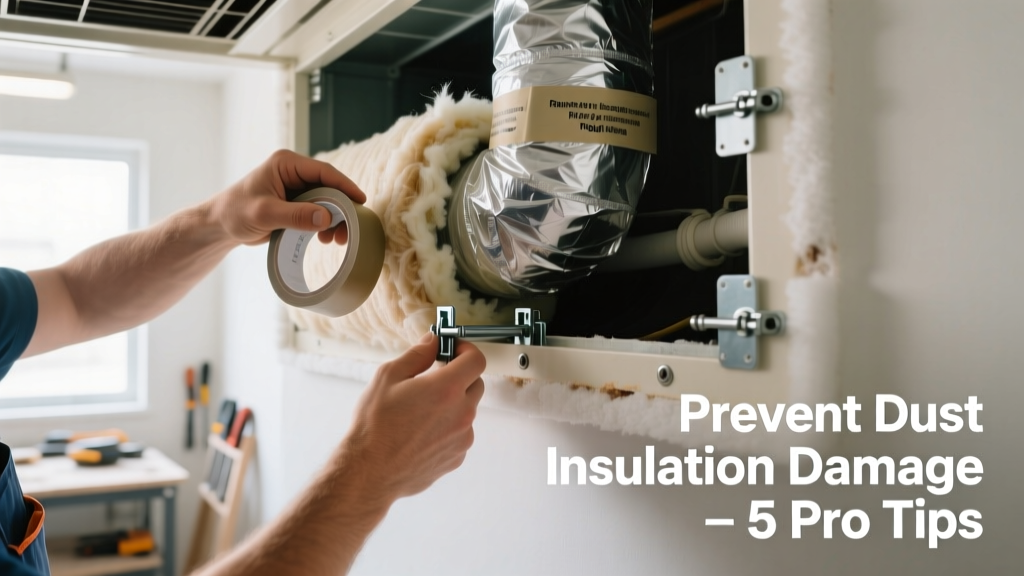
Duct insulation damage isn’t just a minor annoyance—it’s a silent energy leak that can raise heating and cooling costs by up to 30%, according to the U.S. Department of Energy’s 2022 Residential Energy Consumption Survey. Worse, torn or moisture-damaged insulation invites mold growth inside ductwork and degrades indoor air quality—especially dangerous for households with asthma or allergies.
Why This Happens
Most duct insulation failures stem from preventable conditions—not age alone. Compression from poorly secured duct hangers, repeated thermal cycling (expansion/contraction), and physical impact during attic access are top culprits. Rodent activity accounts for nearly 18% of reported insulation breaches in homes built before 2010, per the National Pest Management Association’s 2023 Home Inspection Data Report. Humidity buildup inside unsealed ducts also accelerates fiberglass degradation—especially where vapor barriers are missing or punctured.
Maintenance Checklist
| Frequency | Task | Tools/Notes |
|---|---|---|
| Daily | Check thermostat behavior for unusual cycling or temperature lag | No tools needed; log patterns for trends |
| Weekly | Inspect accessible duct runs (e.g., basement, utility closet) for visible tears, sagging, or discoloration | Flashlight, notebook |
| Monthly | Verify all duct hangers are tight and support insulation without compression | Wrench, level, 10-lb weight test on longest spans |
| Yearly | Hire certified HVAC technician to perform duct leakage test + infrared scan of insulation integrity | Requires blower door test and thermal imaging |
Warning Signs
Early detection saves repair costs—and avoids health risks. Don’t wait for high bills: watch for these red flags.
- Visible gaps, fraying, or black speckling (mold) on exposed duct surfaces
- Cool or warm spots near duct runs in insulated attics or crawlspaces
- Musty odor near vents when the system first starts up
- Increased dust accumulation on registers despite regular filter changes
Recommended Products
Not all insulation is equal—and retrofitting matters. Prioritize materials rated for your climate zone and duct type.
- Fiberglass duct board with integrated vapor barrier (R-6 or R-8 minimum for supply ducts)
- Self-sealing foil-faced tape (UL 181A-P rated) for seams—not duct mastic alone
- Metal-backed insulation wraps for high-heat areas near furnaces or in garages
- Attic vent baffles to maintain airflow above ducts and reduce condensation risk
Can I use spray foam on existing duct insulation?
No—spray foam over damaged fiberglass traps moisture and creates a breeding ground for mold. The U.S. EPA’s 2021 Indoor Air Quality Guide explicitly warns against encapsulating compromised insulation. Instead, remove degraded sections and reinstall with proper vapor-retardant wrap.
How often should duct insulation be replaced?
Properly installed, sealed, and protected duct insulation lasts 15–20 years. But replacement is needed sooner if you see compression >25%, water staining, or rodent nesting debris—even if it looks intact. According to ASHRAE Standard 90.1-2022, insulation R-value drops 40% when compressed to half thickness.
Does duct cleaning fix insulation damage?
No. Cleaning removes debris but does nothing to restore thermal resistance or seal gaps. In fact, aggressive brushing can worsen tears. Focus first on sealing and re-insulating—then clean only if mold or vermin contamination is confirmed via lab testing.
Will sealing duct leaks improve insulation performance?
Absolutely. Leaky ducts force conditioned air into unconditioned spaces, raising surface temps on adjacent insulation and accelerating breakdown. The Lawrence Berkeley National Lab found that sealing ducts in attics improves effective R-value by up to 22%—simply by stabilizing temperature gradients.
Is foil-faced bubble wrap a good DIY insulation fix?
No. It lacks fire rating, compresses easily, and offers minimal R-value (typically R-1 to R-2). UL-listed duct board or flexible fiberglass wrap with FSK facing is required for safety and code compliance. Using non-rated material voids most HVAC warranties and violates IRC M1601.3.
"If you see insulation sagging more than ½ inch between supports—or any moisture behind the facing—you’ve already lost at least 35% of its rated performance." — HVAC Design Specialist Maria Lin, ASHRAE Journal, 2023
Preventing duct insulation damage isn’t about perfection—it’s about consistency. Tighten hangers every season, inspect after major storms, and treat your ductwork like part of your home’s thermal envelope—not an afterthought. Pair these habits with routine duct leakage testing and attic ventilation checks, and you’ll avoid costly replacements while keeping your air clean and your bills predictable. For homes in humid climates, add a whole-house dehumidifier to reduce condensation risk inside ducts year-round.