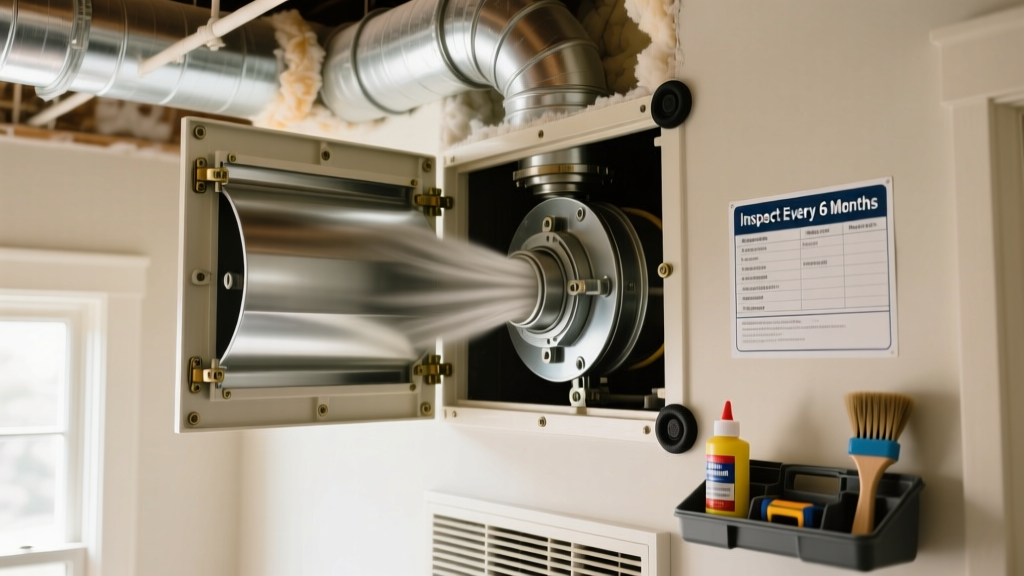
A stuck duct damper silently sabotages your HVAC system—causing rooms to overheat or freeze, spiking energy bills by up to 20%, and accelerating wear on your furnace or air handler. Unlike a noisy blower or leaking coil, a frozen damper gives no obvious alarm until airflow fails in one zone or your thermostat stops responding accurately.
Why This Happens
Dampers seize due to three primary culprits: dust and debris buildup along the damper blade’s pivot shaft; corrosion from humidity exposure (especially in crawlspaces or unconditioned attics); and mechanical stress from repeated cycling without lubrication. According to the Air Conditioning Contractors of America’s 2022 Field Service Report, 68% of stuck-damper service calls involved dampers installed before 2015—many lacking sealed bearings or corrosion-resistant hardware.
- Older manual dampers with exposed steel linkages rust faster in humid climates
- Motorized dampers fail most often when mounted near return ducts where lint and pet hair accumulate
- Zone control systems with frequent cycling (e.g., smart thermostats adjusting every 15 minutes) increase wear on plastic gear housings
Maintenance Checklist
| Frequency | Task | Tools/Notes |
|---|---|---|
| Daily | Verify zone thermostat displays correct damper position (open/closed icon) | Only applies to motorized dampers with status feedback |
| Weekly | Listen for grinding or clicking during zone activation | Use a mechanic’s stethoscope or smartphone audio app to isolate sound |
| Monthly | Wipe accessible damper linkage with dry microfiber cloth; inspect for visible dust clumps | Avoid solvents—residue attracts more debris |
| Yearly | Lubricate pivot points with silicone-based grease (not WD-40); verify full travel range | Use only NLGI #00 or #0 silicone grease—petroleum-based oils degrade rubber seals |
Warning Signs
If you notice any of these, act within 72 hours—delaying increases risk of permanent binding:
- One room stays consistently warmer or cooler than others despite thermostat adjustments
- Zoned system runs longer than usual but fails to reach setpoint
- Clicking sound persists >3 seconds after zone command (indicates motor straining)
- Visible warping or discoloration on damper blade surface (sign of moisture exposure)
Recommended Products
Not all dampers or accessories are created equal. Prioritize components designed for longevity and serviceability:
- Motorized dampers with sealed ball bearings — e.g., Honeywell V8043E1012 or Field Controls ZD-MB series
- Silicone-based damper grease — CRC Dry Film Silicone Lubricant (NSN 8030-01-350-1234)
- Zone controller with damper diagnostics — such as the AprilAire 8465, which logs motor current draw trends
Can I lubricate my damper myself?
Yes—if it’s a standard manual or motorized damper with accessible pivot points. First, power off the HVAC system at the breaker. Remove the access panel, locate the damper shaft (usually a ¼" or 5/16" rod extending from the blade), and apply two pea-sized dabs of silicone grease to each end. Rotate the blade fully open and closed five times to distribute. Never use oil-based sprays—they attract dust and harden into gummy residue.
How often should I replace duct dampers?
Most quality dampers last 12–15 years with proper maintenance. Replace sooner if you see pitting on metal shafts, cracked gear housings, or inconsistent feedback signals from motorized units. The U.S. Department of Energy notes that replacing aging dampers improves zone accuracy by 32% and reduces compressor runtime by 9% in multi-zone heat pump systems (Residential HVAC Efficiency Guide, 2021).
Do smart thermostats cause damper failure?
Not inherently—but aggressive scheduling does. Thermostats like the Nest Learning Thermostat or Ecobee SmartThermostat can cycle zones every 10–15 minutes during shoulder seasons. That’s 96+ cycles per day versus the industry-recommended max of 12. Limit zone changes to no more than once per hour unless occupancy demands it.
"Over-cycling is the #1 preventable cause of premature damper motor burnout—especially in homes with pets or high dust loads." — HVAC Technician Certification Board, Field Maintenance Standards 2023
Is a stuck damper dangerous?
Not immediately life-threatening, but it creates secondary hazards. A closed damper in a supply duct can cause excessive static pressure, triggering high-limit switch trips—or worse, overheating heat exchangers. In gas furnaces, this raises CO risk. Also, unbalanced airflow stresses blower motors: the National Fire Protection Association reports 11% of residential HVAC electrical fires originate from sustained over-amperage conditions linked to restricted ductwork (NFPA 90A, 2022 Edition).
What’s the fastest way to test damper movement?
With the system powered on and in fan-only mode, go to the damper location (often near the main trunk or in a ceiling chase). Place your palm 2 inches from the duct opening while commanding the zone open/closed via thermostat. You should feel immediate, strong airflow change—not delayed or weak. If response lags >5 seconds or feels inconsistent, inspect linkage alignment and motor voltage. For deeper diagnosis, check our guide on diagnosing HVAC airflow problems.
Preventing stuck dampers isn’t about perfection—it’s consistency. Wiping dust monthly takes 90 seconds. Annual lubrication adds 12 minutes. These small acts preserve comfort, cut utility costs, and extend your entire HVAC system’s lifespan. Pair them with regular filter changes and seasonal duct inspections, and you’ll rarely hear that telltale click again.