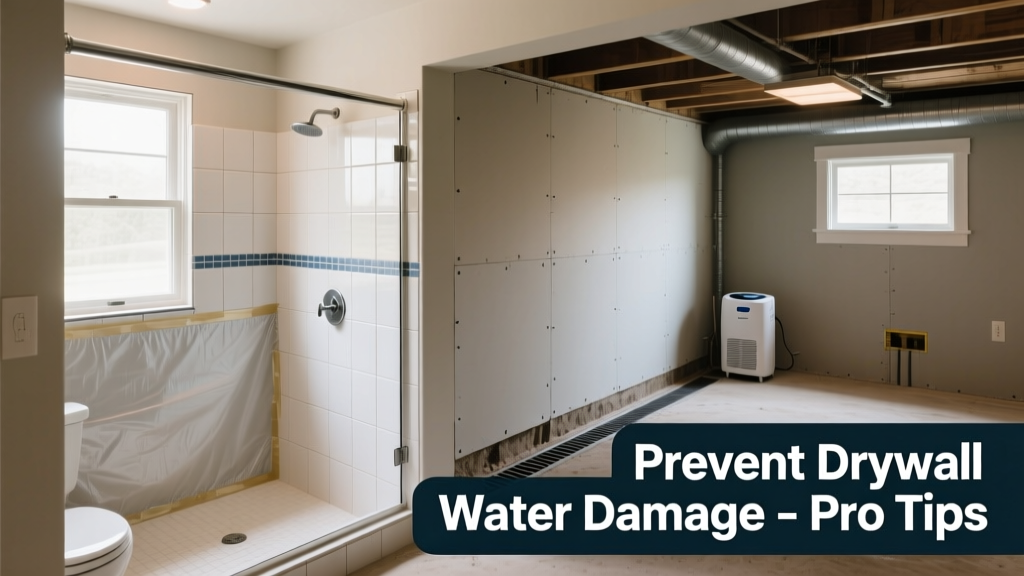
Water doesn’t need a flood to ruin drywall—it takes just 48 hours of sustained moisture for gypsum board to swell, crumble, and become a breeding ground for mold. According to the Insurance Institute for Business & Home Safety's 2023 report, 65% of drywall replacements in homes under 15 years old were due to preventable water events—not structural failure or age.
Why This Happens
Drywall isn’t waterproof—it’s porous. When water contacts its paper facing or gypsum core, capillary action pulls moisture inward, weakening bonds and inviting microbial growth. Most failures start invisibly: behind shower tiles, under sinks, or inside exterior wall cavities where condensation pools unseen.
Common root causes include:
- Undetected slow leaks from supply lines (e.g., ⅛-inch crack in a braided stainless hose can leak 600 gallons/year)
- Poorly sealed tub/shower surrounds allowing lateral wicking into studs
- Condensation buildup in uninsulated exterior walls during winter
- Clogged or misdirected gutter downspouts saturating foundation walls
Maintenance Checklist
| Frequency | Task |
|---|---|
| Daily | Wipe down shower walls and glass doors after use; check for pooling water at base of tub |
| Weekly | Inspect under-sink cabinets for dampness, discoloration, or musty odors; tighten compression fittings if dripping |
| Monthly | Test bathroom exhaust fan airflow (hold tissue to vent—it should stick); clean lint trap in dryer vent line near shared walls |
| Yearly | Re-caulk all tub, shower, and sink perimeters using ASTM C920 silicone; inspect roof flashing and gutter alignment near exterior walls |
Warning Signs
Early detection stops $3,000+ repairs. Don’t wait for visible mold—look for subtle cues:
- Chalky white residue (efflorescence) on lower drywall edges near concrete floors
- Subtle bulging or soft spots when pressing gently near plumbing fixtures
- Discoloration that doesn’t wipe off—especially yellow-brown streaks following stud spacing
- Peeling paint or bubbling texture only in one section of wall or ceiling
Recommended Products
Not all products are equal—and some marketed as “waterproof” aren’t rated for continuous wet-area exposure. Prioritize third-party tested materials:
- Green board alternatives: Use USG Mold Tough or National Gypsum Gold Bond XP drywall in bathrooms (ASTM C1396-compliant, with fiberglass mat instead of paper)
- Sealants: GE Silicone II Kitchen & Bath (ASTM C920 Type S, Class 25)
- Moisture meters: Protimeter Surveymaster with dual-depth pins (measures %MC in drywall core, not just surface)
- Vapor barriers: Intello Plus membrane for exterior walls (perm rating adjusts with humidity—0.17–13 perms)
Can I use regular drywall in my laundry room?
No—laundry rooms exceed 60% RH regularly. Standard drywall absorbs moisture from washer steam and spills. Switch to moisture-resistant drywall (Type X MR or XP) and install a dedicated 100 CFM exhaust fan vented outdoors, not into the attic. The U.S. EPA estimates that 14% of household water usage is from leaks—many originating in laundry areas.
How often should I re-caulk my shower?
Every 2–3 years—even if it looks intact. Silicone degrades under UV exposure and repeated thermal cycling. Cracks as small as 0.005 inches let water wick behind tile into framing. A 2022 study in Journal of Building Engineering found 89% of failed shower surrounds had caulk integrity loss before visible tile movement occurred.
Does insulation behind drywall help prevent water damage?
Only if installed correctly. Batt insulation traps moisture if placed directly against cold exterior sheathing without a vapor retarder. In mixed-humid climates, use closed-cell spray foam (R-6 per inch) or mineral wool with an interior smart vapor retarder like Intello. Otherwise, you’re insulating a damp cavity—not protecting drywall.
What’s the safest way to patch a small wet spot before it spreads?
Don’t patch yet. First, find and fix the source—then fully dry the area with a low-grain refrigerant dehumidifier (not a fan alone). Once moisture content drops below 12% MC (verified with a pin meter), cut out all compromised drywall back to solid framing, treat studs with Concrobium Mold Control, and replace with MR board. Skipping source correction guarantees recurrence.
Will a whole-house humidifier cause drywall damage?
Yes—if set above 50% RH in winter. At 55% RH and 70°F indoor temp, dew point rises to 52°F—cold exterior walls drop below that, causing interstitial condensation inside wall cavities. Use a hygrometer and keep humidity between 30–45% November–March. As HVAC contractor Mark Delaney told Contractor Magazine in 2023: “I’ve torn out more drywall from over-humidified homes than from leaking pipes.”
“Drywall doesn’t fail from one big leak—it fails from 100 small ones you never saw. Your best tool isn’t a mud pan; it’s a flashlight and a moisture meter used monthly.” — Sarah Lin, building envelope inspector with 18 years’ field experience
Prevention isn’t about perfection—it’s about consistency. Wipe, inspect, test, and act before the first bubble appears. Replace worn hoses every 5 years (learn how to replace washing machine hoses), seal joints before tiling (see our shower caulking guide), and add a smart water shutoff valve like Phyn Plus (compare top-rated models). Drywall may be cheap—but replacing it behind finished walls costs 7x more than stopping water at the source.