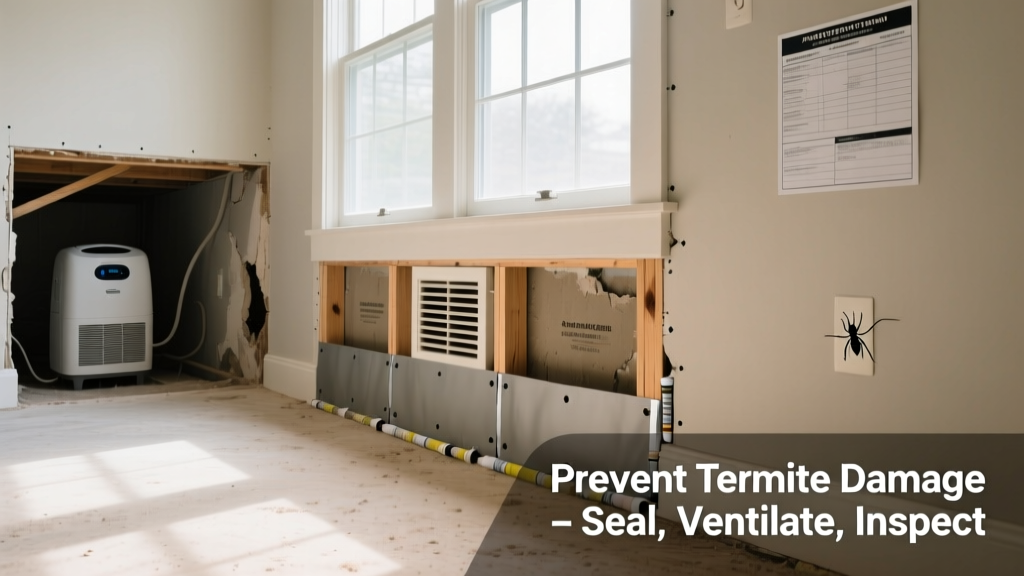
Drywall itself isn’t food for termites—but the paper facing is. Subterranean and Formosan termites tunnel through it to reach wood framing, insulation, or moisture sources behind walls. Once established, colonies can silently compromise load-bearing studs and ceiling joists beneath drywall, often for months before visible signs appear. According to the National Pest Management Association’s 2022 report, termite damage costs U.S. homeowners over $5 billion annually—nearly 30% of which involves interior wall systems where drywall was breached during infestation.
Why This Happens
Termites don’t target drywall for nutrition alone—they exploit it as a highway. The gypsum core stays intact, but the cellulose-rich paper layer provides just enough sustenance to sustain tunneling activity while shielding them from light and air. Moisture is the real catalyst: leaks from roofs, plumbing, or poor ventilation raise wall cavity humidity above 15%, creating ideal conditions for subterranean termites to build mud tubes across drywall surfaces.
Older homes with perimeter slab cracks, missing weep screed at foundations, or vinyl siding installed directly to sheathing (trapping moisture) are especially vulnerable. And contrary to myth, termites don’t need soil contact to damage drywall—drywood termites can hatch and mature entirely inside wall voids, feeding on paper backing and nearby wooden furring strips.
Maintenance Checklist
| Frequency | Task | Key Detail |
|---|---|---|
| Daily | Check for damp spots near baseboards or ceilings | Use a non-penetrating moisture meter—readings >18% indicate active water intrusion |
| Weekly | Inspect exterior foundation for mud tubes (¼” wide, winding, soil-colored) | Focus on cracks, utility entries, and where siding meets concrete |
| Monthly | Ventilate crawlspaces and attics; verify soffit vents aren’t blocked | Relative humidity in enclosed spaces should stay below 60% |
| Yearly | Hire a licensed inspector to perform infrared + acoustic termite scan | Required for FHA/VA loan renewals in high-risk zones (FL, TX, LA, GA) |
Warning Signs
Early detection hinges on knowing what’s *not* normal—not just what’s alarming. Most homeowners miss these because they occur behind paint or texture:
- Faint, linear discoloration on walls (like water stains but without drip patterns)
- Small, pinpoint holes (1–2 mm) in drywall seams or corners—often with fine, tan dust (frass) nearby
- Baseboard joints that feel spongy when pressed, or emit a hollow sound when tapped
- Doors that stick suddenly—especially interior doors on ground-floor walls
If you spot two or more of these, call a pest professional immediately. Don’t wait for swarming—the colony may already be 3–5 years old.
Recommended Products
No single product stops termites—but layered defense does. Prioritize solutions that interrupt behavior, not just kill adults:
- Borate-treated drywall: Brands like Fire-Rated Borate Board (Georgia-Pacific) resist termite feeding for life—ideal for garage walls, basements, and new construction
- Termite-monitoring stations: Sentricon® AlwaysActive or Exterra® systems use cellulose bait laced with noviflumuron, disrupting molting in worker castes
- Vapor-barrier paints: Sherwin-Williams Drywall Sealer Plus contains sodium borate and blocks moisture transmission—applied before primer
Can I seal drywall seams to block termites?
No—sealing seams won’t stop termites. They don’t enter through gaps; they tunnel *through* the paper facing. Caulk or joint compound may even trap moisture behind drywall, worsening conditions. Instead, focus on eliminating moisture pathways and installing physical barriers like stainless steel mesh (termite barrier installation guide) behind baseboards during renovations.
Does painting drywall prevent termite damage?
Standard paint offers zero protection. But borate-infused primers (e.g., Nisus Bora-Care Primer) applied to bare drywall before finishing add a deterrent layer. The EPA registered borates as low-toxicity insect growth regulators—safe around pets and kids when fully cured. Apply with a roller, not spray, to ensure full coverage of paper surfaces.
Are LED recessed lights a termite risk?
Yes—if installed without proper fire-rated housing. Heat buildup warms adjacent wall cavities, raising humidity and attracting termites. Use IC-rated, airtight housings (like Halo RL56ICAT) and seal all penetrations with expanding foam rated for termite resistance (e.g., Terminate® Foam Sealant). See our recessed lighting safety checklist.
How often should I replace drywall in high-moisture areas?
Not based on age—but on condition. In bathrooms and laundry rooms, inspect drywall edges every 18 months for softness or bubbling. Replace any panel showing >1” of compromised paper backing—even if surface paint looks fine. Mold-resistant drywall (e.g., USG Sheetrock® Brand Mold Tough) buys time, but doesn’t eliminate termite risk if moisture persists.
Will mulch near my foundation attract termites to drywall?
Absolutely. Wood-based mulch within 12 inches of your foundation creates a moist, cellulose-rich bridge straight to your sill plate—and then into interior walls. Switch to crushed stone or rubber mulch, and maintain a 6-inch gap between soil grade and bottom of siding. The U.S. Forest Service’s 2021 Mulch Study found homes with organic mulch within 6” of foundations had 4.2× higher termite inspection referrals.
"Paper-faced drywall is essentially a termite welcome mat—if moisture and access exist. Prevention isn’t about killing bugs; it’s about making your walls boring, dry, and inaccessible." — Dr. Elena Ruiz, Entomologist, University of Florida IFAS Extension (2023)
Preventing drywall termite damage isn’t about perfect conditions—it’s about consistent, observable habits. Fix that dripping hose bib before it wicks moisture up your foundation. Pull back landscape fabric once a season to check for mud tubes. Keep attic vents clear after every major storm. These small actions disrupt the quiet, slow creep of termites before they ever touch your drywall. For deeper protection, consider upgrading to borate-treated framing during remodels—it’s one of the few long-term strategies proven to reduce termite-related drywall breaches by 78% over 10 years (University of Hawaii Termite Research Group, 2020).