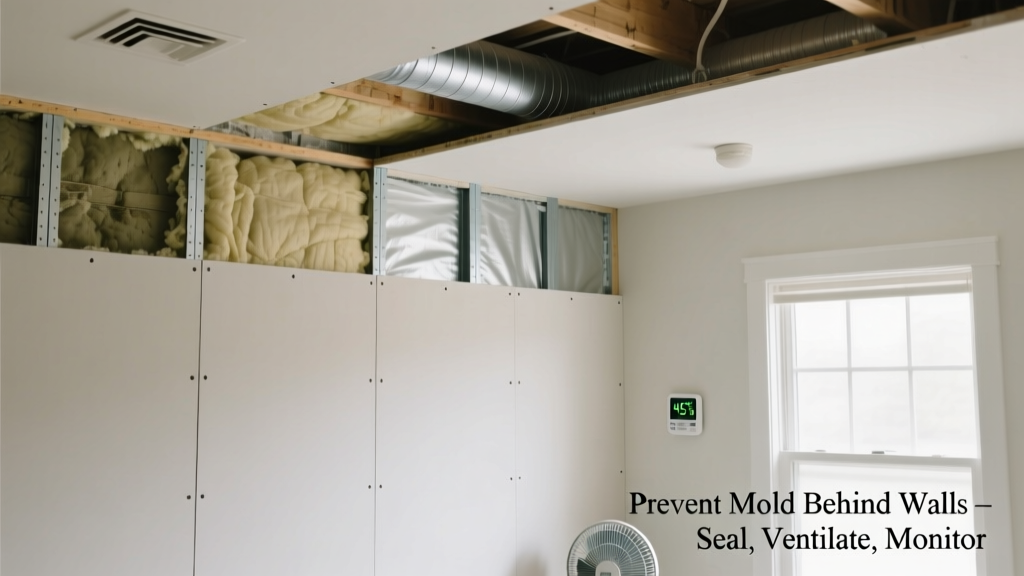
Mold behind drywall isn’t just an eyesore—it’s a silent threat. By the time you spot discoloration or smell mustiness, mold may have colonized framing, insulation, and electrical boxes for months. According to the U.S. EPA, indoor mold exposure contributes to 25% of asthma exacerbations in children—and hidden growth behind walls accounts for nearly 60% of unexplained respiratory complaints in homes with no visible mold (EPA Indoor Air Quality Guide, 2022). Prevention isn’t optional; it’s your first line of defense.
Why This Happens
Hidden drywall mold grows where moisture lingers unseen: inside wall cavities, behind baseboards, or above ceilings with roof leaks. The three main triggers are chronic condensation, undetected plumbing leaks, and poor ventilation behind finished surfaces. Drywall itself doesn’t feed mold—but the paper facing does, and once wet, it becomes a nutrient-rich breeding ground. A study by the Building Science Corporation found that relative humidity above 60% inside wall assemblies for more than 48 consecutive hours creates ideal conditions for Aspergillus and Stachybotrys colonization—even without visible water intrusion.
- Condensation on cold exterior sheathing during winter (especially in poorly insulated walls)
- Leaking supply lines behind vanities or kitchen cabinets
- Roof flashing failures allowing water into attic-to-wall junctions
- Improperly vented bathroom exhaust fans dumping moist air into attics instead of outdoors
Maintenance Checklist
| Frequency | Task | Key Detail |
|---|---|---|
| Daily | Wipe down shower walls and tub surrounds after use | Use microfiber cloth—not sponges—to avoid trapping moisture in grout lines |
| Weekly | Check under sinks for dampness or discoloration | Look for darkening at drywall corners near P-traps and shutoff valves |
| Monthly | Inspect HVAC drip pans and drain lines | Clogged condensate lines cause overflow into wall cavities—test flow with 1 cup of water |
| Yearly | Hire certified thermographer to scan exterior walls | Thermal imaging detects latent moisture behind stucco, brick veneer, or siding (cost: $250–$450) |
Warning Signs
Most homeowners miss early indicators because they’re subtle—or hidden. Don’t wait for black spots or peeling paint. Watch for:
- Discoloration *behind* outlet or switch plates—yellowish or grayish staining on drywall edges
- Musty odor localized to one room or wall section, especially after rain or high humidity
- Soft or spongy drywall texture when pressed lightly near baseboards or ceiling corners
- Peeling paint or wallpaper *only* along interior corners or near windows—never across full walls
- Unexplained allergy flare-ups that improve when away from home
Recommended Products
Not all products prevent mold equally. Prioritize those tested for long-term moisture resistance and low-VOC emissions:
- Mold-resistant drywall: USG Sheetrock® Brand Mold Tough® (contains antimicrobial-treated paper and fiberglass core)
- Vapor-permeable primers: Benjamin Moore Ultra Spec 500 Low-Odor Primer (perm rating >10 perms—lets walls breathe)
- Exhaust fan timers: Broan-NuTone 750CFM Timer Switch (ensures 20+ minutes of post-shower ventilation)
- Smart humidity monitors: AcuRite 01512 with wall-mount bracket and alert thresholds (set alerts at 55% RH)
Can I use regular drywall in bathrooms?
No—standard drywall lacks moisture resistance and its paper facing absorbs water rapidly. Even with tile, vapor diffusion through grout and caulk can saturate the backside. Always use mold-resistant drywall rated for high-humidity zones (e.g., USG Greenboard is outdated; opt for fiberglass-core alternatives like National Gypsum Gold Bond XP).
Do dehumidifiers help prevent mold behind walls?
Yes—but only if placed strategically. Portable units in basements reduce bulk humidity, but won’t address interstitial moisture in walls. For wall-specific protection, pair them with balanced whole-house ventilation and ensure crawlspaces have 6-mil polyethylene vapor barriers.
How often should I check behind outlet covers?
Twice yearly—once before heating season (October) and once before AC season (May). Remove cover plates and shine a flashlight at a 45° angle to reveal subtle staining or fuzzy growth along drywall edges. If you see anything suspicious, don’t probe—call a certified mold inspector for non-invasive moisture meter readings first.
Does painting over mold kill it?
No—and it makes remediation harder later. Paint seals surface spores but leaves active colonies thriving beneath. According to the New York City Department of Health’s 2021 Mold Remediation Guidelines, encapsulation without removal is prohibited for areas larger than 10 sq ft. Always test first with an ERMI (Environmental Relative Moldiness Index) kit before assuming it’s safe to paint.
Will sealing exterior walls stop mold behind drywall?
Sealing alone can backfire. Applying impermeable sealants (like elastomeric coatings) to brick or stucco traps inward-diffusing moisture. Instead, focus on drainage: ensure weep holes are clear, grade soil away from foundations, and install rainscreen gaps behind cladding per ASTM E2273 standards.
"If you hear a hollow sound when tapping drywall near a window or plumbing chase—and it feels cool to the touch—you’ve likely got trapped moisture. That’s not just ‘old house settling.’ It’s mold’s welcome mat." — Sarah Lin, Certified Indoor Environmental Consultant (CIEC), Building Diagnostics Group, 2023
Preventing drywall mold behind walls isn’t about perfection—it’s about consistency. Small habits, like checking under sinks monthly or installing a $25 humidity monitor, compound into real protection. And when you catch moisture early, you avoid tearing out drywall, replacing studs, or filing insurance claims. Your walls don’t need to be perfect—they just need to stay dry. Start today: grab a flashlight, remove one outlet cover, and look closely. What you find—or don’t find—could save your home.