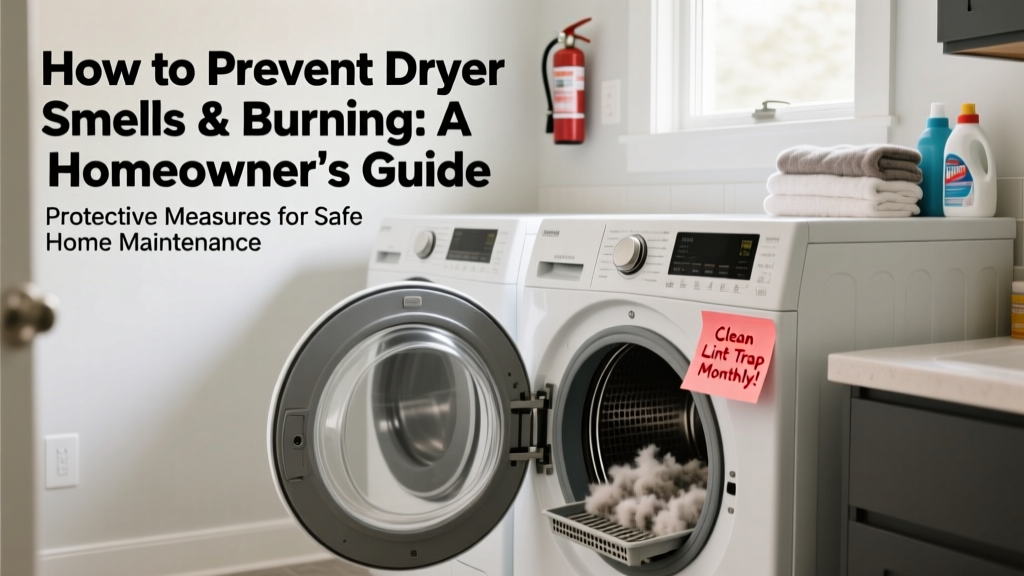
A burning smell from your dryer isn’t just unpleasant—it’s a red flag. According to the U.S. Fire Administration, clothes dryers cause an estimated 15,970 home fires annually (2022 data), with lint buildup responsible for 29% of those incidents. Ignoring early warning signs can escalate into appliance failure or even structure fire—especially in homes with older venting systems or shared laundry rooms.
Why This Happens
Burning smells almost always trace back to heat interacting with something it shouldn’t: trapped lint, degraded components, or obstructed airflow. Lint isn’t just flammable—it’s highly combustible when compacted and heated above 400°F. But it’s not the only culprit. Worn drum glides, overheating thermostats, or plastic items (like dryer sheets stuck behind the drum) can also smolder silently before releasing acrid smoke.
Moisture buildup inside the vent duct—common in long, bent, or uninsulated runs—creates ideal conditions for mold and mildew that bake into musty-burnt odors during cycles. And if your dryer’s exhaust is venting indoors (a code violation in most states), you’re recirculating hot, humid air loaded with volatile organic compounds from detergents and fabric softeners.
Maintenance Checklist
| Frequency | Task | Time Required |
|---|---|---|
| Daily | Remove lint screen and wipe with damp cloth; inspect for residue or holes | 1–2 minutes |
| Weekly | Vacuum lint trap housing with narrow crevice tool; check door seal for tears or debris | 3–5 minutes |
| Monthly | Inspect exterior vent hood for flap movement and blockage; clean interior 3 ft of duct with flexible brush | 10–15 minutes |
| Yearly | Hire certified technician to clean internal ductwork, test thermal cutoffs, and verify exhaust airflow ≥ 100 CFM | 45–60 minutes |
Warning Signs
Don’t wait for smoke. These subtle cues often appear days—or weeks—before a burning odor emerges:
- Clothes take longer than usual to dry (e.g., >60 minutes on medium heat)
- Dryer exterior feels unusually hot to the touch, especially near the rear panel
- Exhaust vent produces weak or no airflow—even with clean lint screen
- You hear grinding, squeaking, or thumping during operation
- Lint appears oily or discolored (gray-black streaks indicate overheated residue)
Any one of these warrants immediate inspection. Two or more? Shut off the unit and call a technician.
Recommended Products
Not all tools are equal—and some marketed as ‘dryer-safe’ actually worsen buildup. Stick with UL-listed, non-abrasive options designed for lint management:
- Lint-removal brushes: Look for nylon bristles with 360° rotating heads (like the Dryer Vent Wizard Pro Brush)
- Non-residue dryer sheets: Seventh Generation or Attitude brands avoid waxy coatings that coat sensors and duct walls
- Aluminum foil vent ducts: Rigid or semi-rigid, never plastic or foil accordion—per NFPA 54 standards
- Thermal sensor testers: The Fluke 62 Max+ IR thermometer helps spot localized overheating before failure
Can overloading cause burning smells?
Yes—consistently overloading restricts airflow and forces the heating element to cycle longer. That raises internal temps beyond design specs. Load dryers no more than ¾ full, and separate heavy items (jeans, towels) from lightweight fabrics. Overloading also accelerates wear on drum bearings, which can emit a metallic-burning odor when failing.
Does using fabric softener contribute?
Concentrated liquid softeners leave mineral-rich residue on lint screens and drum surfaces. Over time, this film bakes onto heating elements and ignites at high temps. Switch to vinegar rinse cycles (½ cup white vinegar in dispenser) or use wool dryer balls instead. According to the American Cleaning Institute’s 2021 Fabric Care Study, 68% of households using liquid softener reported earlier-than-expected lint screen replacement.
Why does my dryer smell like burning rubber?
This usually signals mechanical failure—not lint. Common causes include a worn drive belt slipping on the motor pulley, cracked drum support rollers, or melted idler pulley bushings. All generate friction heat that degrades rubber compounds. If you detect this odor *without* visible lint buildup, unplug the unit and inspect the belt path. Don’t run it again until repaired.
Is a burning smell ever normal after cleaning?
Yes—but only briefly. After deep-cleaning the vent system or replacing parts, you might notice a faint, acrid scent for the first 1–2 cycles. It’s residual dust or lubricant burning off. If it persists past three loads—or intensifies—something was installed incorrectly or a component is failing.
What’s the safest way to clean behind the dryer?
Unplug the unit first. Pull it forward carefully—never drag—and use a shop vac (not a household vacuum) to extract dust and pet hair from the wall cavity and floor gap. Then wipe down the rear panel with a microfiber cloth dampened with 50/50 water-vinegar solution. Never spray cleaners directly onto electrical components. For homes with carpeted laundry rooms, vacuum under the dryer monthly—carpet fibers are major contributors to airflow restriction.
Do gas dryers smell different when burning?
Yes—and dangerously so. A gas dryer emitting a sharp, chemical-burning odor (not just hot dust) may indicate incomplete combustion or a cracked heat exchanger. That’s a carbon monoxide risk. Turn off the gas valve, open windows, and contact a licensed HVAC technician immediately. Do not relight the burner.
Preventing dryer-related burning smells isn’t about perfection—it’s about consistency. A 90-second lint screen wipe, a yearly professional vent inspection, and swapping out old dryer sheets add up to real safety dividends. If you’ve had repeated issues, consider upgrading to a heat pump dryer, which operates at lower temps and eliminates exhaust ducting entirely. Your laundry room—and your insurance agent—will thank you.
"A dryer running at 150°F above its rated temperature isn’t just inefficient—it’s a latent ignition source. Thermal runaway starts quietly, but rarely gives second chances." — Certified Appliance Safety Technician, National Appliance Repair Association, 2023