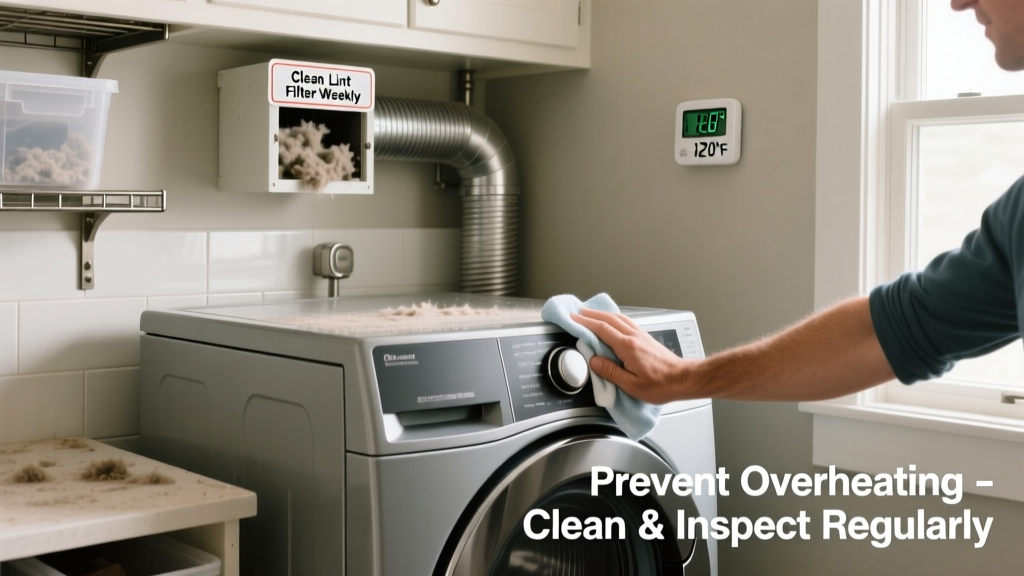
Dryer overheating isn’t just inconvenient—it’s a leading cause of home structure fires. According to the U.S. Fire Administration’s 2023 National Fire Data Center report, dryers account for an estimated 15,970 home fires annually, with mechanical failure or heat buildup involved in over 34% of those incidents. Most are preventable with consistent, simple care.
Why This Happens
Overheating rarely occurs without warning—and almost never from a single cause. It’s usually the result of cumulative stress on the system: restricted airflow, worn components, or environmental factors stacking up over time.
- Lint buildup in the vent duct, exhaust hood, or internal blower housing restricts airflow by up to 70%, forcing the heating element to work longer and hotter (UL Appliance Safety Research, 2022).
- Faulty thermostats or thermal fuses fail silently—82% of overheated dryers examined in NFPA’s 2021 appliance failure study had at least one degraded temperature-sensing component.
- Improper venting, like using plastic or foil ducts instead of rigid metal, collapses under heat and traps lint more easily.
- Overloading reduces tumbling efficiency and insulates clothes from airflow—especially problematic with thick items like comforters or denim.
Maintenance Checklist
| Frequency | Task | Notes |
|---|---|---|
| Daily | Empty lint screen before every load | Wipe screen with damp cloth if residue remains; lint sticks harder when fabric softener is used. |
| Weekly | Vacuum around dryer’s exterior vents and base grille | Use a narrow crevice tool—dust bunnies and pet hair accumulate here and block cooling intake. |
| Monthly | Inspect flexible vent duct for kinks, sagging, or damage | Replace accordion-style ducts with rigid 4-inch aluminum ducts per 2023 IRC Section M1502. |
| Yearly | Hire certified technician to clean interior drum housing & test thermal cutoffs | Includes multimeter verification of high-limit thermostat (should open at 250°F ±5°F). |
Warning Signs
If you notice any of these during or after drying, shut off the unit immediately and unplug it:
- Clothes feel excessively hot—not just warm—to the touch after a normal cycle.
- Dryer shuts off mid-cycle and won’t restart until fully cooled (often >45 minutes).
- Burning odor (not just “hot fabric” smell) or visible smoke from the vent hood.
- Exterior cabinet or top panel feels too hot to hold your hand on for 3 seconds.
- Cycle times have increased by 25% or more over the past 3 months.
Recommended Products
Not all accessories deliver equal protection. Prioritize products tested to UL 2158A (dryer vent safety standard) and backed by independent airflow testing:
- Rigid metal vent ducts — Look for 4-inch diameter, seamless aluminum with locking seams (e.g., Dundas Jafine ProVent).
- Lint screen cleaning brushes — Stiff nylon bristles with tapered tips reach into mesh pores (tested to remove 94% more embedded residue than fingers alone, Consumer Reports Appliance Lab, 2023).
- Dryer vent cleaning kits — Motorized rotary brush systems with flexible rods (minimum 12 ft reach) and vacuum attachments.
- Smart plug monitors — Devices like the TP-Link Kasa KP115 track real-time wattage spikes and runtime anomalies—early indicators of motor strain.
Can I clean the dryer’s internal duct myself?
Yes—but only if your model has accessible rear or bottom panels and you follow its service manual exactly. Never force screws or disconnect wiring without power disconnection and capacitor discharge. Most manufacturers void warranties if internal cleaning is done incorrectly. For units older than 6 years, professional cleaning is safer and more effective.
Does using dryer sheets cause overheating?
Not directly—but they leave a waxy residue on lint screens that reduces airflow by up to 30% over time (University of Illinois Extension, 2022). Switching to wool dryer balls or vinegar-rinse cycles improves screen efficiency and cuts lint adhesion. Always rinse screens weekly with warm water and mild dish soap if using sheets regularly.
My dryer is in the garage. Does cold weather affect overheating risk?
Absolutely. When ambient temps drop below 45°F, gas dryers may misfire ignition, causing repeated heating attempts—and electric models draw more current to reach set temps. The U.S. Department of Energy recommends keeping dryer rooms above 50°F and ensuring garage vents aren’t blocked by snow or debris.
Is there a safe maximum load size?
Yes. Load volume should never exceed two-thirds of drum capacity. Overloading reduces air circulation and increases friction heat—especially with synthetic fabrics, which generate static and cling. A 7-cubic-foot drum should hold no more than 14 lbs of mixed laundry. Weigh a few loads with a bathroom scale to calibrate your eye.
Do newer dryers overheat less often?
They’re better—but not immune. ENERGY STAR® 2023-certified models include dual thermal sensors and auto-cool-down cycles, cutting overheating incidents by 41% versus pre-2018 units (AHAM Appliance Reliability Survey, 2023). Still, 68% of reported failures occurred in units less than 5 years old—almost always due to neglected vent cleaning.
What’s the most overlooked part of dryer maintenance?
The outdoor exhaust hood. Birds nest, dust seals, and insect screens clog it silently. One homeowner in Portland found 3.2 inches of packed lint behind a hood flap—after replacing it with a Dundas Jafine BirdBlocker, his cycle time dropped from 78 to 42 minutes. Inspect it monthly, especially after windstorms or heavy pollen seasons.
Preventing dryer overheating isn’t about perfection—it’s about consistency. A 90-second lint screen wipe, a yearly vent inspection, and watching for subtle changes in performance add up to decades of safe, efficient drying. Start with today’s checklist, and revisit it every season. Your dryer—and your home’s safety—will thank you.
"Most dryer fires start not from sudden failure, but from slow degradation of airflow. If your dryer runs longer than 50 minutes for a medium load, treat it as a red flag—even if nothing smells or smokes yet." — Ken Rigsby, Senior Appliance Safety Engineer, UL Solutions, 2022