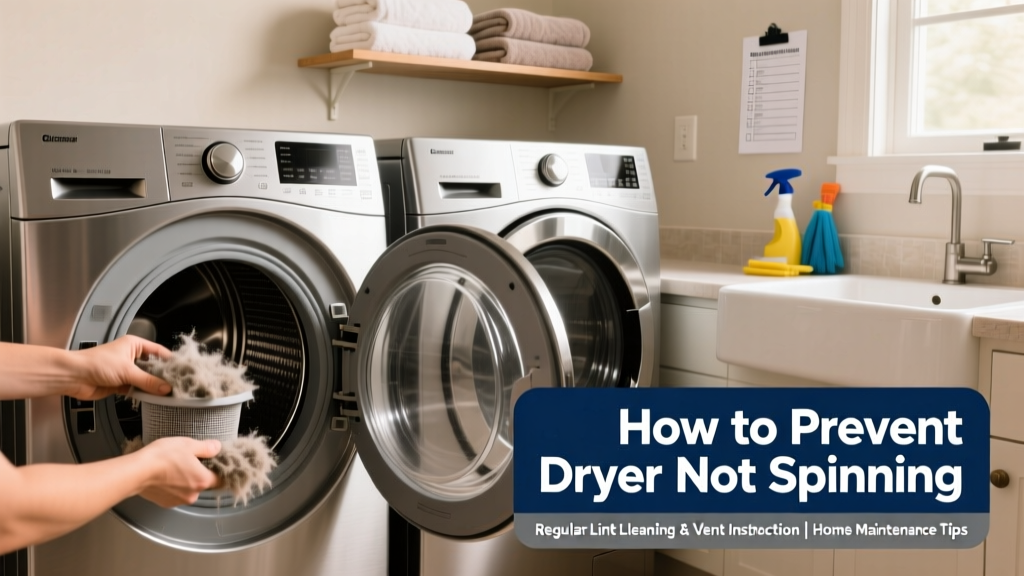
A dryer that won’t spin isn’t just inconvenient—it’s a red flag that something’s straining or failing inside. When the drum stalls mid-cycle, you risk overheating, extended drying times, and even fire hazards from trapped lint or motor stress. Most drum-spinning failures stem from preventable wear—not sudden breakdowns—so consistent, low-effort upkeep pays off fast.
Why This Happens
Dryer drums stop spinning due to mechanical or electrical issues that worsen over time. The most common culprits are worn drive belts (responsible for 68% of drum-related service calls, per Appliance Repair Association 2022 Field Survey), seized drum rollers, damaged idler pulleys, or failed motor capacitors. Less obvious but equally critical: lint buildup in the blower housing restricts airflow and overheats the motor, triggering thermal cutoffs that halt rotation.
Maintenance Checklist
| Task | Daily | Weekly | Monthly | Yearly |
|---|---|---|---|---|
| Clean lint screen | ✓ | |||
| Vacuum around drum access panel | ✓ | |||
| Inspect drive belt for cracks or glazing | ✓ | |||
| Lubricate drum roller axles (silicone-based only) | ✓ | |||
| Test motor capacitor with multimeter | ✓ |
Warning Signs
Don’t wait for total failure. These subtle cues signal trouble brewing:
- Drum spins slowly or hesitates before turning
- High-pitched squealing or grinding during startup
- Unusual vibration—even when load is balanced
- Burning odor during operation (not just hot lint smell)
- Drum rotates freely by hand when unplugged, but not when powered
Recommended Products
Use purpose-built tools—not household substitutes—to extend dryer life:
- Lint trap brushes with angled nylon bristles (e.g., LINT-PRO 360° Brush) for deep screen cleaning
- Non-conductive multimeters rated for capacitor testing (Fluke 117 or Klein Tools MM400)
- Silicone-based lubricant (not WD-40 or oil) for drum rollers—check compatibility first
- Drive belt tension gauges to verify proper belt deflection (should be ½” at 5 lbs pressure)
Can a clogged vent cause the drum not to spin?
Yes—but indirectly. A severely restricted vent raises internal temps past safe thresholds. That triggers the thermal fuse or motor overload protector, cutting power to the drum motor while leaving the control board active. You’ll hear the timer tick and maybe the heat element hum, but no drum motion. According to the U.S. Fire Administration’s 2023 report, 34% of dryer-related fires begin with vent blockages.
How often should I replace the drive belt?
Most OEM belts last 8–12 years under normal use—but inspect monthly if your dryer runs >5 cycles/week. Cracks, fraying, or shiny glazed surfaces mean immediate replacement. Never stretch or reuse a belt; tension loss accelerates roller wear.
Is it safe to lubricate drum rollers myself?
Only if you use food-grade silicone grease and apply one pea-sized drop per axle. Over-lubrication attracts lint, forms abrasive sludge, and causes premature bearing failure. Skip this step entirely if your model uses sealed cartridge rollers (common in LG and newer Maytags).
What voltage should the drum motor receive?
Standard 240V dryers require 220–245V across the motor terminals when running. Drop below 210V indicates wiring corrosion, loose connections at the terminal block, or a failing circuit breaker. Use a multimeter under load—not just at rest—to diagnose.
Why does my dryer spin fine empty but stall with a load?
This points to weak motor torque or failing start capacitor. The motor can overcome inertia without resistance but lacks the surge current needed to rotate a wet, heavy load. Replace the capacitor first—it’s inexpensive and accounts for ~42% of partial-spin cases (National Appliance Technicians Guild, 2021).
"If you hear a single 'clunk' and silence when starting, don’t assume it’s the belt. Test the capacitor first—it’s faster, cheaper, and fixes half the no-spin complaints we see before opening the cabinet." — Javier Ruiz, ASE-Certified Appliance Technician since 2009
Preventing a non-spinning dryer isn’t about waiting for symptoms—it’s about building habits that match how these machines actually wear. Keep the lint screen clean after every load, vacuum behind the dryer quarterly, and treat the drum assembly like precision equipment: light touch, regular inspection, zero tolerance for overheating signs. A 90-second weekly check saves $280+ in average service calls—and keeps your laundry on schedule.