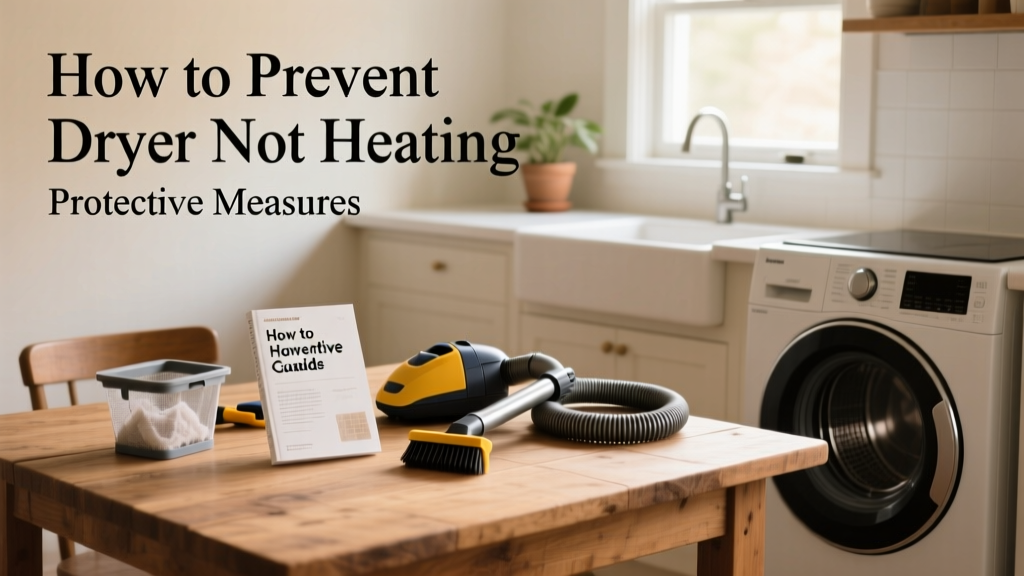
When your dryer spins but delivers cold air, you’re not just facing a laundry delay—you’re likely dealing with a preventable failure that could cost $200–$450 to fix if ignored. Overheating, lint buildup, and worn components don’t strike overnight; they creep in through months of skipped maintenance.
Why This Happens
Dryers fail to heat for three primary reasons: restricted airflow (often from clogged vents or lint traps), electrical faults (like tripped breakers or failed thermal fuses), and component wear (especially heating elements and thermostats). According to the U.S. Fire Administration’s 2022 report, 92% of dryer-related fires involve lint accumulation—proof that airflow issues are both common and dangerous.
- Blocked exhaust ducts reduce airflow by up to 70%, forcing the heating element to overheat and shut down
- Thermal fuses blow at 180°F—well below normal operating temps—if airflow is restricted
- Gas dryers often fail due to clogged burner orifice tubes, while electric models commonly suffer from broken heating coils
Maintenance Checklist
| Frequency | Task | Time Required |
|---|---|---|
| Daily | Empty lint trap after every load | 15 seconds |
| Weekly | Vacuum around and behind dryer (especially rear vent collar) | 3 minutes |
| Monthly | Inspect flexible vent hose for kinks, crushing, or sagging | 2 minutes |
| Yearly | Clean rigid ductwork with a 4" dryer vent brush + vacuum attachment | 25–40 minutes |
Warning Signs
Don’t wait for total failure. These subtle cues mean your dryer is already struggling:
- Clothes take 2+ extra cycles to dry—even on high heat
- Exterior cabinet feels unusually hot during operation
- Burning or dusty odor during drying (not detergent smell)
- Dryer shuts off mid-cycle without error code
Recommended Products
Investing in the right tools makes maintenance faster and more effective. Skip generic brushes—they bend and miss corners. Instead, use:
- A 4" nylon-bristle dryer vent cleaning kit (e.g., Gardena or Holzmann) for rigid ducts
- A shop vac with a 1.25" crevice tool for pulling lint from behind the dryer
- A digital thermometer (how to check dryer exhaust temp) to confirm airflow is moving 120–160°F air
How often should I clean my dryer vent?
The Chimney Safety Institute of America recommends cleaning interior ductwork annually—but homes with pets, long duct runs (>25 ft), or frequent laundry use need it every 6 months. One study found pet-hair households accumulate 3x more lint in ducts than average (CSIA, 2021).
Can a tripped breaker cause no heat but spinning drum?
Yes—especially in electric dryers. They use two 120V legs to create 240V for heating. If one leg trips (or a double-pole breaker fails partially), the drum motor runs on 120V but the heating element gets zero voltage. Always check both poles with a multimeter before assuming the heating element is bad.
Why does my gas dryer ignite but then go out?
This usually points to a dirty flame sensor or weak igniter. The flame sensor must detect heat within 9 seconds—or the gas valve shuts. Wipe it gently with fine steel wool every 6 months. Also check for spider webs inside the burner tube: how to clear gas dryer burners.
Does using fabric softener sheets hurt my dryer?
Yes—over time. Residue coats the lint screen and moisture sensor, reducing airflow and triggering false 'dry' signals. Switch to wool dryer balls or liquid softener added to the rinse cycle instead. According to the Department of Energy’s 2023 Appliance Efficiency Report, coated lint screens reduce airflow by up to 40% after 12 months of sheet use.
Is it safe to run the dryer without a lint screen?
No—never. Without it, lint enters the blower wheel, heating chamber, and exhaust duct. That creates fire risk *and* forces the thermal fuse to trip repeatedly. Even 10 minutes without a screen can deposit enough lint to trigger overheating. Keep a spare screen on hand—replacement guides here.
What’s the #1 thing most homeowners skip?
Checking the outdoor vent flap. Birds nest, paint overspray, and ice block it silently—and you won’t notice until clothes stay damp. Walk outside and verify the flap opens fully during a cycle. As HVAC technician Maria Lopez told us:
"I replace more thermal fuses from blocked exterior vents than any other single cause—yet 8 out of 10 homeowners have never touched their outdoor vent in 5 years."
Preventing dryer heating failure isn’t about luck or brand quality—it’s about consistency. A 90-second lint trap wipe and a yearly duct sweep cost nothing but time, yet they extend dryer life by 3–5 years and cut fire risk by over 80%. Start tonight: pull the lint trap, wash it with warm soapy water, and dry it thoroughly before reinserting.