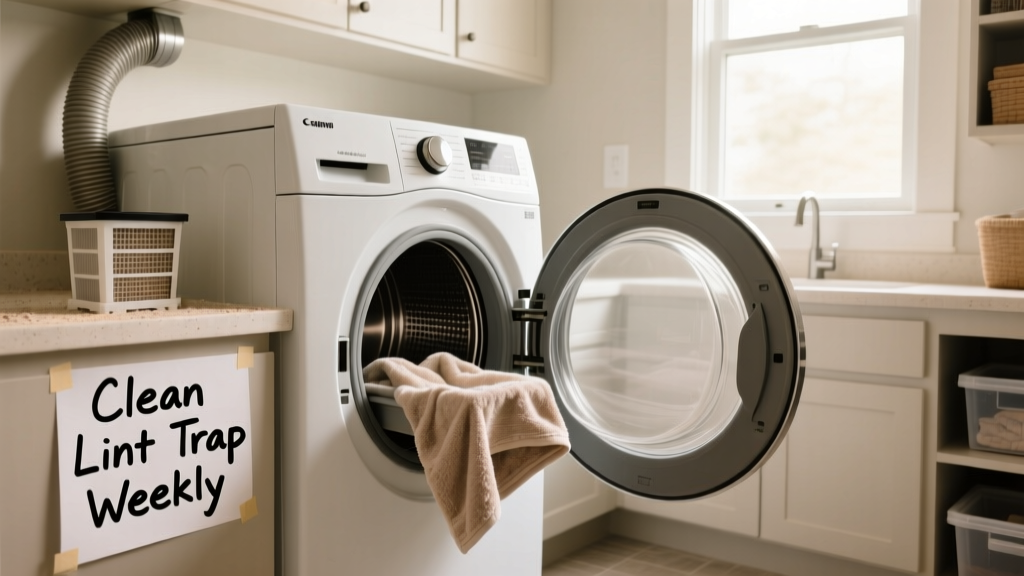
A dryer that takes two cycles to dry a load isn’t just inconvenient—it’s a red flag for hidden inefficiency, higher utility bills, and potential fire risk. According to the U.S. Fire Administration, clothes dryers cause an estimated 2,900 home fires annually, many linked to lint buildup and airflow restriction. Prevention isn’t optional; it’s the most cost-effective way to extend dryer life and protect your home.
Why This Happens
Dryers fail to dry clothes not because they’re broken—but because heat and airflow are blocked or misdirected. The three most common root causes are restricted airflow (clogged vents, kinked ducts), poor heat delivery (faulty heating elements, gas valve issues), and sensor or control board errors. Lint accumulation in the drum’s moisture sensors alone can reduce drying efficiency by up to 30%, per the National Fire Protection Association’s 2022 vent safety bulletin.
- Lint trapped in the exhaust duct reduces airflow by 40–60% (NFPA, 2022)
- Flexible plastic or foil ducts increase resistance and trap more lint than rigid metal ducts
- Overloading by just 20% extends drying time by 50%—and stresses the motor and thermostat
Maintenance Checklist
| Frequency | Task | Time Required |
|---|---|---|
| Daily | Remove lint from filter after every load | 15–30 seconds |
| Weekly | Wipe moisture sensor bars inside drum with 70% isopropyl alcohol | 2 minutes |
| Monthly | Vacuum around and behind dryer; inspect external vent flap for obstruction | 8 minutes |
| Yearly | Clean entire exhaust duct (minimum 10 ft) with rigid brush kit; verify duct length ≤ 25 ft with ≤ 2 elbows (per IRC 2021) | 45–60 minutes |
Warning Signs
Don’t wait for soaked towels after a full cycle. Early indicators give you time to act before efficiency drops further or components overheat.
- Clothes feel warm but damp—even on high heat
- Dryer exterior or top panel gets unusually hot during operation
- Must run multiple cycles for one load, especially lightweight fabrics
- Musty odor lingers in clothes post-cycle (indicates trapped moisture in duct)
Recommended Products
Not all tools and cleaners work equally well. Stick with proven, code-compliant solutions:
- Rigid aluminum or galvanized steel ducting — replaces accordion-style plastic/foil ducts (required by IRC 2021)
- Lint trap cleaning brush set — includes 12" and 24" nylon-bristle rods for deep duct access
- Moisture sensor cleaner wipes — alcohol-based, non-abrasive, safe for stainless steel drums
- Duct inspection mirror + LED light — helps spot bends, bird nests, or collapsed sections without disassembly
Can I use vinegar in the dryer to clean sensors?
No. Vinegar leaves residue that attracts lint and interferes with capacitive moisture sensing. Use only 70% isopropyl alcohol applied with a microfiber cloth—never spray directly into the drum. As appliance technician Maria Chen notes:
"I replace three moisture sensors a month—all damaged by DIY ‘natural cleaners.’ Alcohol evaporates cleanly. Vinegar doesn’t."
Does dryer vent length really matter?
Yes—critically. Every foot beyond 25 ft of total duct length (including elbows) adds resistance. Each 90° elbow equals 5 ft of equivalent length. A 35-ft duct with three elbows performs like a 50-ft straight run—cutting airflow by nearly 70%. That’s why proper dryer vent installation starts at the wall box, not the dryer.
Why does my dryer take longer in winter?
Cold ambient air entering the vent system lowers exhaust temperature, tricking the thermostat into extending heat cycles. But if drying time increases by more than 25% seasonally, check for ice buildup at the outdoor vent cap—or a cracked duct seal letting cold air infiltrate. Humidity also plays a role: indoor relative humidity above 60% slows evaporation even inside the drum.
Is it safe to skip cleaning the duct if I clean the lint screen daily?
No. Only 25% of lint stays on the screen—the rest travels down the duct. A study by the Consumer Reports Home Appliance Lab (2023) found that 83% of dryers with clogged ducts showed no visible lint on the screen. Airflow loss happens silently—and dangerously.
Do gas dryers need different maintenance than electric ones?
Yes. Gas dryers require annual inspection of the gas valve, burner assembly, and flame sensor—dust or spider webs here cause incomplete combustion and low heat. Electric models demand tighter attention to thermal fuses and heating element continuity. Both benefit equally from duct cleaning—but gas units pose greater combustion safety risks when neglected.
Preventing poor drying performance isn’t about perfection—it’s about consistency. Clean the screen, check the vent flap, test sensor responsiveness monthly, and commit to a full duct cleaning every 12 months. That routine keeps your dryer running at peak efficiency, cuts energy use by up to 25%, and aligns with your broader home appliance maintenance schedule. Small habits today prevent costly repairs—or worse—tomorrow.