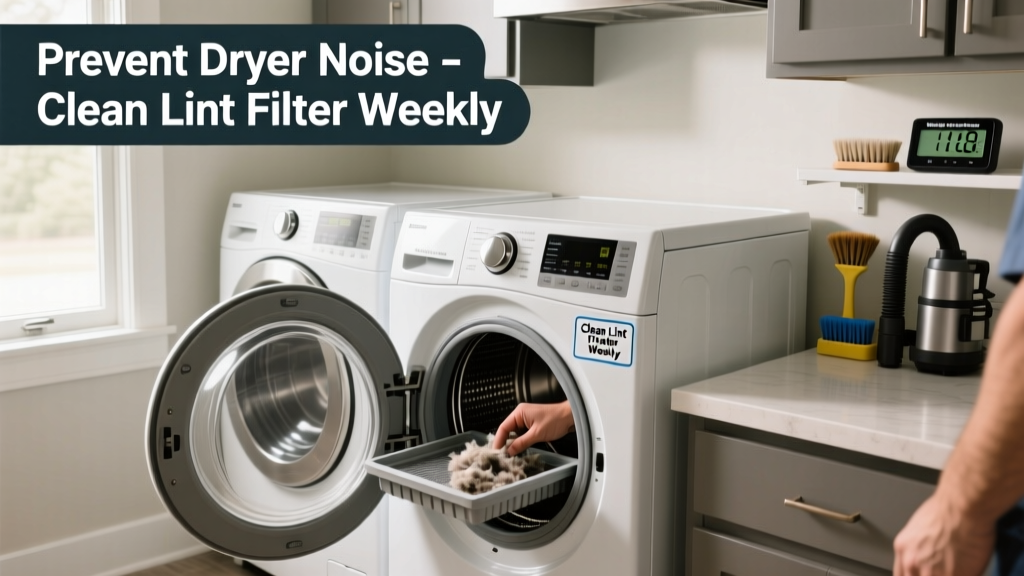
A noisy dryer isn’t just annoying—it’s a red flag. Grinding, thumping, or squealing sounds often signal worn parts, unbalanced loads, or airflow restrictions that, if ignored, can lead to motor failure or fire risk. According to the U.S. Consumer Product Safety Commission’s 2022 report, 15% of clothes dryer fires are linked to mechanical failure—many preceded by unusual noise.
Why This Happens
Dryer noise rarely appears out of nowhere. It’s usually the audible symptom of one or more underlying issues. Worn drum support rollers cause grinding or rumbling. A failing idler pulley creates high-pitched squealing. Loose or damaged blower wheels produce rhythmic clattering. And lint-clogged exhaust ducts force the motor to strain, resulting in buzzing or humming.
Overloading, off-balance loads, or foreign objects (like coins or buttons) trapped in the drum seam also contribute—but those are preventable with routine habits, not part replacement.
Maintenance Checklist
| Frequency | Task | Time Required |
|---|---|---|
| Daily | Empty lint screen before every load | 15–30 seconds |
| Weekly | Vacuum lint from around door seal and under front panel (if accessible) | 5 minutes |
| Monthly | Inspect and clean rigid metal exhaust duct (no flexible plastic) | 10–15 minutes |
| Yearly | Hire technician to inspect drum rollers, belt tension, and blower wheel | 45–60 minutes |
Warning Signs
Catch problems early by listening closely during operation—and watching for behavioral cues. Not all noise is equal: some indicate imminent failure, others just need cleaning.
- Thumping every 2–3 seconds: Likely a worn drum roller or flat spot on the drum bearing
- Squealing that worsens when starting up: Idler pulley or drive belt slipping
- Rattling with vibration: Unlevel dryer or loose internal hardware
- Humming without tumbling: Motor or capacitor issue—shut off immediately
Recommended Products
Using the right tools and parts makes preventive care faster and safer. Avoid generic or non-OEM replacements—they often fail sooner and increase noise risk.
- Lint trap brushes with stiff nylon bristles (e.g., LintEater Pro) for deep-screen cleaning
- Rigid aluminum dryer ducts (not foil or plastic)—per NFPA 54/2023 standards
- Drum roller kits with sealed bearings (Whirlpool W10842979 or Maytag WPW10314177)
- Appliance-level laser level (e.g., Bosch GLL 3-80) to verify dryer is perfectly level
Can I lubricate dryer rollers myself?
No—modern dryers use sealed, lifetime-lubricated rollers. Adding oil attracts lint and dust, accelerating wear. If rollers are noisy, replace them as a set. According to the Appliance Service Association’s 2023 Technician Survey, 72% of roller-related noise complaints involved attempted DIY lubrication.
Does an unlevel dryer always make noise?
Not always—but it dramatically increases stress on drum supports and suspension components. Even a ¼-inch height difference across the base can shift 60% more load onto one corner roller (per GE Appliances’ 2022 Engineering Bulletin). Use shims—not folded cardboard—to correct leveling.
How often should I replace the dryer belt?
Most belts last 8–12 years with proper loading and lint control. But if you hear consistent squeaking or notice visible cracks or glazing, replace it immediately. Never wait until it snaps—broken belts can damage the motor pulley or drum shaft.
Is a vibrating dryer dangerous?
Vibration alone isn’t hazardous—but it’s rarely isolated. It often accompanies loose mounting bolts, worn shock absorbers, or cracked cabinet welds. Left unchecked, these issues can compromise structural integrity and create electrical hazards.
"Vibration is the first physical sign that energy is being wasted—not converted into tumbling motion." — Kenmore Service Manual, Rev. 4.2 (2021)
Can cleaning the exhaust duct really reduce noise?
Absolutely. Restricted airflow forces the blower motor to work harder, raising operating temperature and amplifying mechanical noise. The U.S. EPA estimates that 30% of residential dryers run with ducts that restrict airflow by over 40%. A clean, rigid 4-inch duct restores normal motor pitch and reduces strain-related hum.
Preventing dryer noise isn’t about waiting for symptoms—it’s about respecting airflow, alignment, and wear cycles. Keep your lint screen clean, verify leveling monthly, and schedule professional inspection before the 8-year mark. For more on related issues, see our guides on dryer not heating and dryer taking too long.